
Rand Paul Criticizes Trump's Tariffs, Citing Economic and Constitutional Concerns
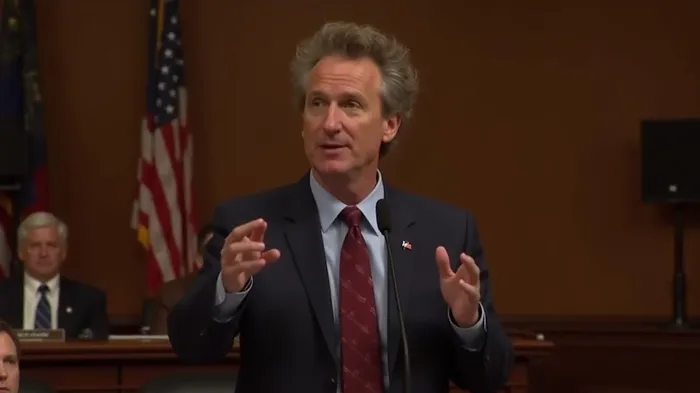
On Sunday, Republican Senator RandRAND-- Paul criticized President Trump's aggressive tariff strategy, questioning both its economic logic and its constitutional validity. Paul argued that Trump's comprehensive tariffs are based on flawed economic reasoning and have raised significant constitutional concerns. He emphasized that the tariffs could lead to unintended economic consequences and potentially violate the principles of free trade.
Paul stated that Trump's tariffs are grounded in an "economic fallacy" regarding trade deficits and opposed the president's implementation of these tariffs without congressional approval. "Tariffs are taxes, and when you tax businesses, it always gets passed on as a cost. So, prices will go up," Paul said, advocating for unrestricted global trade. "The only meaningful trade is when an individual buys a product. That is the only true trade. By definition, if it is voluntary, it is mutually beneficial; otherwise, trade would not occur."
When asked about the legality of Trump's tariff policies, Paul seemed to support the constitutional provision that grants Congress the power to levy taxes. "In the past, courts have allowed these things, but I think it would be an interesting thing because most of our tariffs in history have been passed by Congress. We have never had a large-scale tariff imposed by a president, and I oppose that," he said.
Paul is one of the few Republicans who have expressed hesitation about Trump's "Liberation Day" tariff policy, announced in early April. Courts have previously upheld the legality of tariffs based on congressional authorization. However, Trump's unilateral decision to impose tariffs has raised legal questions about whether he has exceeded his authorized powers.
Paul also raised another constitutional question: "Even if we do have a long history of both parties abdicating responsibility on tariffs and giving the power to the president, that raises another constitutional question: Can Congress delegate the powers given to it by the Constitution to the president?"
Other prominent Republicans have also expressed reservations about Trump's tariff policies. Representative Don Bacon from Nebraska described Trump's tariffs as a "historic mistake" by Congress, suggesting that the administration's approach to trade has been misguided. Former Vice President Mike Pence, who served under Trump, criticized the administration's broad imposition of tariffs, stating that it was a strategic error that could have detrimental effects on the U.S. economy.
The criticism from within the Republican Party highlights the increasing tension over Trump's tariff strategy. While some Republicans support the tariffs as a means to protect American industriesAIG--, others argue that the policies are flawed and could have serious economic and constitutional implications. The debate within the party underscores the complexity of trade policy and the challenges of balancing protectionism with free trade principles.

Stay ahead of the market.
Get curated U.S. market news, insights and key dates delivered to your inbox.






Comments
No comments yet