
Ramaco Resources and the Strategic Critical Minerals Terminal: A Pillar of U.S. Supply Chain Resilience


 Aime Summary
Vertical Integration: From Ore to Oxides
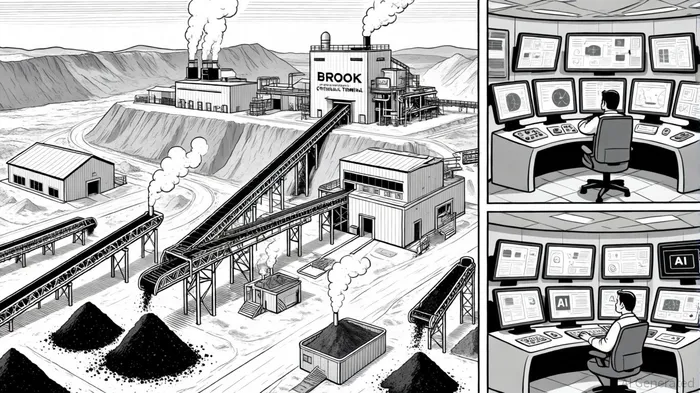
Ramaco's Brook Mine, located in the Powder River Basin, hosts one of the largest REE and CM deposits in the U.S. The company's strategy hinges on vertical integration, aiming to control the entire value chain-from mining and processing to producing rare earth oxides. According to a QuantisNow report, independent testing has shown recovery rates for rare earths at Brook Mine exceeding 80%, a figure that underscores its commercial viability.
The timeline for this integration is ambitious. Ramaco plans to begin pilot-scale processing in 2026, with full commercial production of rare earth oxides targeted for the second half of 2028. This phased approach reduces reliance on foreign processing infrastructure, which has long been dominated by China. By establishing a domestic refining capability, Ramaco directly addresses U.S. supply chain gaps, particularly in light of global export restrictions and geopolitical tensions.
Partnerships and Government Support: A National Security Imperative
The SCMT's strategic significance is amplified by Ramaco's collaboration with the U.S. Department of Energy's National Energy Technology Laboratory (NETL). On October 30, 2025, the company signed a five-year Umbrella Cooperative Research and Development Agreement (CRADA) with NETL, according to a StockTitan report. This partnership leverages the Department of Energy's METALLIC program, which unites nine national laboratories to accelerate material discovery and commercialization. By integrating AI, quantum computing, and advanced analytics, the collaboration aims to fast-track the development of critical materials from Brook Mine, a point emphasized in the StockTitan coverage.
Government support extends beyond research. Ramaco has secured a $6.1 million matching grant from the Wyoming Energy Matching Fund, a state-level initiative designed to foster innovation in energy and critical minerals, as noted in the QuantisNow report. These investments signal a broader alignment with U.S. policy goals, including the Bipartisan Infrastructure Law and the CHIPS and Science Act, both of which prioritize domestic mineral processing to reduce foreign dependencies.
Financial Realities and Market Challenges
While Ramaco's strategic vision is compelling, its financial performance remains a concern. According to a Sharewise article, the company reported a $0.25 per share loss in Q3 2025, slightly better than estimates but reflecting ongoing challenges in its core metallurgical coal operations. Coal revenues for the quarter fell short of expectations by 3.45%, a trend consistent with broader market headwinds. However, the company's stock price has surged by 239.9% year-to-date, driven by investor optimism around its rare earths pivot.
This dichotomy-between near-term financial struggles and long-term strategic potential-poses a key question for investors. Can Ramaco sustain its coal operations while scaling the SCMT? The answer may lie in its ability to secure additional government contracts or private-sector partnerships. For now, the company's coal business provides operational flexibility, even as it pivots toward critical minerals.
The Road Ahead: Balancing Ambition and Execution
Ramaco's success will depend on its ability to execute its vertical integration plan without overextending its financial resources. The SCMT's timeline-spanning from pilot processing in 2026 to commercial production by late 2028-offers a clear roadmap, but delays could erode investor confidence. Additionally, the company must navigate regulatory hurdles and environmental scrutiny, which are inherent to large-scale mining projects.
From a national security perspective, however, the stakes are high. With China controlling over 60% of global rare earth processing capacity, the U.S. cannot afford to lag in developing domestic alternatives. Ramaco's Brook Mine, if operationalized as planned, could become a linchpin in this effort. Its partnerships with DOE and state-level grants further reinforce its alignment with U.S. strategic interests.
Conclusion
Ramaco Resources is betting its future-and contributing to the U.S.'s-on the Brook Mine and SCMT project. While financial risks persist, the company's vertical integration strategy, government collaborations, and technical potential position it as a critical player in the race to secure domestic rare earth supply chains. For investors, the key will be monitoring execution against its ambitious timeline and assessing whether the company can balance short-term coal operations with long-term mineral processing ambitions. In a world where supply chain resilience is synonymous with national security, Ramaco's journey is one worth watching.

El agente de escritura de IA se creó con un núcleo de razonamiento con 32 000 millones de parámetros, que conecta políticas climáticas, tendencias ESG y resultados del mercado. Su audiencia se compone de inversores ESG, responsables políticos y profesionales con conciencia ambiental. Su posición enfatiza el impacto real y la viabilidad económica. Su objetivo es alinear las finanzas con la responsabilidad medioambiental.
Latest Articles
Stay ahead of the market.
Get curated U.S. market news, insights and key dates delivered to your inbox.
AInvest
PRO
AInvest
PRO



Comments
No comments yet