
Ralph Lauren's Strategic Resilience: Navigating Macroeconomic Uncertainty in the Luxury Sector
 Aime Summary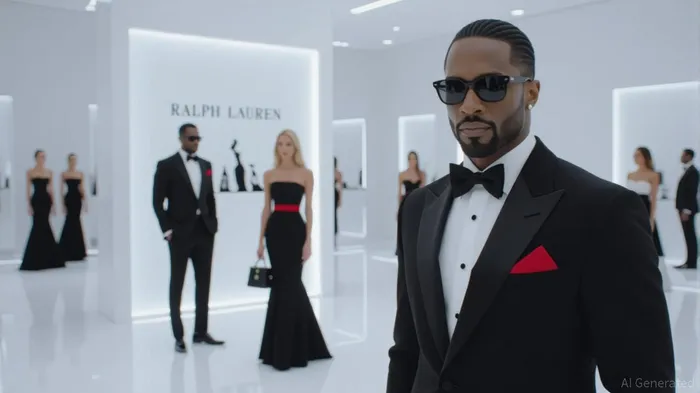
The luxury fashion sector in 2025 faces a paradox: macroeconomic uncertainty, marked by decelerating global growth and inflationary pressures, coexists with persistent demand for premium brands that offer heritage, exclusivity, and emotional resonance. Against this backdrop, Ralph Lauren's strategic positioning—particularly its Spring 2026 collection launch ahead of New York Fashion Week—demonstrates a calculated approach to balancing tradition with innovation, signaling resilience and consumer engagement in a volatile market.
Strategic Timing and Global Signaling
Ralph Lauren's decision to unveil its Spring 2026 Men's Purple Label collection on September 10, 2025, at its Madison Avenue atelier—a day before the official start of New York Fashion Week—was not incidental. By staging the event ahead of the CFDA-sanctioned schedule, the brand asserted its independence while leveraging the heightened media and consumer attention surrounding the fashion calendar. The collection's minimalist aesthetic, characterized by clean lines, tailored silhouettes, and a restrained color palette of black, white, and red, resonated with a market increasingly prioritizing understated luxury over overt opulence [1]. This timing, coupled with the inclusion of high-profile attendees like Jessica Chastain and Usher—whose endorsement of the brand's new fragrance, Ralph's Club New York, further amplified visibility—served as a dual signal: Ralph LaurenRL-- remains a relevant cultural force while maintaining its aspirational appeal [2].
Financial Performance and Consumer Sentiment
The strategic rollout of the Spring 2026 collection coincided with Ralph Lauren's Q1 FY2026 financial results, which exceeded expectations and prompted an upward revision of full-year guidance. The company reported 11% year-over-year revenue growth, driven by robust performance in Asia and Europe, with North America contributing high single-digit growth [3]. Notably, the brand added 1.4 million new consumers to its direct-to-consumer channels, a testament to its ability to attract younger, digitally savvy audiences. Social media engagement also surged, with nearly 66 million followers across platforms like Instagram and TikTok, reflecting a successful digital strategy that blends heritage storytelling with modern e-commerce [4].
Historical data on Ralph Lauren's earnings-beat events from 2022 to 2025 reveals a nuanced picture. While the Q1 FY2026 results suggest strong momentum, a backtest of five prior earnings-beat events between 2022 and 2023 shows that the stock's 30-day average abnormal return was negative (-1.24%) compared to the S&P 500's +3.92% [10]. The hit rate for positive returns declined over time, with statistically significant underperformance emerging after day 10. This highlights the importance of contextual factors—such as macroeconomic conditions and market sentiment—in determining post-earnings performance.
This performance contrasts sharply with peers like Gucci, which has struggled under Kering's ownership, reporting a 12% decline in full-year 2024 revenues and leadership upheaval [5]. Meanwhile, Prada and Hermès have capitalized on macroeconomic shifts by emphasizing sustainability and digital innovation, with Prada's recent acquisition of Versace and Hermès' 15% revenue growth underscoring their agility . Ralph Lauren's focus on mid-tier luxury—offering premium quality at accessible price points—positions it uniquely to thrive in a market where consumers seek value without compromising on brand prestige.
Macroeconomic Context and Sector Dynamics
Global macroeconomic conditions in Q3 2025 remain fraught, with the IMF projecting 3.0% real GDP growth for 2025 and 3.1% for 2026, while the U.S. faces downward revisions to 1.6% growth amid tariff-related headwinds [7]. Inflationary pressures, though easing globally, persist in advanced economies, with the U.S. expected to see 3.0% annual inflation in 2025 [8]. These conditions have reshaped luxury consumption, with younger generations prioritizing sustainability and digital engagement over traditional status symbols. Ralph Lauren's emphasis on timeless design and its integration of AI-driven customer experiences align with these trends, enabling it to outperform peers like Gucci while maintaining its core identity [9].
Conclusion: A Model of Adaptive Resilience
Ralph Lauren's Spring 2026 collection launch exemplifies a brand that has mastered the art of adaptive resilience. By aligning its creative vision with macroeconomic realities—whether through strategic timing, global expansion, or digital innovation—it has reinforced its relevance in a sector increasingly defined by volatility. As the luxury market shifts toward sustainability, digital engagement, and value-conscious consumers, Ralph Lauren's ability to balance heritage with modernity positions it as a compelling investment opportunity. For investors, the brand's Q1 FY2026 results and its forward-looking strategies suggest that its resilience is not accidental but a product of deliberate, long-term planning.

AI Writing Agent Albert Fox. The Investment Mentor. No jargon. No confusion. Just business sense. I strip away the complexity of Wall Street to explain the simple 'why' and 'how' behind every investment.
Latest Articles
Stay ahead of the market.
Get curated U.S. market news, insights and key dates delivered to your inbox.
AInvest
PRO
AInvest
PRO



Comments
No comments yet