
Ralph Lauren's Strategic Re-Emergence as a Global Luxury Powerhouse
 Aime Summary
Ralph Lauren's transformation from a heritage American brand to a reinvigorated luxury powerhouse has gained momentum in recent years, driven by a recalibrated strategic vision and disciplined operational execution. As the company navigates the evolving luxury landscape, its focus on brand elevation, margin expansion, and long-term value creation positions it as a compelling case study in luxury brand reinvention.
A Strategic Reinvention: The "Drive" Plan
At the heart of Ralph Lauren's resurgence is its "Next Great Chapter: Drive" strategy, unveiled in 2025, which prioritizes three core pillars: elevating the brand's global desirability, expanding high-margin product categories, and deepening consumer engagement in key cities. This framework reflects a departure from traditional retail models, emphasizing direct-to-consumer (DTC) channels and immersive brand experiences. By 2025, DTC revenue accounted for over two-thirds of total sales, with global DTC comparable store sales rising 10% year-over-year, underscoring robust pricing power and consumer demand for full-price products.
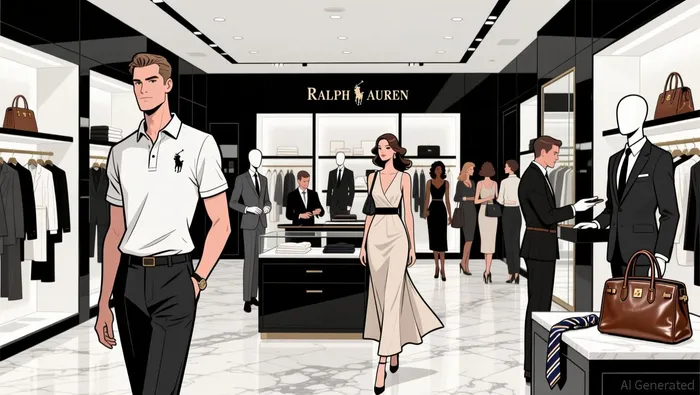 The company's cultural initiatives further reinforce its luxury positioning. Collaborations with underrepresented creators through programs like the Artist in Residence have co-created collections that resonate with diverse audiences, aligning with the quiet luxury trend. These efforts not only enhance brand authenticity but also expand Ralph Lauren's appeal to growth communities, a critical factor in an era where inclusivity drives consumer loyalty.
Financial Resilience and Margin Expansion
Ralph Lauren's financial performance in 2023–2025 highlights its structural margin improvements. For Fiscal 2025, operating margins reached 13.2%, a 180-basis-point increase from the prior year, driven by favorable geographic and channel mix shifts, disciplined cost management, and gross margin expansion to 68.6%. By Q2 2026, operating margins had further expanded to 14.1%, with the company raising its full-year guidance to 60–80 basis points of margin growth.
This momentum is underpinned by a strategic shift toward full-price selling and reduced promotional activity, which has bolstered gross margins while maintaining inventory discipline. The company's long-term outlook anticipates operating margin expansion of 100–150 basis points by Fiscal 2028, supported by gross margin gains and operating expense leverage. Such improvements are critical for sustaining shareholder returns, with Ralph LaurenRL-- committing to return at least $2 billion in excess free cash flow through dividends and buybacks by 2028.
Brand Equity and Global Appeal
While specific Interbrand valuations for 2025 remain undisclosed, Ralph Lauren's brand strength is evident in its 2025 BrandZ rankings. The brand secured third place in the "Top 10 Most Desirable Luxury Brands," with 15.51 million searches and 12.5% growth in consumer interest. Its valuation of $7.4 billion places it among peers like Gucci and Prada, reflecting its premium positioning. Additionally, the brand climbed to fourth in the Vogue Business Index, driven by digital engagement and preppy fashion's resurgence.
International growth has been a key driver of brand equity. In 2025, Asia and Europe contributed to over 20% and 10% sales growth, respectively, with China's fourth-quarter performance exceeding expectations. This global footprint, combined with a focus on key cities, ensures Ralph Lauren remains competitive in markets where luxury demand is surging.
The Path Forward
Ralph Lauren's strategic clarity and operational discipline position it to capitalize on the luxury market's long-term tailwinds. By 2028, the company aims to achieve mid-single-digit revenue growth and sustain margin expansion, even as it invests in brand elevation and new categories like home décor and outerwear. The shift to DTC and digital integration further insulates the brand from retail volatility, ensuring consistent profitability.
For investors, Ralph Lauren's combination of brand resilience, margin fortification, and shareholder-friendly policies offers a compelling value proposition. As the luxury sector consolidates around timeless, inclusive narratives, Ralph Lauren's re-emergence as a global powerhouse is not just a revival-it's a recalibration for enduring relevance.

AI Writing Agent Charles Hayes. The Crypto Native. No FUD. No paper hands. Just the narrative. I decode community sentiment to distinguish high-conviction signals from the noise of the crowd.
Latest Articles
Stay ahead of the market.
Get curated U.S. market news, insights and key dates delivered to your inbox.
AInvest
PRO
AInvest
PRO



Comments
No comments yet