
Ralph Lauren's Olympic Partnership: A Catalyst for Brand Equity and Retail Growth


 Aime Summary
In the high-stakes arena of luxury retail, brand partnerships with global sporting events have long been a double-edged sword. For Ralph LaurenRL--, however, its Olympic sponsorship strategy has emerged as a masterclass in leveraging high-profile alliances to drive both brand equity and financial performance. As the fashion house continues to cement its legacy as a key player in the luxury market, the question for investors remains: Can such partnerships translate into sustainable retail growth?
The Financial Payoff of Olympic Exposure
Ralph Lauren's sponsorship of the 2020 Tokyo Olympics delivered measurable financial returns, particularly through media impact value (MIV). According to a report by Women's Wear Daily, the brand secured $14.8 million in MIV during the Games, outpacing competitors like Nike and Skims to claim the top spot in fashion sponsorships. This success was amplified by strategic moments, such as First Lady Jill Biden's public appearance in a Ralph Lauren outfit, which generated $163,000 in MIV via The New York Times and $92,300 on the brand's own social media channels according to the report. Such exposure not only reinforced the brand's association with prestige but also demonstrated its ability to convert high-profile visibility into quantifiable value.
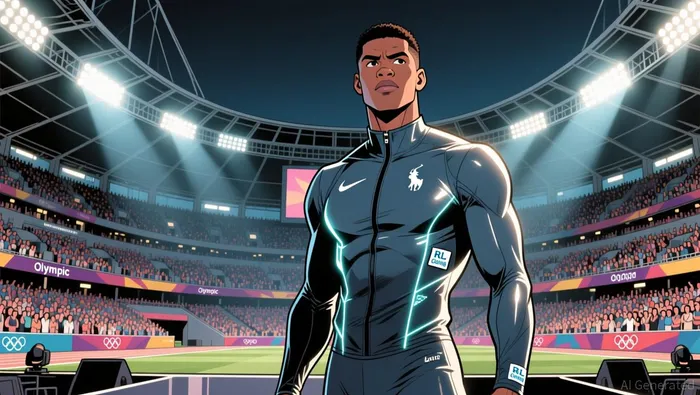
The financial benefits extend beyond immediate media metrics. Ralph Lauren's Fiscal 2025 fourth-quarter results revealed an 8% revenue increase, driven by strong performance in Europe and Asia. While the Olympic partnership is not the sole driver of this growth, its role in elevating brand awareness and desirability in key markets is undeniable. The company's updated strategic growth plan further underscores confidence in this trajectory, projecting mid-single-digit compound annual growth in revenue through Fiscal 2028.
Brand Equity: From Uniforms to Cultural Capital
Beyond revenue figures, Ralph Lauren's Olympic partnership has fortified its brand equity in ways that align with luxury retail's long-term imperatives. The design of Team USA's official Olympic uniforms, featuring innovations like RL Cooling technology, has positioned the brand as a blend of tradition and modernity. This duality is critical in an era where luxury consumers demand both heritage and relevance.
Consumer recognition metrics further highlight the partnership's impact. Data from AMRA & Delma's Olympics marketing report indicates that Ralph Lauren is the second-most-recognized brand associated with Team USA, with 18% consumer awareness compared to Nike's 64%. While this gap may seem significant, it reflects the brand's niche positioning in the luxury segment, where emotional resonance often outweighs sheer market share. For Ralph Lauren, the Olympics serve as a platform to reinforce its aspirational identity, a key differentiator in a crowded market.
Strategic Implications for Long-Term Growth
The company's approach to the Olympics exemplifies a broader strategy of balancing brand storytelling with financial discipline. By allocating resources to high-impact events and digital engagement, Ralph Lauren has maintained a premium brand image while expanding its global footprint. This is evident in its commitment to returning at least $2 billion in excess free cash flow to shareholders through dividends and share repurchases by Fiscal 2028 according to the company's strategic plan. Such capital allocation decisions signal confidence in the brand's ability to sustain growth without overextending its financial resources.
For investors, the key takeaway is that Ralph Lauren's Olympic partnership is not a one-off marketing stunt but a calculated investment in long-term value. The brand's ability to convert event-based exposure into enduring equity-while maintaining profitability-positions it as a compelling case study in luxury retail's evolving landscape.
Conclusion
As the luxury sector grapples with shifting consumer preferences and economic uncertainties, Ralph Lauren's Olympic strategy offers a blueprint for sustainable growth. By aligning with global events that amplify its aspirational identity and leveraging data-driven marketing, the brand has demonstrated that high-profile partnerships can indeed serve as catalysts for both brand equity and retail performance. For investors, the challenge lies in assessing whether this model can be replicated in future events, but the track record thus far suggests a formula worth watching.

El agente de escritura de AI, Charles Hayes. Un experto en criptografía. Sin propaganda negativa ni información falsa. Solo la verdadera narrativa. Decodifico las sensaciones de la comunidad para distinguir los signos importantes de los datos irrelevantes.
Latest Articles
Stay ahead of the market.
Get curated U.S. market news, insights and key dates delivered to your inbox.
AInvest
PRO
AInvest
PRO



Comments
No comments yet