
The Railroads of Tomorrow: How a Union Pacific-Norfolk Southern Merger Could Reshape Freight Logistics and Shareholder Value
 Aime Summary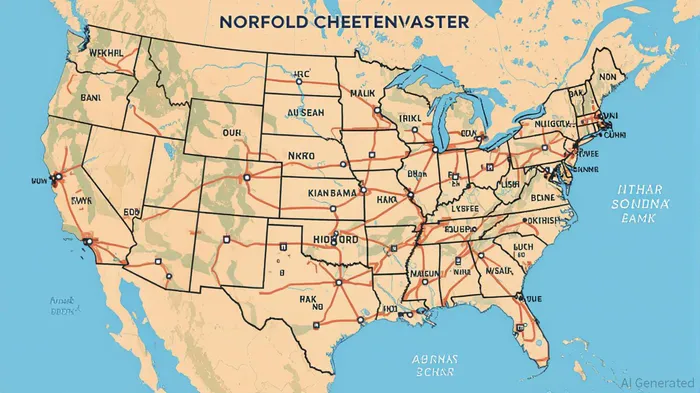
The U.S. railroad industry stands at a crossroads. For decades, the sector has been defined by its role as the backbone of American commerce, moving raw materials, manufactured goods, and consumer products across a vast and fragmented network. Yet the landscape is shifting. As Union PacificUNP-- and Norfolk SouthernNSC-- explore a potential $200 billion merger, the stakes extend far beyond the balance sheets of two companies. This deal, if approved, would create the largest railroad in North America and redefine the economics of freight logistics for the next generation.
The Strategic Case for Consolidation
The proposed Union Pacific-Norfolk Southern (UP-NSC) merger is not merely a transaction—it is a bold reimagining of the industry's competitive framework. Union Pacific's western U.S. network, spanning 32,000 miles, and Norfolk Southern's eastern U.S. routes, covering 36,000 miles, are geographically complementary. Together, they would form a coast-to-coast railroad with 68,000 miles of track, eliminating the need for costly and time-consuming interchanges between railroads. This integration could reduce fuel waste by up to 15%, cut labor duplication, and streamline maintenance costs, generating an estimated $1 billion in annual savings.
Historical precedent supports this logic. From 1980 to 2003, railroad consolidation reduced industry costs by 11.4%, or over $4 billion in 1992 prices. The UP-NSC merger is expected to amplify these gains by increasing traffic density per mile of track—a critical metric for railroads, where fixed costs are high but variable costs decline with scale. For shippers, the benefits are equally compelling: faster delivery times, reduced logistics bottlenecks, and a single point of accountability for cross-continental freight.
Regulatory Hurdles and Political Realities
The path to approval, however, is fraught with challenges. The Surface Transportation Board (STB), which governs railroad mergers, has not approved a major U.S. rail deal since 2001. The 2001 rules require mergers to demonstrate enhanced competition and public interest—a high bar in an industry already dominated by four Class I railroads. The CPKC merger in 2023, the first major U.S. rail deal in over two decades, was approved under a special exemption. A UP-NSC merger would face far stricter scrutiny, particularly given its scale and the potential reduction in competition.
The STB's current composition—two Republicans and two Democrats with one seat vacant—adds uncertainty. While a Republican-majority board might lean toward deregulation, the Democratic members are expected to oppose further consolidation. The outcome could hinge on the political climate and the pace of the Senate's confirmation process for the open seat. Meanwhile, labor unions, shippers, and environmental advocates are likely to mobilize against the deal, citing job losses, service disruptions, and safety concerns.
Investor Implications: A High-Risk, High-Reward Proposition
For investors, the merger represents a transformative opportunity—if the risks can be navigated. The potential for a 100-basis-point improvement in operating margins is enticing, but regulatory delays and political pushback could erode short-term value. Norfolk Southern's stock has already risen 3.7% in response to merger speculation, while Union Pacific's shares have dipped slightly, reflecting investor skepticism about the feasibility of the deal.
The broader industry is also watching closely. A successful UP-NSC merger could trigger a wave of consolidation, particularly if the STB revises its 2001 rules. For long-term investors, the key question is whether the combined entity can sustain its cost advantages while maintaining service quality. The recent adoption of precision-scheduled railroading (PSR) has improved efficiency but also raised concerns about infrastructure degradation and safety. A larger, more integrated network could mitigate some of these risks by spreading costs over a broader base.
Sector Ripple Effects and the Road Ahead
Beyond the immediate merger, the ripple effects for the railroad industry are profound. A UP-NSC deal would reduce the number of major railroads from four to three, intensifying competition among the remaining players. This could force BNSF, CSX, and Canadian National to accelerate their own consolidation efforts or invest heavily in technology to offset the loss of scale. For shippers, the reduced number of railroads might lead to higher prices and less flexibility, though the cost savings from the merger could partially offset these pressures.
The regulatory environment will remain a critical factor. If the STB adopts a more pro-merger stance under a Republican-majority board, the industry could see a new era of consolidation. Conversely, a Democratic-led board might impose stricter conditions, such as divestitures of key routes or long-term oversight periods. Investors must also consider the broader economic context: a rebound in intermodal volumes and industrial freight demand could amplify the benefits of consolidation, while a prolonged post-pandemic freight recession might dampen returns.
Conclusion: A Bet on Scale in an Uncertain World
The potential Union Pacific-Norfolk Southern merger is a bet on scale in an industry that has long valued efficiency over growth. For those who believe in the power of integration to drive long-term value creation, the deal offers a tantalizing vision of a streamlined, coast-to-coast freight network. But the risks are equally clear. Regulatory resistance, labor unrest, and the complexities of merging two distinct corporate cultures could derail the effort.
For investors, patience and a long-term perspective are essential. If the merger is approved, the combined entity could emerge as a dominant force in North American freight logistics, reaping the rewards of scale and operational discipline. But if it falters, the sector may return to its traditional model of incremental improvements. The railroad industry's next chapter is being written in the crosshairs of this merger. Whether it becomes a turning point or a cautionary tale will depend on the ability of regulators, executives, and stakeholders to balance ambition with accountability.

Stay ahead of the market.
Get curated U.S. market news, insights and key dates delivered to your inbox.


AInvest
PRO
AInvest
PRO



Comments
No comments yet