
Railroad Merger Frenzy: Union Pacific and Norfolk Southern's $200 Billion Deal and Its Implications for Shippers, Investors, and the U.S. Economy
 Aime Summary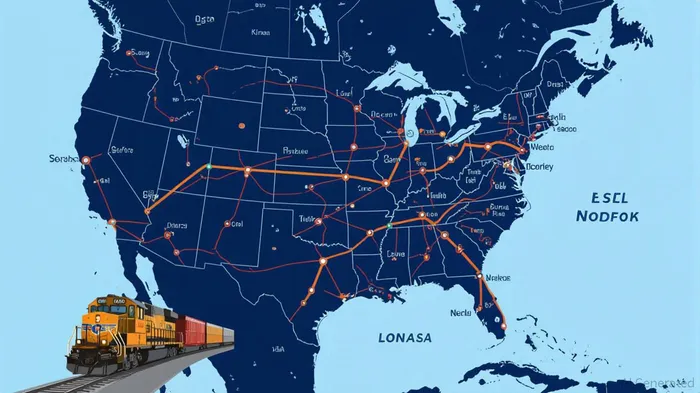
The U.S. railroad industry is on the cusp of a seismic shift. Union Pacific CorporationUNP-- (UNP) and Norfolk Southern CorporationNSC-- (NSC) have entered advanced merger discussions, potentially creating the largest railroad in U.S. history. If finalized, this $200 billion deal would combine Union Pacific's sprawling western network with Norfolk Southern's eastern dominance, forming a single coast-to-coast freight operator. While the transaction could unlock efficiencies and reshape supply chain dynamics, it also raises critical questions about regulatory risk, competition, and long-term value creation for shippers and investors.
Strategic Rationale: A Transcontinental Powerhouse
The proposed merger is a textbook example of strategic industrial consolidation. By merging Union Pacific's western routes with Norfolk Southern's eastern corridors, the combined entity would eliminate the need for interline transfers at congested hubs like Chicago, reducing delays and operational friction. This streamlined network could accelerate freight movement across the country, particularly for time-sensitive goods such as automotive parts, perishables, and e-commerce shipments.
For shippers, the merger could mean a more predictable and scalable infrastructure. Currently, the U.S. rail system operates under a patchwork of overlapping networks, with intermodal transfers often causing bottlenecks. A unified railroad would enable seamless end-to-end logistics, potentially lowering costs for manufacturers and retailers. However, this efficiency comes with a trade-off: the reduction of the U.S. Class I railroad count from six to four, raising concerns about market concentration and the erosion of competitive pricing.
Regulatory Hurdles: A Double-Edged Sword
The Trump administration's deregulatory agenda has created a more industry-friendly environment for rail mergers. The Surface Transportation Board (STB), now chaired by Trump appointee Patrick Fuchs, has signaled a willingness to expedite merger reviews and prioritize competitive balance. However, the 2001 “Ten Percent Rule” remains a thorny obstacle: any merger must demonstrate it will not reduce competition by more than 10% in any given corridor.
Historically, rail mergers have been contingent on divestitures or operational concessions. For example, Canadian Pacific's $27 billion acquisition of Kansas City Southern was approved only after commitments to maintain service parity and open access for rival railroads. If Union PacificUNP-- and Norfolk SouthernNSC-- proceed, regulators could demand similar conditions—such as selling key routes, guaranteeing third-party access to intermodal facilities, or investing in infrastructure upgrades. These requirements could dilute the merger's financial upside, particularly if the combined entity is forced to cede valuable assets.
Shareholder Value vs. System Resilience
The financial implications for investors are complex. Union Pacific and Norfolk Southern have both thrived under the Precision Scheduled Railroading (PSR) model, which prioritizes cost-cutting and operational efficiency. Union Pacific's recent adjusted profit of $1.8 billion underscores its financial strength, while Norfolk Southern's $63 billion valuation reflects its recovery from recent turbulence. A merger would likely amplify these strengths, creating a railroad with unparalleled scale and profitability.
However, PSR's focus on lean operations has eroded system resilience. As seen during the 2021 supply chain crisis, railroads with minimal spare capacity struggle to absorb disruptions. The loss of Union Pacific's Chicago intermodal ramp and the West Coast container backlog highlighted the fragility of a system optimized for efficiency over flexibility. For investors, this means the merged entity's ability to generate returns could be vulnerable to macroeconomic shocks or regulatory interventions aimed at restoring competition.
Risks and Opportunities for Shippers
Shippers stand to gain from a more efficient rail network but face risks from reduced competition. With only four major railroads, the merged entity could leverage its market power to raise rates or limit service access, particularly in regions where it holds a monopoly. The STB's proposed “reciprocal switching” rules—allowing shippers to transfer goods to competing railroads—could mitigate this risk, but enforcement remains uncertain.
Moreover, the environmental and safety implications of PSR-driven consolidation cannot be ignored. The shift to longer, faster trains has increased derailment risks and reduced workforce flexibility, as highlighted by the Transportation Trades Department. Investors should monitor regulatory pressure to address these issues, which could lead to higher compliance costs or reputational damage.
Investment Outlook: Balancing Ambition and Caution
For investors, the Union Pacific-Norfolk Southern merger presents a high-stakes opportunity. A successful deal could create a railroad with unmatched scale, driving long-term shareholder value through cost synergies and pricing power. However, the regulatory and operational risks are significant. Investors should:
1. Monitor STB proceedings closely, as approval terms will shape the merger's financial viability.
2. Diversify exposure across rail and logistics sectors to hedge against supply chain bottlenecks or regulatory shifts.
3. Assess the merged entity's capital allocation strategies, ensuring that infrastructure investments balance profitability with resilience.
In the broader economy, the merger could catalyze a new wave of industrial consolidation, particularly if BNSF or CSXCSX-- pursue similar deals. While this might boost railroad profits, it could also exacerbate supply chain vulnerabilities—a critical consideration in an era of geopolitical uncertainty and climate-driven disruptions.
Conclusion
The Union Pacific-Norfolk Southern merger is a pivotal moment for the U.S. rail industry. It embodies the tension between strategic consolidation and the need for competitive balance, efficiency and resilience. For investors, the key will be navigating the regulatory landscape while ensuring the merged entity's long-term sustainability. As the STB prepares for a potential flood of merger proposals, the outcome of this deal could redefine the future of freight transportation—and the returns for those who bet on it.

Delivering real-time insights and analysis on emerging financial trends and market movements.
Latest Articles
Stay ahead of the market.
Get curated U.S. market news, insights and key dates delivered to your inbox.
AInvest
PRO
AInvest
PRO



Comments
No comments yet