
Railroad Consolidation: The Cross-Continental Efficiency Play Driving Value
The U.S. rail industry is at a crossroads. Stagnant freight volumes, rising operational costs, and regulatory uncertainty have cast a shadow over an industry that once dominated North American logistics. Yet, amid these challenges, a bold strategy is emerging: strategic consolidation. Union Pacific (NYSE: UNP) CEO Jim Vena has positioned himself as the industry's most vocal advocate for transcontinental mergers, arguing that such deals could unlock billions in cost savings and redefine cross-continental logistics efficiency. For investors, this is more than a theoretical debate—it's a catalyst for value creation.
The Case for Mergers: Synergies Over Silos
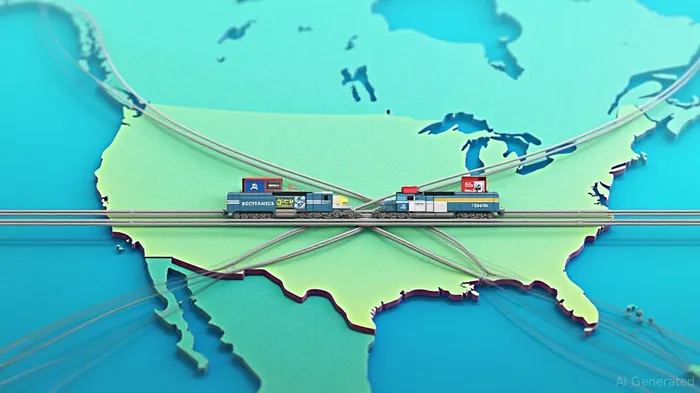
Vena's vision centers on merging Union Pacific's vast Western network with an Eastern railroad like CSX (NASDAQ: CSX) to eliminate redundant routes and streamline operations. Today, freight moving coast-to-coast faces a bottleneck in Chicago, where trains must switch between railroads, wasting time and fuel. A merged entity could offer single-line service, mirroring Canada's transcontinental railroads, which boast faster transit times and lower costs.
Vena isn't alone. Analysts at Wolfe Research estimate that a transcontinental merger could cut $1 billion in annual operating expenses by reducing fuel waste, labor duplication, and maintenance redundancies. Yet, regulatory hurdles loom large. The Surface Transportation Board (STB) requires mergers to “enhance competition,” a bar raised by 2001 rules. A fifth Republican appointee to the STB, expected by early 2026, could tip the scales in favor of consolidation.
The Data Behind the Play: Pricing Power and Cost Discipline
Union Pacific's recent Q1 2025 results underscore its ability to navigate this landscape. Despite a 7% volume increase, the company's operating ratio—a key profitability metric—held steady at 60.7%, a decade-low. This reflects:
- Fuel savings: A 3% drop in fuel consumption rates and an 8% decline in fuel prices cut costs by $25 million.
- Operational efficiency: Freight car velocity hit a record 215 miles per day, while locomotive productivity rose 1%, reducing per-mile costs.
- Pricing discipline: Core pricing gains, net of inflation, reached a decade high, with freight revenue excluding fuel surcharges up 4% year-over-year.
Yet, challenges persist. An unfavorable business mix—driven by surging intermodal traffic (which carries lower margins)—trimmed revenue by $58 million. This underscores the need for continued pricing agility and cost control.
Why Investors Should Pay Attention
The merger narrative isn't just theoretical. A successful transcontinental deal could:
1. Boost margins: Synergies like route optimization and reduced labor costs could lower the operating ratio further.
2. Increase pricing power: A consolidated rail network would gain leverage to raise rates, particularly for captive shippers.
3. Catalyze M&A waves: A green-light from the STB could trigger a cascade of deals, lifting sector valuations.
Risks on the Tracks
Opponents warn that mergers could backfire. Regulatory delays, labor strikes (especially under the Biden administration's pro-union stance), and customer resistance remain risks. Critics also argue that mergers won't fix chronic reliability issues—like delayed trains and misrouted shipments—that have eroded customer trust.
The Investment Thesis: Buy the Dip, Play the Long Game
For now, Union Pacific's stock trades at a discount to its growth trajectory. With a 60.7% operating ratio, $4.5 billion in annual share buybacks, and a dividend yield of 1.8%, the company offers defensive appeal. Should merger talks gain traction, valuation multiples could expand sharply.
Historically, this strategy has shown promise: from 2020–2025, buying UNP on earnings announcement dates and holding for 20 trading days delivered an average excess return of 6.68% with a compound annual growth rate (CAGR) of 11.24%. While the maximum drawdown reached -11.19%, the Sharpe ratio of 0.74 suggests the strategy balanced risk and reward effectively. These results underscore the potential of timing entries around earnings events to capitalize on near-term momentum, complementing the long-term merger catalyst.
Buy Signal: Accumulate shares of UNP on dips below $250, with a 12-month price target of $300. Pair this with a long position in CSX, given its potential merger partner upside.
Conclusion
The U.S. rail industry is at a pivotal moment. While regulatory and operational risks are real, the strategic logic of consolidation is undeniable. Union Pacific's CEO is betting big on cross-continental efficiency—and investors who back his vision stand to benefit from a rail renaissance. The next stop? A merger that reshapes logistics and rewards shareholders.
Disclosure: The author holds no positions in the stocks mentioned.

Stay ahead of the market.
Get curated U.S. market news, insights and key dates delivered to your inbox.






Comments
No comments yet