
RAIL Stock Gains On Record Backlog Despite Q2 Margin Compression
 Aime Summary
- Institutional investors including BlackRockBLK-- and Vanguard have significantly increased their holdings in FreightCar AmericaRAIL--, signaling growing confidence in the company's turnaround strategy despite recent unprofitability.
- FreightCar America reported a Q2 2026 revenue beat of $113.1 million but faced gross margin compression to 5.5 percent due to lower volumes and restructuring costs.
- The company secured a record backlog of 3,972 railcar units valued at $344 million, expanding its market share to 45 percent of new industry orders and providing visibility through 2028.
- Analyst sentiment remains mixed with an average rating of Reduce, while Wall Street projects a one-year price target of $14.96, reflecting cautious optimism amid operational challenges.
Institutional investors have shown renewed interest in FreightCar America IncRAIL-- (NASDAQ: RAIL), with major financial players significantly increasing their positions in the railcar leasing provider. BlackRock Inc.BLK-- initiated a new position during the second quarter, acquiring 958,735 shares valued at approximately $9.3 million, which brought total ownership to 5.01 percent. This move suggests confidence in the company's value proposition despite its negative earnings and ongoing operational challenges.
Other prominent institutional investors also adjusted their holdings, indicating a broader institutional interest in the stock. Vanguard Group Inc. increased its stake by 2.2 percent in the third quarter, now holding 631,029 shares, while Marshall Wace LLP made a substantial increase, raising its stake by 92.4 percent. Diamond Hill Capital Management LLC established a new position valued at $3.58 million, and Essex Investment Management grew its holding by 68.7 percent. Collectively, institutional investors now own 31.96 percent of FreightCar America, reflecting a significant shift in ownership dynamics.
FreightCar America reported Q2 2026 results that highlighted a complex financial picture, with revenue beating forecasts but margins facing significant pressure. The company reported an adjusted loss of $0.94 per share against an expected profit of $0.01, driven primarily by gross margin compression which fell to 5.5 percent from 15 percent year-over-year . This decline was attributed to lower production volumes and $2.2 million in Castaños restructuring costs, which management expects will yield $12 million in annual savings beginning in Q3 .
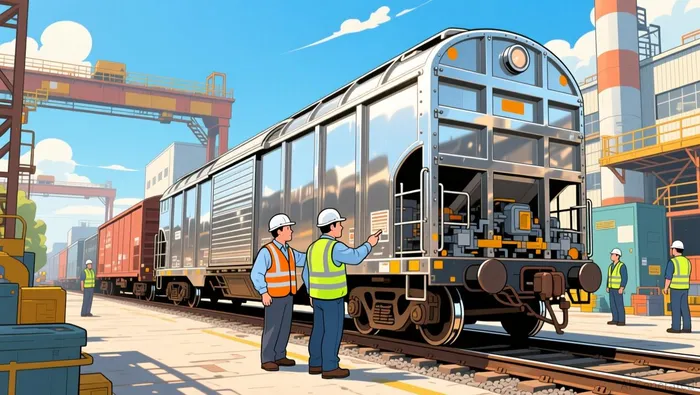
On the top line, the company's market position strengthened significantly, with revenue coming in at $113.1 million, beating forecasts of $110.31 million . The primary driver of this performance was a surge in the company's backlog to 3,972 units valued at $344 million, with approximately 3,000 orders received in Q2 alone . This represents a capture rate of 45 percent of industry new railcar orders, a substantial increase from just 5 percent market share in 2022 .
What Is Driving The Backlog Growth For FreightCar America?
The expansion in market share to 27 percent year-to-date 2026 is driven by a strategic focus on engineering and product innovation, allowing the company to capture a larger portion of new railcar orders . The record backlog provides visibility through 2028, offering a clear pipeline for future revenue generation as production ramps up. Management indicated that Q2 marked the low point for margins, with production expected to increase in the second half of the year, potentially alleviating some of the gross margin pressures observed in recent quarters .
How Do Analysts View The Future Prospects Of RAIL?
Wall Street analysts have established a one-year price target for FreightCar America at an average of $14.96, with a forecast range spanning from a low of $13.13 to a high of $16.80 . Despite the revenue beat and backlog growth, analyst sentiment remains cautious, with Weiss Ratings assigning a sell rating and Zacks Research upgrading to hold, resulting in an average analyst rating of Reduce . The consensus rating on MarketBeat reflects this mixed outlook, with analysts forecasting $0.35 EPS for the current fiscal year .
The company continues to struggle with profitability, reporting a negative net margin of 2.69 percent and a negative return on equity of 15.23 percent . The stock trades with a price-to-earnings ratio of -13.15 and a beta of 1.46, indicating higher volatility relative to the market . Fundamentally, the company operates with a market capitalization of $232.81 million, and the stock has traded between $6.57 and $14.90 over the past 52 weeks .
Looking ahead, full-year delivery guidance was cut to 3,500-3,900 railcars from previous higher outlooks, as order timing shifted toward early 2027 . Despite the guidance cut, EBITDA is expected to range between $36 million and $44 million, with expectations for improvement in the second half of the year . This suggests that while near-term production volumes may be lower, the underlying demand for railcars remains strong, providing a foundation for future growth as the company navigates its restructuring efforts and margin recovery .

Blending traditional trading wisdom with cutting-edge cryptocurrency insights.
Latest Articles
Stay ahead of the market.
Get curated U.S. market news, insights and key dates delivered to your inbox.


AInvest
PRO
AInvest
PRO




Comments
No comments yet