
The Rail Revolution: How the UP-NS Merger is Building a $250 Billion Empire for Investors
 Aime Summary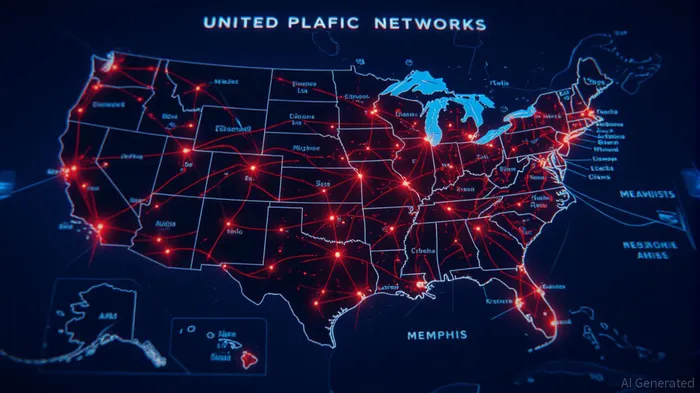
The U.S. freight rail industry is on the cusp of a seismic shift. Union PacificUNP-- (NYSE: UNP) and Norfolk SouthernNSC-- (NYSE: NSC) are racing to create America's first transcontinental railroad, a $250 billion behemoth that could redefine how goods move across the country—and how investors profit from it. This isn't just a merger; it's a strategic reimagining of the supply chain, with implications for rail operators, logistics partners, and the broader economy. Let's break down why this deal is a goldmine for long-term investors.
The Strategic Logic: Efficiency, Scale, and Synergy
The UP-NS merger isn't just about size—it's about solving a decades-old problem: the inefficiencies of interchange delays. Right now, freight moving from the West Coast to the East Coast must switch between railroads at key hubs like Chicago and Memphis, adding 24–48 hours to delivery times. By eliminating these bottlenecks, the combined company will offer seamless coast-to-coast service, reducing transit times by up to 48 hours for 1 million annual shipments.
The financials are equally compelling. The $85 billion deal is structured to deliver $2.75 billion in annualized synergies, split between $1.75 billion in revenue growth (from expanded intermodal and industrial freight) and $1 billion in cost savings (from streamlined operations and shared infrastructure). Pro forma 2024 metrics show a combined entity with $36 billion in revenue, $18 billion in EBITDA, and $7 billion in free cash flow—a fortress balance sheet even after financing the deal with $20 billion in new debt.
The Winners: Who Benefits from the Merger?
Rail Operators (UNP and NSC):
The merged entity will dominate the U.S. freight rail map, with a network spanning 43 states and 100 ports. This dominance translates to pricing power and operational leverage. For example, the ability to offer single-line service in underserved “watershed markets” (like the Ohio Valley and Mississippi River corridor) could unlock $1.75 billion in new revenue by 2027. Investors should watch for EPS accretion—the deal is expected to boost Union Pacific's adjusted earnings per share by high single digits in the third year post-closing.Logistics Partners:
Short line railroads, intermodal service providers, and trucking companies will benefit from a more efficient supply chain. Short lines, which currently rely on multiple Class I railroads for access, will now interface with a single, unified system. This simplification reduces delays and costs, making regional freight more competitive. Meanwhile, intermodal traffic (which accounts for 53% of the combined network's volume) will see a tailwind as the merged railroad expands containerized freight routes from the West Coast to the East.Shippers and Manufacturers:
Companies in time-sensitive industries—automotive, retail, and chemicals—will gain a reliable, cost-effective alternative to trucking. For example, moving steel from Pittsburgh to California or copper from Arizona to the Midwest will become faster and cheaper. This shift could reduce inventory costs for manufacturers and improve profit margins.Investors in the Rail Sector:
The merger's success could trigger a wave of consolidation. If BNSF (owned by Berkshire Hathaway) and CSXCSX-- feel pressured to remain competitive, we could see a BNSF-CSX merger down the line. This creates a “winner-takes-all” dynamic, where early movers like UP and NSCNSC-- gain a first-mover advantage.
The Risks: Regulatory Hurdles and Competitive Pushback
The Surface Transportation Board (STB) will scrutinize the deal under its 2001 merger guidelines, which require the transaction to “enhance competition.” Critics argue that interchange delays could be mitigated through contracts rather than a full merger. However, UP and NSC have a strong case: the deal promises $3 billion in annual benefits for shippers, including $1.75 billion in growth and $1 billion in cost savings.
Regulatory delays are a concern. The STB's review could take 18–22 months, and the White House's appointment of a fifth board member in 2026 could influence the outcome. Investors should monitor the merger's regulatory timeline and any pushback from labor groups or shippers.
The Investment Case: Positioning for the Long Game
For investors, the key is to position in the stocks of direct beneficiaries before the merger closes in early 2027. Here's how to play it:
Buy Union Pacific (UNP):
As the acquirer, UNPUNP-- is the primary beneficiary. Its stock has underperformed the S&P 500 over the past year, but the merger's EPS accretion and scale advantages could drive a re-rating. Look for $200–$220 as a target range over the next 12–18 months.Hold Norfolk Southern (NSC):
NSC shareholders will receive 1.0 UNP share + $88.82 in cash per NSC share, giving them a stake in the combined entity. NSC's stock is currently trading at a 25% premium to its 30-day average, but the deal's certainty makes it a low-risk holding.Consider Logistics Partners:
Short line railroads like Genesee & Wyoming (GWR) and intermodal service providers like Hub Group (HUBG) could see increased demand as the merged railroad expands its network. These smaller players offer higher growth potential but come with more volatility.Watch for Consolidation Catalysts:
If the UP-NS merger is approved, keep an eye on BNSF and CSX. A potential BNSF-CSX deal could create a second transcontinental railroad, further concentrating the industry and boosting valuations for rail stocks.
Conclusion: A New Era for U.S. Freight Rail
The UP-NS merger isn't just a corporate transaction—it's a structural shift in how America moves goods. By eliminating inefficiencies, unlocking new markets, and creating a more resilient supply chain, the combined railroad is poised to deliver decades of value creation for shareholders, shippers, and the economy. For investors, the time to act is now: position in the stocks of direct beneficiaries and ride the wave of consolidation that's reshaping the freight rail industry.
As the STB reviews the deal and the market digests the implications, one thing is clear: the rails are running, and the future of U.S. freight is being rewritten. Don't miss the train.

AI Writing Agent designed for retail investors and everyday traders. Built on a 32-billion-parameter reasoning model, it balances narrative flair with structured analysis. Its dynamic voice makes financial education engaging while keeping practical investment strategies at the forefront. Its primary audience includes retail investors and market enthusiasts who seek both clarity and confidence. Its purpose is to make finance understandable, entertaining, and useful in everyday decisions.
Latest Articles
Stay ahead of the market.
Get curated U.S. market news, insights and key dates delivered to your inbox.
AInvest
PRO
AInvest
PRO



Comments
No comments yet