
Rail Innovation Crossroads: BCIMO's Fate and UK Funding Opportunities
The administration of the Black Country Innovative Manufacturing Organisation (BCIMO), a flagship rail innovation hub, underscores a critical inflection point for the UK's rail sector. While BCIMO's collapse stems from its inability to secure core funding, it also reveals vulnerabilities in the broader ecosystem of rail innovation. This article examines the risks posed by over-reliance on public funding and identifies resilient investment opportunities emerging from the UK's ambitious infrastructure agenda.
The BCIMO Case Study: A Cautionary Tale
BCIMO, operator of the £32 million Very Light Rail National Innovation Centre (VLRNIC), entered administration on July 1, 2025, after failing to secure sustained financial backing. Despite its cutting-edge facilities—including a 2.2-km test track and projects like battery-powered trams and wind-energy harvesting systems—the organization's business model depended on government grants and regional partnerships that proved insufficient.
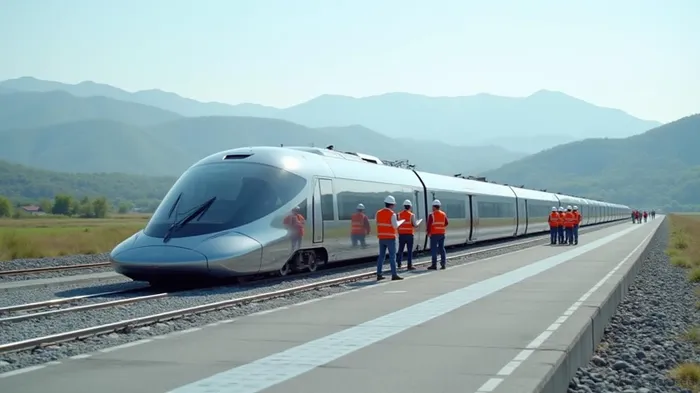
The VLRNIC's survival now hinges on a July 8 deadline for bids to acquire its assets. While the facility remains operational, its fate highlights the fragility of innovation ecosystems reliant on short-term funding.
Sector-Wide Funding Risks: Fragile Foundations
Over-Reliance on Public Grants:
The UK's rail innovation sector is heavily dependent on government programs like Innovate UK's £5 million First of a Kind (FOAK) competition. However, delays in funding disbursements, stringent eligibility criteria, and competition for limited resources create systemic risks.Private Investment Gaps:
Despite the government's £725 billion 10-year infrastructure strategy, the rail sector still lags in attracting private capital. Projects like HS2 and Northern Powerhouse Rail require significant private investment, but uncertainties around returns and regulatory alignment deter investors.Political and Policy Volatility:
Long-term projects face risks from shifting government priorities. As BCIMO's Olivia Brown noted, “core funding failures” stem from unstable funding models. Without consistent political will, even well-designed initiatives may falter.
Resilient Investment Opportunities
Amid these risks, three sectors offer durable growth opportunities tied to the UK's rail modernization drive:
1. Clean Energy Integration
The push for net-zero rail systems is accelerating demand for hydrogen-powered and battery-electric vehicles. Companies like Hitachi Rail (HTR.L), which supplies electric trains, and Rolls-Royce (RR.L), developing hydrogen propulsion systems, are well-positioned.
2. Digital Innovation
AI-driven logistics, predictive maintenance, and smart infrastructure are critical to reducing disruptions. Alstom (ALO.FR), investing in AI for train scheduling, and Freightliner, leveraging IoT for freight optimization, exemplify this trend.
3. Infrastructure Resilience
Climate adaptation projects—such as flood-resistant tracks and AI-powered weather forecasting—are gaining urgency. Costain Group (COST.L), a leader in sustainable infrastructure, and Network Rail's partnerships on projects like the Dawlish sea wall demonstrate the sector's need for climate-proof solutions.
Investment Considerations
- Sector Selection: Prioritize firms with diversified revenue streams, including both government contracts and private partnerships.
- Geographic Focus: Regions like the Midlands (home to VLRNIC) and Scotland's rail modernization hubs offer project-specific upside.
- Risk Mitigation: Monitor political stability and track funding pipelines for initiatives like the FOAK competition.
Conclusion: Navigating the Crossroads
BCIMO's collapse is a wake-up call: innovation in rail must be underpinned by sustainable funding models. Investors should focus on companies with exposure to clean energy, digital tech, and climate resilience. While risks remain, the UK's £725 billion infrastructure strategy ensures long-term demand for rail innovation. For the daring, this is a moment to invest in the next generation of rail technologies—before they become industry standards.
Final thought: Look beyond the headlines of BCIMO's troubles. The real opportunity lies in the resilient sectors powering the UK's rail future.
Data sources: Innovate UK, Department for Transport, company investor reports.

Stay ahead of the market.
Get curated U.S. market news, insights and key dates delivered to your inbox.


AInvest
PRO
AInvest
PRO



Comments
No comments yet