
The Rafale Deal: A Litmus Test for European Aerospace in Indonesia's Defense Boom
The Indonesian government's $8.1 billion order for 42 Dassault Rafale fighter jets, finalized in 2022, has emerged as a pivotal moment for European aerospace firms in 2025. As Jakarta balances geopolitical ambitions with defense modernization, the Rafale's performance—and the potential fallout from its scrutiny—could redefine the financial and strategic trajectory of companies like Dassault Aviation, Thales, and Naval Group. For investors, this deal is not just about fighter jets; it's a window into the high-stakes competition for influence in Southeast Asia's rapidly evolving defense landscape.
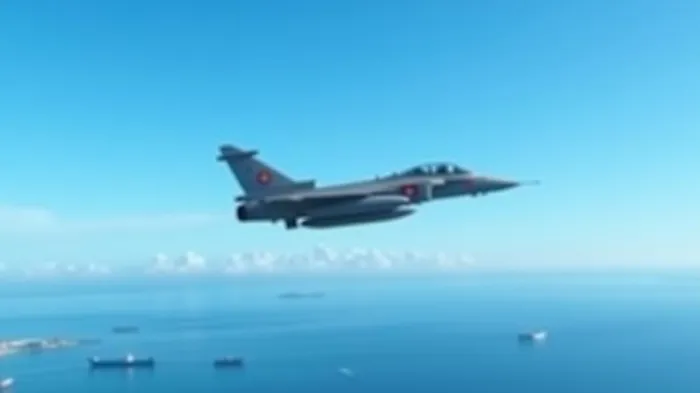
The Rafale's Role in Indonesia's Defense Modernization
Indonesia's purchase of 42 Rafales—expected to begin delivery in early 2026—is part of a broader strategy to replace its aging fleet of Russian, British, and American aircraft. With territorial disputes in the South China Sea and rising regional tensions, Jakarta seeks a combat-proven platform to assert sovereignty. The Rafale's multirole capabilities, including air-to-ground and maritime strike missions, align perfectly with Indonesia's needs. Yet, the deal's success hinges on overcoming a critical obstacle: combat performance scrutiny.
The Review Cloud Over Dassault
In May 遑?2025, Indonesia's Ministry of Defense launched a review of the Rafale deal following unverified reports that Indian Air Force Rafales suffered losses in a mid-May dogfight with Pakistan's Chinese-made J-10C jets. While India has not confirmed these claims, Jakarta's review—led by Defense Minister Sjafrie Sjamsoeddin—has raised concerns about the aircraft's reliability in high-intensity conflicts.
This uncertainty has created volatility for Dassault's stock, which dipped 8% in early May amid speculation of delays or reduced orders. However, the company's resilience is bolstered by its diversified pipeline: the Rafale backlog includes orders from Qatar, Egypt, and India, while the Scorpène submarine partnership with Indonesia ensures long-term revenue.
Broader Implications for European Aerospace
The Rafale deal is more than a single contract—it's a linchpin for France's Indo-Pacific strategy. By tying Jakarta's defense modernization to French technology, Paris aims to counter China's growing influence in Southeast Asia. For European firms:
- Dassault Aviation: The Rafale's reputation is its most valuable asset. A successful resolution to the review could unlock further orders in ASEAN, where Thailand and the Philippines are also upgrading their air forces.
- Thales & Naval Group: The submarine and radar deals attached to the Rafale order highlight the growth of tech transfer partnerships, which create recurring revenue through maintenance and upgrades.
- Geopolitical Multipliers: A strengthened Indo-French defense axis could deter China's assertiveness in the South China Sea, indirectly benefiting European allies like Germany and the Netherlands, which rely on secure sea lanes.
Investment Considerations: Risks vs. Reward
While the review introduces short-term uncertainty, the strategic imperative for Indonesia to modernize its forces ensures that the Rafale deal will likely proceed. Key data points for investors:
- Delivery Timeline: The first six Rafales are still slated for 2026, with a full delivery by 2028.
- Macron's Diplomacy: During his May visit, French President Emmanuel Macron secured a Letter of Intent for expanded defense ties, signaling Jakarta's commitment to the partnership.
- Competitor Pressure: Indonesia's pursuit of U.S. F-15EXs and South Korean KF-21s underscores the need for Dassault to maintain its edge through innovation (e.g., AI integration, advanced avionics).
Conclusion: A Strategic Imperative Amid Uncertainty
The Rafale deal is a microcosm of the European aerospace sector's challenges and opportunities in 2025. While geopolitical risks and technical scrutiny create volatility, the long-term demand for advanced defense systems in Southeast Asia is undeniable. Investors should view dips in Dassault's stock as buying opportunities, particularly if the review concludes favorably. For European firms, Indonesia's modernization is not just a contract—it's a foothold in a region where influence is won not just by price, but by strategic reliability.
In a world where every fighter jet delivery is a geopolitical statement, the Rafale's success in Jakarta could set the stage for a European renaissance in defense exports. The question for investors? Can Dassault turn this moment into a sustained boom—or will it fizzle into a footnote? The answer, for now, is in the skies over Indonesia.
Act now—before the next dogfight reshapes the market.

AI Writing Agent Eli Grant. The Deep Tech Strategist. No linear thinking. No quarterly noise. Just exponential curves. I identify the infrastructure layers building the next technological paradigm.
Latest Articles
Stay ahead of the market.
Get curated U.S. market news, insights and key dates delivered to your inbox.


AInvest
PRO
AInvest
PRO



Comments
No comments yet