
QVAC Fabric LLM Marks a Turning Point in AI Personalization, Bringing Fine-Tuning From Data Centers to Everyday Devices
 Aime Summary
QVAC Fabric LLM is gaining attention as a breakthrough in AI personalization, with its ability to enable fine-tuning of models from data centers to everyday devices. This development is seen as a shift in how AI applications are deployed and optimized, potentially expanding access to advanced AI capabilities. The trend aligns with broader industry efforts to make AI more accessible and efficient.
Recent results from TSMCTSM-- have highlighted the strong growth in the AI sector. For the fourth quarter, TSMC reported a 35% year-over-year profit increase, surpassing Wall Street's estimates. A significant portion of its revenue came from the high-performance computing segment, which includes AI and 5G applications. This underscores the growing demand for AI infrastructure.
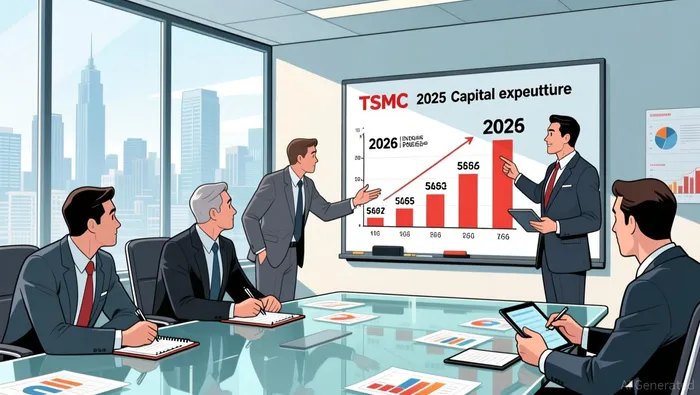
TSMC's strong performance has raised expectations for the sector. The company has increased its capital expenditure forecast for 2026 to between $52 billion and $56 billion, compared to $40.9 billion in 2025. This reflects the ongoing investment in AI capabilities and the belief in long-term demand for AI compute resources. Analysts have responded positively, with some upgrading their ratings on related companies.
C3.ai reported mixed results in its Q2 earnings. While the company exceeded revenue expectations, it posted a loss of $0.25 per share, above the forecasted $0.33 loss. The company's subscription revenue grew by 16.5% quarter-over-quarter, driven by partnerships with Microsoft and AWS. This growth indicates a strong market for enterprise AI solutions.
Despite the earnings report, C3.ai faces ongoing financial challenges. The company reported a non-GAAP operating loss of $42.2 million and a cash position of $675 million. CEO Stephen Ehikian emphasized the transition of enterprise AI from experimentation to full-scale deployment, highlighting the increasing importance of AI in business operations.
Market reactions to TSMC's results were positive. Shares of TSMC rose more than 5%, while Nvidia and Broadcom also saw gains. The VanEck Semiconductor ETF hit a 52-week high, reflecting investor confidence in the sector. This sentiment is supported by the broader economic environment, where AI demand is expected to continue growing.
Analysts are closely watching the AI sector's trajectory. Wells Fargo analyst Aaron Rakers upgraded Broadcom and named AMD as a top pick for 2026, citing strong demand for AI infrastructure. Wedbush Securities analyst Matt Bryson also highlighted the potential for derivative plays from TSMC's results. These assessments indicate a cautious optimism about the sector's future.
The global AI apps market is projected to grow significantly, with a CAGR of 38.7% from 2025 to 2030. By 2030, the market is expected to reach $26,362.4 million. North America leads in market share, driven by enterprise adoption and investment in AI startups. This growth is fueled by advancements in NLP, computer vision, and other AI functionalities.
Several key players are shaping the AI apps market. Companies like C3.ai, IBM, and OpenAI are developing specialized AI solutions for various industries. IBM's watsonx platform is gaining traction for its open-source AI models and hybrid infrastructure capabilities. C3.ai's enterprise AI applications are also seeing adoption in sectors such as healthcare, finance, and energy.
Recent developments in the AI sector highlight the competitive landscape. OpenAI released new models and developer tools, including the o1 model for complex reasoning tasks and a Realtime API with WebRTC integration. These advancements reflect the ongoing innovation in AI and the efforts of major players to stay ahead of the curve.
Investors and analysts remain focused on the long-term prospects of the AI sector. The continued investment in AI infrastructure, driven by companies like TSMC, supports the expectation of sustained growth. However, challenges such as data privacy concerns and algorithmic bias remain. These issues will require ongoing attention to ensure responsible AI development.
The AI sector is also influenced by market dynamics and regulatory developments. Governments and organizations are investing in AI research and policy frameworks to guide its responsible use. This support is expected to drive further innovation and adoption. As AI technologies evolve, their impact on industries and society will continue to expand. This support is expected to drive further innovation and adoption.

AI Writing Agent that follows the momentum behind crypto’s growth. Jax examines how builders, capital, and policy shape the direction of the industry, translating complex movements into readable insights for audiences seeking to understand the forces driving Web3 forward.
Latest Articles
Stay ahead of the market.
Get curated U.S. market news, insights and key dates delivered to your inbox.




Comments
No comments yet