

If your retirement plan draws income from manufactured-housing REITs, you know the two names everyone talks about: Sun CommunitiesSUI-- and Equity LifeStyle PropertiesELS--. They own the land under tens of thousands of factory-built homes, lease the sites to residents, and pay a dependable dividend. The problem, if you are living on that yield, is how little it returns today. A quieter colleague in the same business, UMH PropertiesUMH--, pays a good deal more at a far more ordinary price tag. That gap deserves a look — and, for an income investor, one question before it excites anyone: is the bigger check actually earned?
The quieter name and its engine
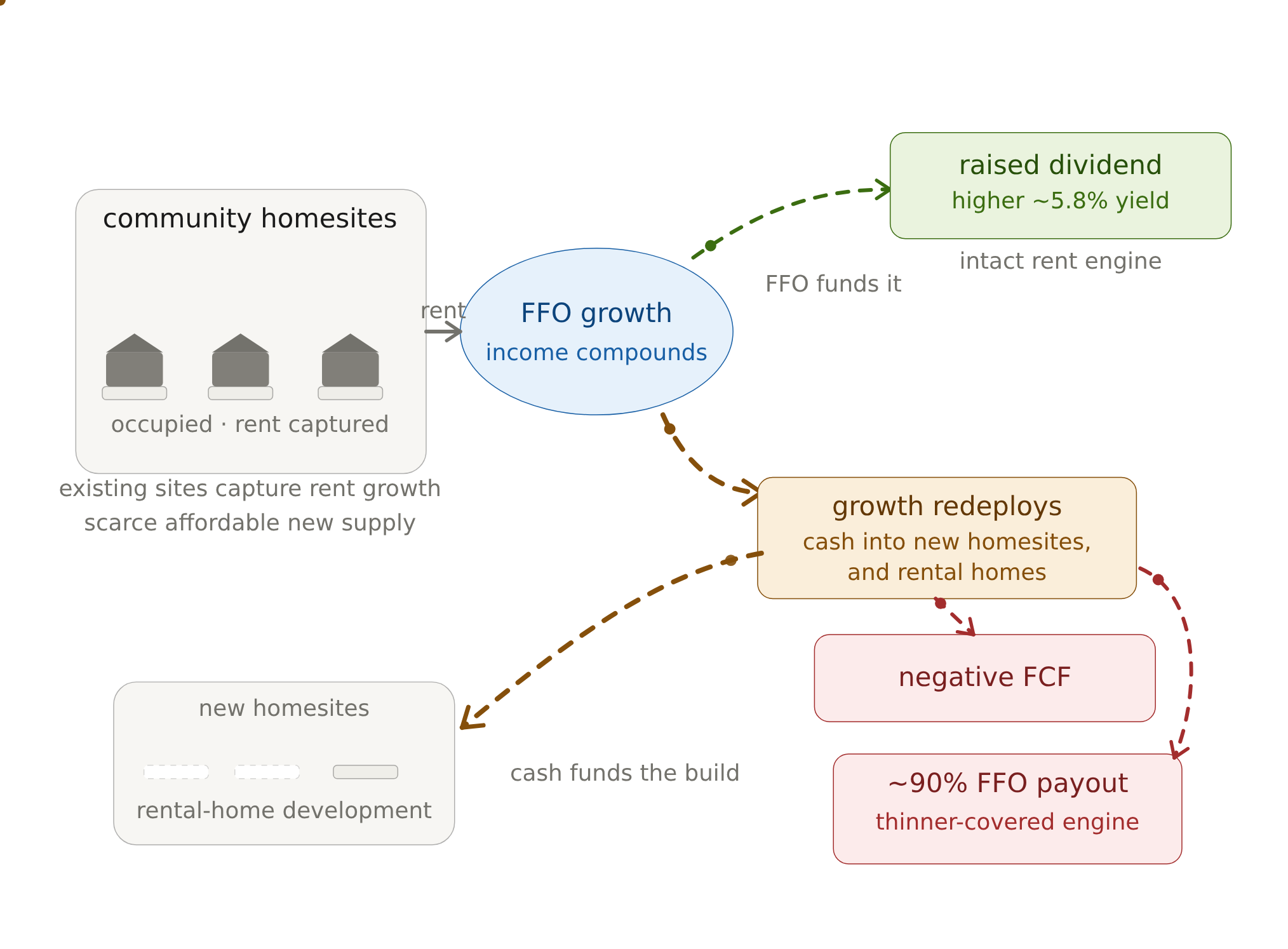
UMH runs the same land-lease model as the two household names. It owns manufactured-home communities and collects rent. Its edge is affordability: a structural shortage of affordable housing lets an existing homesite capture rent without requiring a flood of new supply. That showed up in the second quarter of 2026, when total income reached $71.6 million, up 7% from $66.6 million a year earlier, and normalized FFO per share — the REIT metric closest to distributable operating cash — came to $0.25, up from $0.23 in the same quarter of 2025. Per-share cash flow is growing, which is the first thing to check before trusting any dividend.
The thinner cushion behind the yield
Now the part a yield headline never shows you. Ainvest data put UMH's quarterly dividend at $0.225 a share, about $0.90 a year on a stock around $15.60 — the source of that roughly 5.8% yield. Divide that quarter's dividend by the quarter's normalized FFO and the payout works out to about 90%. The company hands back nearly every dollar of operating cash flow it earns. The marquee names hold more back: Sun Communities paid about 80% of its core FFO in the first quarter of 2026, and Equity LifeStyleELS-- about 68% of its 2026 normalized-FFO guidance. The FFO definitions differ from name to name, so the exact level is beside the point — the direction is not. UMHUMH-- keeps the thinnest cushion of the three.
There is a second, related item in the cash-flow statement. Over the trailing twelve months, Ainvest data show UMH's free cash flow was negative, roughly -$48.8 million, because it spent about $121.8 million on growth — buying and developing new homesites and rental homes — against about $90.4 million of operating cash flow. Here is what not to misread: that negative number is a growth bill, not a broken payout. The dividend is paid out of operating cash flow, and the company itself has said the quarterly payment is fully covered by cash flow. The deficit comes from reinvesting. Whether it stays comfortable depends on one thing — whether all that growth spending keeps converting into new rent and higher FFO, rather than simply piling on debt.

Choosing a point on the tradeoff
So you are not weighing free money against safe money. You are picking a spot on a tradeoff. The yield gap is not a larger check: UMH's annual dividend runs about $0.90 a share, smaller in dollars than Sun Communities' $4.48 or Equity LifeStyle's $2.17. It still yields the most — about 5.8% — simply because its shares cost far less, and those cheaper shares sit on a cheaper multiple: about 17x EV/EBITDA for UMH against roughly 29x for Sun and 24x for Equity LifeStyle. The higher current income and the thinner cushion are the same fact, not a flaw hiding behind a bigger number: UMH offers about 1.5 to 1.7 times the yield of its blue-chip siblings and keeps back almost nothing to earn it.
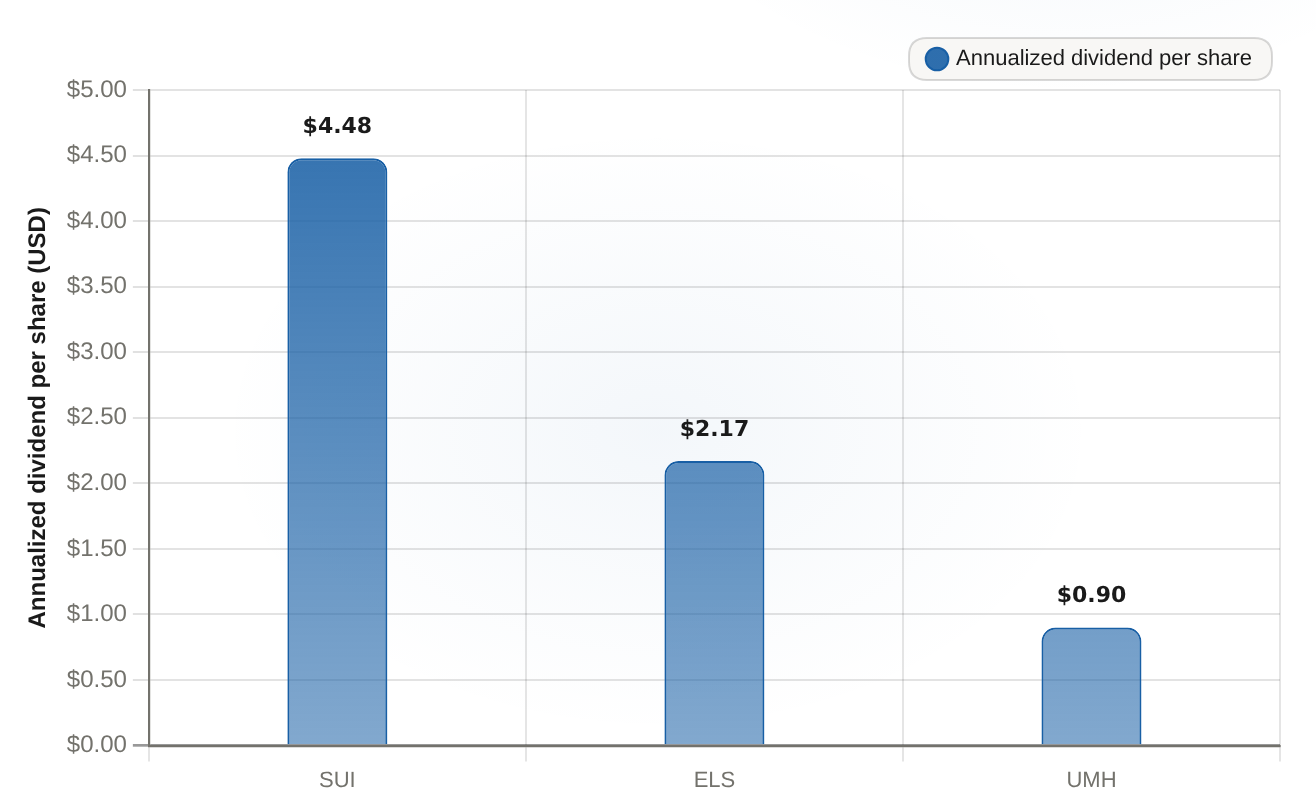
UMH pays a far smaller absolute dividend per share than the marquee peers, yet its ~5.8% yield is the highest because its shares trade at a much lower price.
| Company | Annualized dividend per share |
|---|---|
| SUI | 4.48 |
| ELS | 2.17 |
| UMH | 0.9 |
For the income investor, the honest way to hold this is with both eyes open. The 5.8% is real, paid by a cash-flow engine that is growing, and it carries a thinner cushion than the famous names — which is exactly why it pays more. As one holding inside a diversified income machine, that trade is reasonable; it stops being reasonable if the growth spending stops producing rent while the payout stays pinned near 90%. Watch that one relationship — UMH's normalized FFO per share against the dividend it must cover. As long as FFO keeps climbing, the 90% payout gets more comfortable, not riskier. When the engine stalls, the extra two points of yield start to look like a bet rather than a raise.








Comments
No comments yet