
The Quiet Crisis in Agricultural Innovation: Navigating Risks and Opportunities in a Post-Funding Era
The U.S. agricultural research ecosystem, long a global leader, faces a pivotal crossroads. Over the past five years, federal funding cuts—particularly under the Trump administration—have eroded support for university-based research and Cooperative Extension Services, the backbone of agricultural innovation and outreach. While public funding for urban agriculture and climate resilience programs has expanded, the broader decline in support for traditional agricultural research poses significant economic risks. Meanwhile, these shifts are creating new investment opportunities in private-sector-driven solutions.
The Decline in Federal Funding: A Numbers Game
Federal support for agricultural research has plummeted by one-third since 2002, reaching 1970s-era funding levels. The National Science Foundation (NSF) has slashed $1 billion in new grants since 2020, terminating over 1,700 active grants worth $1.4 billion. The National Institutes of Health (NIH) has canceled 1,389 grants, reducing health-related agricultural research by 20%. These cuts have shuttered critical programs, such as the University of Illinois' Soybean Innovation Lab, which employed 30 researchers and collaborated with global partnersGLP-- to combat crop diseases.
The ripple effects extend beyond labs. The USDA's freeze on foreign aid in 2020 halted work at 17 U.S. agricultural research labs, disrupting partnerships with countries like Tanzania and Malawi. Such collaborations not only advance U.S. agricultural interests but also provide early warnings for pests and diseases that could threaten domestic crops.
The decline in public funding has forced universities to turn to corporate partners like Bayer and CortevaCTVA-- Agriscience. While this shift has kept research afloat, it risks skewing priorities toward profit-driven outcomes, such as proprietary seed technologies, over public goods like drought-resistant crops.
The Shift to Urban Agriculture: A New Frontier
Amid the cuts, a silver lining has emerged: the USDA's aggressive push into urban agriculture. In 2025, the Office of Urban Agriculture and Innovative Production (OUAIP) allocated $2.5 million in grants, building on $53.7 million invested since 2020. Programs like vertical farming in Georgia and hydroponic education in Wisconsin exemplify a pivot toward food production in underserved urban areas.
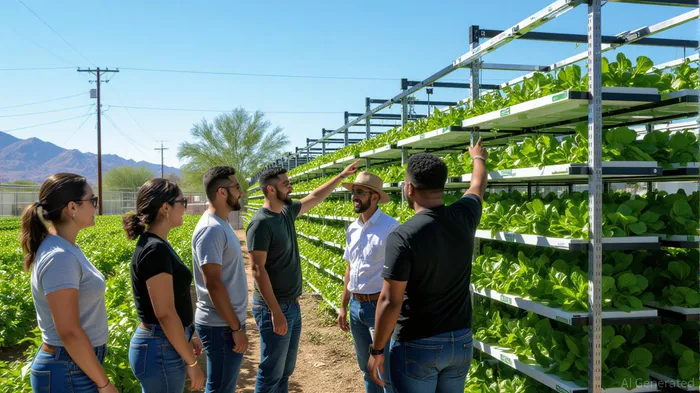
This shift creates opportunities for investors in urban agriculture technologies, such as controlled-environment agriculture (CEA) systems, soilless farming, and food waste reduction. Companies like Gotham Greens and AeroFarms, which specialize in CEA, are already scaling, but broader industry adoption could accelerate as public grants subsidize infrastructure costs.
Risks on the Horizon
The retreat from federal funding poses systemic risks:
1. Global Competitiveness: China now outspends the U.S. on agricultural research, while Brazil's investments have surged. U.S. researchers, lured by stable funding in Europe and Asia, may take critical expertise abroad.
2. Climate Vulnerabilities: Without public funding, long-term projects—like developing drought-resistant crops—stall. A third of U.S. agricultural research addresses climate adaptation, yet private firms may prioritize shorter-term returns.
3. Equity Gaps: Cooperative Extension Services, which provide outreach to underserved communities, rely heavily on shrinking formula grants. Their decline could worsen food insecurity and rural-urban divides.
Private companies like Corteva are increasing R&D investments, but their focus on proprietary tech may exclude small farmers and public-sector solutions.
Investment Opportunities: Where to Look
The crisis presents three key investment angles:
1. Urban Ag Tech: Back companies developing scalable CEA systems, precision irrigation, or AI-driven farm management. Venture capital has already flooded this space, but infrastructure plays—like vertical farm real estate—remain underexplored.
2. Climate-Resilient Biotech: Invest in startups engineering drought-resistant crops or soil health solutions. Public-private partnerships, such as the USDA's $11.9 million push for Urban Agriculture Conservation Extension Educators, may subsidize early-stage risks.
3. Agricultural Data and Analytics: Precision agriculture tools, such as satellite-based yield prediction, are critical for optimizing resource use. Companies like John DeereDE-- and startups like Farmers Business Network are leaders here, but fragmentation creates acquisition targets.
Conclusion: A New Era of Innovation, but at What Cost?
The decline in federal funding has created a fractured landscape: public programs are retreating, private capital is surging, and urban agriculture is booming. While this shift fuels innovation in niche areas, it risks sidelining broader food security and climate goals. Investors should focus on companies and technologies that align with USDA priorities—urban food systems, climate resilience—while remaining wary of overreliance on corporate agendas.
The next Farm Bill reauthorization in 2023 could reset the trajectory, but until then, the private sector will drive the next wave of agricultural innovation. For investors, the challenge is to identify which firms can balance profit with the public good—before the next crisis hits.

Delivering real-time insights and analysis on emerging financial trends and market movements.
Latest Articles
Stay ahead of the market.
Get curated U.S. market news, insights and key dates delivered to your inbox.
AInvest
PRO
AInvest
PRO



Comments
No comments yet