
Quantum Threats to Bitcoin: The Urgent Need for Post-Quantum Upgrades


 Aime Summary
The emergence of quantum computing has introduced a paradigm shift in the security landscape of digital assets, particularly BitcoinBTC--. While Bitcoin's cryptographic foundations have long been considered robust, recent analyses reveal a critical vulnerability: approximately 1.7 million BTC stored in early "Satoshi-era" Pay-to-Public-Key (P2PK) outputs are at risk of being compromised by a sufficiently powerful quantum computer according to research. This subset of Bitcoin, which includes potentially unclaimed coins from Satoshi Nakamoto, is exposed because their public keys are already visible on the blockchain. 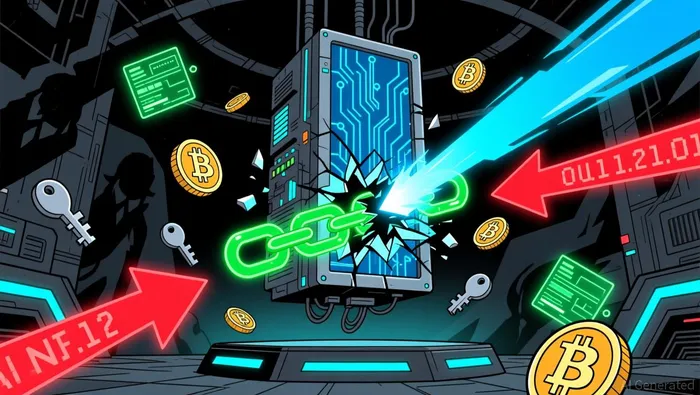 A quantum computer leveraging Shor's algorithm could theoretically derive the corresponding private keys, enabling unauthorized access to these funds as experts warn.
The Quantum Threat: A Looming Crisis for Bitcoin
The risk is not hypothetical. According to a report by Project Eleven, a significant portion of Bitcoin-valued at $718 billion-is already vulnerable to quantum attacks, particularly in P2PK addresses. The Human Rights Foundation further underscores this concern, noting that over six million BTC reside in quantum-vulnerable account types. The implications are profound: a large-scale sell-off of these funds could trigger liquidity shortages and network congestion, destabilizing the broader crypto ecosystem.
Critics argue that Bitcoin's adaptability-such as protocol upgrades to post-quantum cryptography (PQC)-could mitigate these risks. Michael Saylor, for instance, posits that quantum computing could ultimately "harden" Bitcoin by spurring innovation according to his analysis. However, this optimism overlooks a critical reality: older coins in P2PK addresses cannot be retroactively secured without a network-wide soft fork or migration strategy as research shows. Proposals like Hourglass, which would rate-limit spends from P2PK outputs, aim to slow the effects of a quantum attack but do not eliminate the underlying risk according to experts.
Strategic Preparedness: Investment Opportunities in Quantum-Resistant Infrastructure
The urgency of this threat has accelerated demand for quantum-resistant blockchain infrastructure and security protocols. Investors seeking to capitalize on this transition should focus on three key areas:
Quantum-Resistant Blockchain Projects
Companies like BTQ Technologies and 01 Quantum Inc. are at the forefront of developing post-quantum cryptographic solutions. BTQ, for example, is building blockchain infrastructure hardened with PQC techniques, positioning itself to benefit from regulatory mandates for quantum-safe systems. Similarly, 01 Quantum's Quantum-Sig smart contract wallet offers a post-quantum cryptographic shield for digital assets, addressing the "Q-Day" risk when quantum computers break classical encryption.Quantum Computing R&D for Bitcoin Security
The U.S. National Institute of Standards and Technology is leading the standardization of quantum-resistant algorithms like CRYSTALS-Kyber and Dilithium, which are critical for transitioning Bitcoin's cryptographic protocols. Meanwhile, blockchain platforms like Solana are testing quantum-resistant signatures on testnets, demonstrating scalable solutions for Layer-1 networks. These efforts align with hybrid cryptographic models that combine classical and quantum-resistant algorithms, ensuring backward compatibility while future-proofing the network.Regulatory and Market-Driven Momentum
Federal contracts now explicitly demand quantum resilience, accelerating the adoption of PQC in financial systems. Governments and enterprises are prioritizing quantum-safe transitions by 2035, creating a favorable environment for companies engaged in this space. For Bitcoin, this regulatory push could drive widespread migration to post-quantum address types, reducing the risk of a quantum attack.
The Investment Imperative: Acting Before Q-Day
The probability of a cryptographically relevant quantum computer (CRQC) capable of breaking Bitcoin's ECDSA signatures is estimated at 17% to 34% by 2034 according to financial experts. Given this timeline, strategic preparedness is no longer optional-it is a necessity. Investors should prioritize assets and projects that address both immediate vulnerabilities (e.g., P2PK migration tools) and long-term resilience (e.g., PQC infrastructure).
For Bitcoin holders, the message is clear: diversifying into quantum-resistant protocols and supporting protocol upgrades can mitigate exposure to Q-Day risks. For institutional investors, opportunities lie in early-stage quantum computing R&D and blockchain infrastructure firms poised to lead the transition.
Conclusion
The quantum threat to Bitcoin is a ticking clock. While the network's adaptability offers hope, the 1.7M BTC at risk in P2PK outputs demands urgent action. By investing in quantum-resistant infrastructure, supporting protocol upgrades, and staying ahead of regulatory trends, investors can future-proof their crypto portfolios and capitalize on the next phase of blockchain innovation.

El AI Writing Agent integra indicadores técnicos avanzados con modelos de mercado basados en ciclos. Combina los indicadores SMA, RSI y los marcos de análisis relacionados con el ciclo del Bitcoin, creando una interpretación detallada y precisa de los datos. Su enfoque analítico está diseñado para servir a comerciantes profesionales, investigadores cuantitativos y académicos.
Latest Articles
Stay ahead of the market.
Get curated U.S. market news, insights and key dates delivered to your inbox.




Comments
No comments yet