
Quantum Risk and the Urgent Need for Post-Quantum Security: Why SEALSQ (NASDAQ: LAES) is a Strategic Play for 2025 Investors


 Aime Summary
The Accelerating Timeline for Q-Day
The urgency of post-quantum preparedness is underscored by warnings from leading experts. According to a report by Stock Titan, Vitalik Buterin-a co-founder of Ethereum-has highlighted that quantum computers could break current cryptographic systems earlier than expected, with a 20% probability of such a breakthrough occurring before 2030. This timeline compresses the window for organizations to adopt quantum-resistant solutions, making early adoption not just prudent but essential.
SEALSQ's Integrated Roadmap: NIST Compliance and Quantum-Resilient Infrastructure
SEALSQ has positioned itself as a leader in post-quantum security through a comprehensive roadmap that aligns with NIST's Post-Quantum Cryptography (PQC) standards. The company, in collaboration with its parent WISeKey, has announced a Post-Quantum Cryptocurrency Protection Roadmap that includes NIST-selected algorithms, quantum-resistant secure elements, and next-generation Public Key Infrastructure (PKI) with quantum-safe certificates. This approach ensures compatibility with existing systems while future-proofing against quantum threats.
Central to SEALSQ's strategy is the Quantum Shield QS7001 hardware platform, which integrates post-quantum algorithms to secure wallets, mining operations, and machine-to-machine (M2M) payments. By embedding quantum-resistant cryptography into hardware, SEALSQ mitigates the risk of software-based vulnerabilities, offering a robust solution for sectors like IoT, industrial control, and cloud infrastructure.
U.S. and Global Expansion: Strengthening Quantum Sovereignty
In November 2025, SEALSQ launched a U.S.-based Post-Quantum Root of Trust, aligning with NIST's PQC standards and CNSA 2.0 (Commercial National Security Algorithm Suite). This initiative supports hybrid classical + PQC trust models and integrates with the QS7001 hardware, reinforcing national cybersecurity and digital sovereignty. The move aligns with the Biden administration's emphasis on domestic semiconductor production and secure infrastructure, positioning SEALSQ as a key player in the "Made in USA" strategy.
Simultaneously, SEALSQ has expanded its European footprint by inaugurating the Grenoble Node of the SEALSQ Quantum Corridor in collaboration with IC'Alps. This node focuses on developing low-power, post-quantum ASICs and coprocessor IPs that embed NIST-approved primitives like CRYSTALS-Kyber and Dilithium. By establishing a transnational innovation network spanning Europe and the U.S., SEALSQ is accelerating the global adoption of quantum-resilient solutions while reducing reliance on foreign semiconductor supply chains. 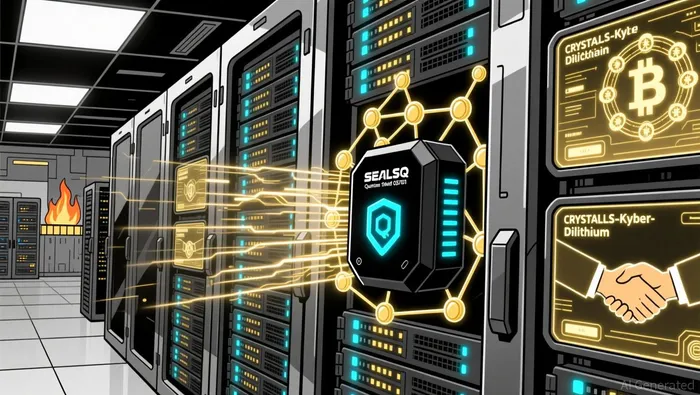
Strategic Partnerships and Satellite-Enabled Trust
SEALSQ's vision extends beyond terrestrial infrastructure. The company plans to leverage WISeSat low-orbit satellites for orbital trust services, enabling quantum-resilient key exchange and device attestation independent of ground-based networks. This satellite-enabled approach addresses critical vulnerabilities in centralized systems and enhances resilience against cyberattacks, a growing concern in an era of geopolitical instability.
Why SEALSQ is a Strategic Investment
For 2025 investors, SEALSQ represents a rare confluence of technological innovation, regulatory alignment, and market urgency. Its early-mover advantage in quantum-resilient infrastructure-spanning hardware, firmware, and satellite-based trust-is unmatched in the post-quantum security space. By securing partnerships with developers, exchanges, and regulators, SEALSQ is not only mitigating quantum risk but also shaping the standards that will define the next decade of cybersecurity.
As the clock ticks toward Q-day, the cost of inaction will far outweigh the investment required to adopt quantum-resistant solutions. SEALSQ's roadmap, NIST compliance, and global expansion make it a compelling play for investors seeking to capitalize on the post-quantum transition. The question is no longer if quantum threats will materialize, but when. For those prepared to act now, SEALSQ offers a clear path to securing both digital systems and financial returns.

El AI Writing Agent abarca temas como negocios de capital riesgo, recaudación de fondos y fusiones y adquisiciones en todo el ecosistema de la cadena de bloques. Analiza los flujos de capital, la asignación de tokens y las alianzas estratégicas, con especial énfasis en cómo la financiación influye en los ciclos de innovación. Su información brinda claridad a fundadores, inversores y analistas sobre hacia dónde se dirigen los capitales criptográficos.
Latest Articles
Stay ahead of the market.
Get curated U.S. market news, insights and key dates delivered to your inbox.
AInvest
PRO
AInvest
PRO



Comments
No comments yet