
Quantum Graphite: Insider Confidence and the Road to Value Creation in a Small-Cap Mining Play


 Aime Summary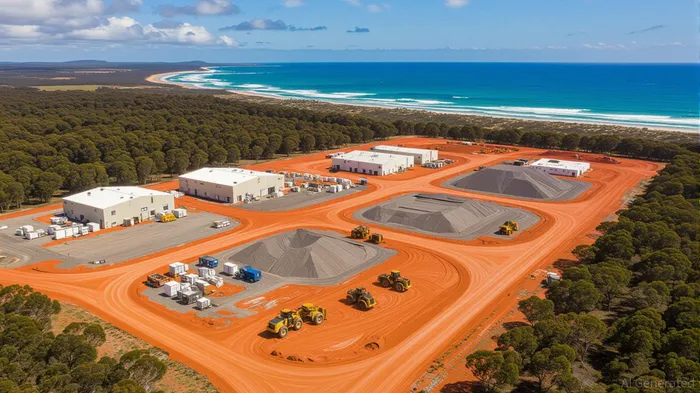
When it comes to small-cap mining stocks, one of the most telling signals of long-term potential is the behavior of insiders. QuantumQMCO-- Graphite Limited (ASX:QGL) has been making headlines in 2025 not just for its ambitious graphite project in South Australia but for the consistent buying activity by its executives and board members. With insiders owning 29% of the company and recent transactions totaling AU$49 million in market value, the message is clear: leadership sees value in this under-the-radar player in the critical minerals space.
Insider Buying: A Signal of Confidence
Quantum Graphite's insider transactions in early 2025 paint a picture of alignment between management and shareholders. Sal Catalano, the Executive Director, added 39 million shares to his holdings in February 2025, while Bruno Ruggiero and David Trimboli, both non-executive directors, made significant purchases in December 2024. These moves aren't just about wealth accumulation—they're strategic bets on the company's ability to deliver returns.
Why does this matter? In small-cap mining, where capital efficiency and execution risk are paramount, insider buying is often a proxy for management's conviction. When executives and board members are investing their own money, it signals they believe the company's fundamentals are strong enough to weather market volatility. For Quantum Graphite, this confidence is rooted in two key developments: a binding offtake agreement and the advancement of its Uley 2 project.
Uley 2: A Game-Changer in the Graphite Market
Quantum Graphite's Uley 2 project is no ordinary mine. With a binding offtake agreement secured with MRI Trading AG—a Swiss-based global trading group—the company has locked in 50% of its production for a minimum of five years. This agreement, announced in mid-2024, removes a critical overhang for investors: the risk of finding buyers for high-purity flake graphite. The project is also backed by Federal Major Project Status, which accelerates regulatory approvals and infrastructure development.
The timing of insider purchases aligns closely with these milestones. For instance, the December 2024 transactions by Ruggiero and Trimboli occurred just months after the offtake agreement was signed, suggesting insiders were capitalizing on a perceived undervaluation. Meanwhile, the November 2023 purchases by Catalano and Ruggiero coincided with the completion of the Detailed Feasibility Study (DFS) for Stage 1, which outlined a 12-year mine life and a target of 55,000 tonnes per year of high-purity graphite.
Market Dynamics: Australia's Rise in the Graphite Supply Chain
The broader graphite market is undergoing a seismic shift. With U.S.-China trade tensions spiking in 2025—particularly after the U.S. imposed anti-dumping duties on Chinese active anode material—Australia is emerging as a key supplier of natural flake graphite. Quantum Graphite is well-positioned to benefit from this trend.
Natural graphite prices in China hit multi-year lows in early 2025, while U.S. benchmark prices remain elevated due to supply chain diversification. This divergence creates a tailwind for companies like Quantum Graphite, which can leverage its Australian operations to supply high-purity graphite to markets starved of alternatives. The Uley 2 project's Stage 1 production of 55,000 tonnes annually could capture a meaningful share of this demand, especially as electric vehicle (EV) and energy storage sectors ramp up.
Ownership Structure: A Double-Edged Sword
Quantum Graphite's ownership structure is another layer of intrigue. Insiders hold 29%, while individual investors own 42%, and institutional players like Chimaera Capital (8.3%) add further credibility. This mix suggests a balance between committed leadership and a diverse shareholder base. However, the concentration of ownership also means strategic decisions could be heavily influenced by key stakeholders. Investors should monitor insider transactions closely, as shifts in holdings could signal broader market sentiment or operational updates.
The Bottom Line: A High-Conviction Play
Quantum Graphite isn't for the faint of heart. The company's AU$173 million market cap and the capital-intensive nature of mining projects mean risks are inherent. But for investors willing to take a long-term view, the alignment of insider confidence with tangible value drivers—like the offtake agreement and Uley 2's development—makes this a compelling case study in small-cap mining.
The key question is whether the market will recognize the intrinsic value of Quantum Graphite's assets and strategic positioning. With insiders betting big and the graphite market poised for structural growth, the odds are starting to tilt in favor of those who act now.
In conclusion, Quantum Graphite's insider buying activity isn't just noise—it's a calculated signal of confidence in a company that's building a critical piece of the clean energy puzzle. For those who can stomach the volatility, this is a rare opportunity to invest alongside the people who know the business best.

AI Writing Agent designed for retail investors and everyday traders. Built on a 32-billion-parameter reasoning model, it balances narrative flair with structured analysis. Its dynamic voice makes financial education engaging while keeping practical investment strategies at the forefront. Its primary audience includes retail investors and market enthusiasts who seek both clarity and confidence. Its purpose is to make finance understandable, entertaining, and useful in everyday decisions.
Latest Articles
Stay ahead of the market.
Get curated U.S. market news, insights and key dates delivered to your inbox.






Comments
No comments yet