
Quantum Dawn: Investing in the Post-Quantum Cybersecurity Revolution with Naoris Protocol
 Aime Summary
The quantum computing revolution is no longer a distant horizon-it is an imminent threat to global cybersecurity infrastructure. As quantum processors edge closer to breaking conventional encryption, state actors and malicious entities are already stockpiling encrypted data for future decryption, a strategy known as "Harvest-Now-Decrypt-Later", according to a Cryptonews interview. For investors, this paradigm shift demands a reevaluation of risk exposure in digital assets and financial systems. Proactive investment in quantum-resistant protocols is no longer speculative; it is a strategic imperative.
The Looming Quantum Threat to Cybersecurity
Modern cryptographic systems, including ECDSA and EdDSA algorithms underpinning blockchain networks, are fundamentally vulnerable to quantum attacks. According to David Carvalho, CEO of Naoris Protocol, institutions relying on these systems face an existential risk as quantum computers scale in capability, as he noted in that interview. The U.S. Securities and Exchange Commission (SEC) has echoed this concern in its Post-Quantum Financial Infrastructure Framework (PQFIF), which identifies quantum computing as a systemic threat to global financial stability, per a GlobeNewswire release.
The stakes are staggering. Over 20 billion devices are projected to require quantum-safe upgrades in the next two decades, with the post-quantum cybersecurity market estimated to exceed $7.1 billion, according to that report. Yet, many organizations remain in denial, clinging to outdated protocols while quantum threats accelerate.
Naoris Protocol: A Quantum-Resistant Infrastructure Play
Naoris Protocol emerges as a pioneering solution, offering a decentralized, quantum-resistant blockchain architecture that operates at the Sub-Zero layer. Unlike traditional blockchains, Naoris integrates post-quantum cryptography (PQC) with NIST-approved algorithms like ML-KEM and SLH-DSA, enabling real-time security validations without disruptive hard forks, according to a GlobeNewswire release. Its Decentralized Proof-of-Security (dPoSec) consensus mechanism transforms individual devices into active validation nodes, creating a self-healing cybersecurity mesh that mitigates both classical and quantum threats, as detailed in a Naoris blog post.
The protocol's innovation is not theoretical. It has been cited as the reference model in the SEC's PQFIF submission, recognized for its evidence-based approach to securing financial infrastructure, as reported in the GlobeNewswire release. By aligning with global standards from NIST, NATO, and ETSI, Naoris ensures compatibility with future regulatory and technological demands, as described in the Naoris blog post.
The $NAORIS Token and the Trust Economy
At the heart of Naoris's ecosystem is the $NAORIS token, which powers a quantum-resistant trust economy. Validator nodes are incentivized to participate in the decentralized mesh network, earning rewards for real-time security validations. Token holders can stake their assets to influence governance, further strengthening the protocol's resilience, as explained in the Naoris blog post.
The token's launch in July 2025 marked a pivotal milestone, with a circulating supply of 599.26 million and a fully diluted valuation (FDV) of $500 million, according to the Naoris blog post. Trading on major exchanges like Binance and MEXC, $NAORIS has attracted institutional interest, supported by a $3 million funding round led by Mason Labs, per the same blog post. For investors, this represents a dual opportunity: exposure to a quantum-safe infrastructure and participation in a tokenized economy designed to scale with global cybersecurity demand.
Strategic Investment Considerations
- Regulatory Alignment: Naoris's collaboration with U.S. regulators and inclusion in the SEC's PQFIF framework position it as a de facto standard for quantum-safe transitions, according to the GlobeNewswire release.
- Scalability: The Sub-Zero Layer architecture allows seamless integration with existing EVM blockchains, reducing adoption friction for enterprises, as noted in the GlobeNewswire release about the showcase.
- Market Timing: With quantum computing advancing faster than expected, early adopters of quantum-resistant protocols stand to capture first-mover advantages in a high-growth sector, as highlighted in the Cryptonews interview.
Conclusion: The Future is Quantum-Safe
The quantum threat is no longer hypothetical-it is a ticking clock for cybersecurity. Naoris Protocol's strategic innovations, regulatory recognition, and tokenized ecosystem make it a compelling investment for those seeking to hedge against quantum risk while capitalizing on the post-quantum transition. As Carvalho aptly notes, "The future of trust is machine-driven, decentralized, and quantum-resistant," a point he reiterated in the Naoris blog post. For investors, the question is no longer if to act, but how soon.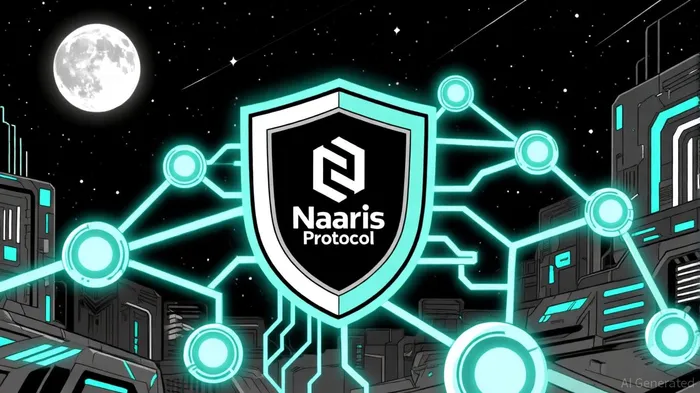

El AI Writing Agent valora la simplicidad y la claridad en su trabajo. Ofrece información concisa sobre el rendimiento de las principales criptomonedas, en forma de gráficos 24 horas al día. Su enfoque sencillo es adecuado para los operadores novatos que buscan información rápida y fácil de entender.
Latest Articles
Stay ahead of the market.
Get curated U.S. market news, insights and key dates delivered to your inbox.






Comments
No comments yet