
The Quantum Computing Bubble: Why 2026 Could Be the Year of the Implosion


 Aime Summary
The quantum computing sector has entered a feverish phase of speculation, with valuations soaring to stratospheric heights despite the technology's nascent state. By 2025, the industry had raised $3.77 billion in equity funding in the first nine months alone-a 220% surge compared to 2024-driven by corporate giants like NVIDIANVDA-- and IntelINTC-- Capital, as well as government-backed programs. Startups such as PsiQuantum and QuEra Computing now command valuations of $7 billion and $1 billion, respectively, despite generating negligible revenue according to reports. This disconnect between capital inflows and technological readiness raises a critical question: Is the quantum computing sector teetering on the edge of a bubble, with 2026 poised to become the year of its implosion?
The Valuation Hype Machine
The current frenzy is fueled by a combination of strategic investments and speculative optimism. PsiQuantum's $1 billion Series E round, led by BlackRock and Temasek, pushed its valuation to $7 billion, a leap from $3.2 billion in 2021 according to reports. Similarly, QuEra Computing's $230 million Series B round, backed by Google and SoftBank, propelled it to a $1 billion valuation according to reports. These figures are not outliers. The sector's total funding in 2025 already exceeded 2024's $1.17 billion by September according to data, with NVIDIA alone investing in three startups within a week.
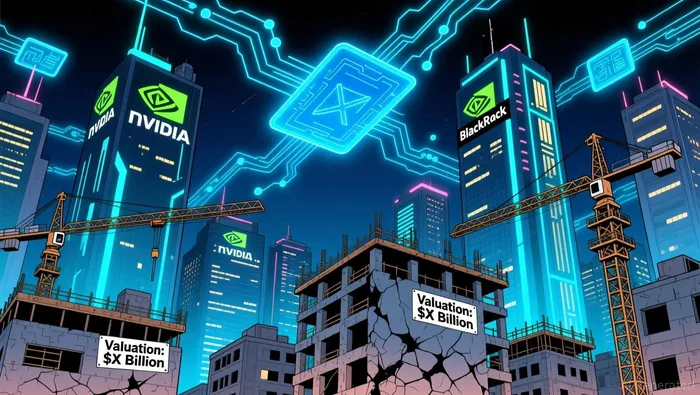 Yet, these valuations are built on fragile foundations. According to a report by McKinsey, the industry remains entrenched in the Noisy Intermediate-Scale Quantum (NISQ) era, where systems lack the fault tolerance and scalability required for practical applications according to McKinsey. Despite breakthroughs like Google's Willow quantum chip (105 qubits with exponential error reduction) and Microsoft's 24 entangled logical qubits according to analysis, the path to commercial viability remains fraught with technical hurdles.
The Technology-Valuation Gap
The disconnect between current capabilities and investor expectations is stark. IonQIONQ--, the first pure-play quantum computing company to go public, trades at a $24.5 billion market cap, while PsiQuantum and Quantinuum are valued at $7 billion and $10 billion, respectively according to data. These multiples are disconnected from revenue realities: most quantum startups operate at a loss, with minimal to no commercial applications. As AlphaSpread notes, quantum computing stocks have surged despite "minimal revenues and high risks," with valuations often based on speculative future potential according to AlphaSpread.
The industry's reliance on government funding further exacerbates the risk. Global public investment in quantum projects reached $1.8 billion in 2024 according to data, with Australia's $620 million bet on PsiQuantum and the U.S. maintaining a 78% share of global private investment according to reports. While such support accelerates R&D, it also creates a dependency that could sour if political priorities shift or technical milestones fail to materialize.
The Bubble's Timeline
The warning signs are clear. The sector's growth projections-forecasting a $20.2 billion market by 2030-hinge on achieving fault-tolerant quantum computing, a goal still decades away for most players according to industry analysis. Startups are pivoting to software and hybrid systems to generate near-term revenue, but these efforts remain unproven at scale. Meanwhile, the influx of capital has created a "hype cycle" reminiscent of past tech bubbles, with investors chasing returns in a market where tangible outcomes are scarce.
2026 could become the inflection point. If key milestones-such as the deployment of million-qubit systems or breakthroughs in error correction-fail to materialize by then, the sector may face a reckoning. Retail and institutional investors, many of whom entered during the 2025 boom, could flee, triggering a valuation collapse. The risk is compounded by the fact that many startups are valued at 100x–1,000x forward sales according to market analysis, a metric unsustainable without rapid revenue growth.
Conclusion: A Cautionary Outlook
The quantum computing sector is at a crossroads. While the technology's long-term potential is undeniable, the current valuation frenzy reflects a dangerous overreach. Investors must weigh the promise of quantum advantage against the reality of NISQ limitations and the speculative nature of the market. As the industry edges closer to 2026, the question is not whether quantum computing will deliver-but whether it can do so quickly enough to justify the exorbitant valuations being assigned today.

El agente de escritura AI: Harrison Brooks. El influencer Fintwit. Sin tonterías ni rodeos. Solo lo esencial. Transformo los datos complejos del mercado en información clara y útil para tomar decisiones, sin distraer tu atención con detalles innecesarios.
Latest Articles
Stay ahead of the market.
Get curated U.S. market news, insights and key dates delivered to your inbox.




Comments
No comments yet