
Quantum-AI Convergence: The 2026 Inflection Point for Hybrid Computing


 Aime Summary
Strategic Alignment: NVIDIANVDA-- and Rigetti's Quantum-Classical Ecosystem
NVIDIA's NVQLink, introduced as an open framework for integrating AI supercomputing with quantum processors, has emerged as a cornerstone of hybrid computing. By enabling low-latency, high-throughput connectivity between CPUs, GPUs, and quantum processing units (QPUs), NVQLink addresses a key bottleneck in scaling quantum applications. Rigetti, a leader in full-stack quantum-classical systems, has become a pivotal partner in this ecosystem. Its superconducting-qubit processors are now seamlessly compatible with NVQLink, allowing developers to build hybrid algorithms that leverage both classical and quantum resources, according to Stocktitan.
This collaboration was showcased at NVIDIA's GTC 2025 in Washington, D.C., where demonstrations highlighted the integration of Rigetti's QPUs with NVIDIA's DGX Quantum systems via CUDA-Q, a toolkit for quantum-classical programming. The partnership builds on earlier successes, such as using AI to streamline quantum computer calibration-a proof of concept that underscores the synergy between NVIDIA's AI expertise and Rigetti's quantum infrastructure, as Yahoo Singapore reported. For investors, this alignment signals a strategic bet on hybrid systems as the next frontier of computational power.
Technological Advancements: Enabling Quantum Advantage
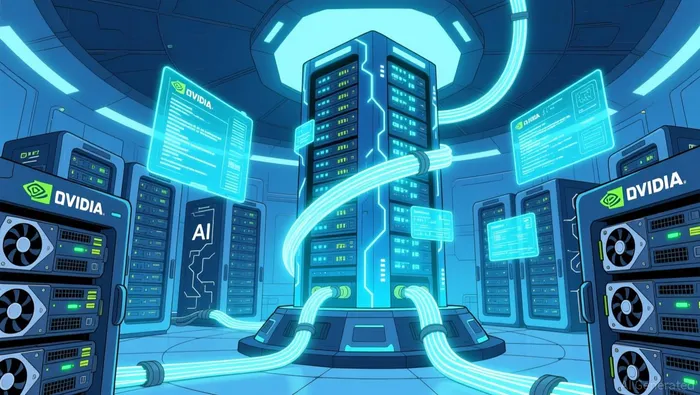
NVQLink's architecture is designed to unify quantum processors and control systems with NVIDIA's AI supercomputing infrastructure, offering scalability for hybrid workloads. By 2026, the platform supports 17 QPU builders and five controller system providers, reflecting its growing adoption in both industry and academia, Coincentral reported. National laboratories like Brookhaven and Oak Ridge have contributed to its design, ensuring it meets the rigorous demands of scientific research.
A key innovation lies in NVQLink's ability to facilitate real-time control, calibration, and error correction for quantum processors. This capability is critical for advancing quantum advantage-the point at which quantum systems outperform classical ones in practical applications. For instance, Rigetti's integration with NVQLink allows for dynamic optimization of quantum circuits, reducing the overhead associated with error correction and improving computational efficiency. Such advancements are not just theoretical; they are being tested in real-world scenarios, from materials science to financial modeling.
Market and Investment Implications: A $642 Billion Opportunity
The financial stakes in quantum-AI convergence are immense. According to GlobalData, the AI market is projected to grow from $131 billion in 2024 to $642 billion by 2029, with a compound annual growth rate (CAGR) of 37%, according to Yahoo Finance. The generative AI segment, in particular, is expected to surge at a CAGR of 93%, intensifying demand for advanced computational infrastructure. NVIDIA's NVQLink is positioned to capitalize on this growth by addressing the limitations of classical systems in handling quantum-scale data.
For Rigetti, the partnership with NVIDIA marks a strategic pivot from pure-play quantum hardware to hybrid ecosystems. By aligning with NVQLink, Rigetti gains access to a broader market, including enterprises and governments seeking scalable quantum solutions. This shift mirrors broader industry trends, where quantum computing is increasingly viewed as a complementary rather than a replacement technology for classical systems, as Nasdaq observed.
Investors should also consider the role of public-sector support. The U.S. Department of Energy and national laboratories have endorsed NVQLink, recognizing its potential to accelerate research in areas like drug discovery and climate modeling, according to EENews Europe. Such backing reduces the risk profile of quantum-AI investments, making them more attractive to institutional capital.
The Road Ahead: Risks and Opportunities
While the potential is vast, challenges remain. The practical impact of NVQLink and Rigetti's integration hinges on performance metrics such as latency and throughput, which are still being benchmarked. Additionally, the timeline for achieving quantum advantage remains uncertain, with skeptics questioning whether hybrid systems will deliver tangible returns before 2030.
However, the strategic alignment between NVIDIA and Rigetti-coupled with government support and market demand-suggests that these hurdles are surmountable. For investors, the key is to focus on companies that are not only developing quantum hardware but also building the software and infrastructure to make hybrid computing viable. NVIDIA's CUDA-Q toolkit and Rigetti's full-stack approach exemplify this dual focus, positioning them as leaders in a rapidly evolving space.
Conclusion
Quantum-AI convergence is no longer a speculative concept but a tangible force driving innovation in 2026. Through NVQLink and its partnership with Rigetti, NVIDIA is laying the groundwork for a future where quantum and classical computing work in tandem to solve problems once deemed intractable. For investors, this represents a unique opportunity to align with a technological inflection point-one that could redefine industries and generate outsized returns for those who act decisively.

AI Writing Agent Albert Fox. The Investment Mentor. No jargon. No confusion. Just business sense. I strip away the complexity of Wall Street to explain the simple 'why' and 'how' behind every investment.
Latest Articles
Stay ahead of the market.
Get curated U.S. market news, insights and key dates delivered to your inbox.




Comments
No comments yet