
Quant Faces Uncertainty Amid Rising Macro Risks and Strategic Tech Collaborations
 Aime Summary
The Strait of Hormuz, a critical global energy chokepoint, faces potential disruptions that could raise energy prices and inflation risks according to market analysis.
Moody's Analytics estimates a 49% probability of a U.S. recession within the next 12 months, underscoring macroeconomic fragility as forecasted by Moody's Analytics.
Future FinTech and Maxing Technology's partnership focuses on enhancing digital wallet and QR code payment services to support diverse transaction scenarios through a strategic cooperation agreement.
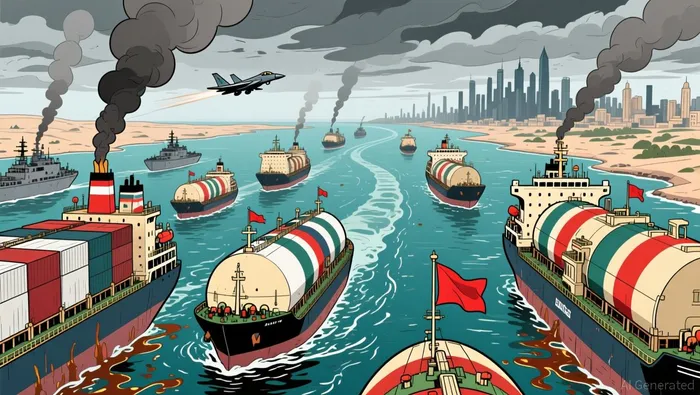
The Strait of Hormuz is a key global energy transit hub, through which approximately 20% of global liquefied natural gas (LNG) and oil supplies pass. If hostilities lead to a prolonged closure, this could push refined product prices, particularly gasoil, while increasing food inflation through higher diesel and fertilizer costs. Europe and Asia are projected to be more vulnerable to stagflation risks compared to the U.S. according to market analysis.
The U.S. faces a growing probability of economic contraction, with Moody'sMCO-- Analytics estimating a 49% chance of a recession in the next 12 months. This is the highest level of recession risk in years and reflects the broader uncertainty in macroeconomic conditions as detailed in their forecast.
Meanwhile, the fintech sector is adapting to evolving transaction demands. Future FinTechFTFT-- and Maxing Technology have formed a strategic cooperation to integrate digital wallet and QR code payment solutions, aiming to expand into diverse transaction scenarios and build a more structured payment ecosystem through a strategic partnership.
What are the potential impacts of Hormuz tensions on global markets?
Tensions in the Strait of Hormuz could lead to supply disruptions that significantly affect global energy prices. Prolonged closures could drive up refined product costs, especially gasoil, while also increasing food inflation through higher diesel and fertilizer expenses. Europe and Asia are expected to face greater stagflation risks than the U.S., which remains relatively insulated from such impacts according to market analysis.
Energy sectors are likely to benefit from these developments, while consumer discretionary sectors may underperform with a lag. The base case assumes a quick resolution, but there is equal probability that disruptions could extend into Q2 2026. This volatility introduces added uncertainty for global investors as market analysis indicates.
How does the macroeconomic outlook affect digital assets and fintech?
The macroeconomic environment, characterized by the rising risk of a U.S. recession, adds uncertainty for digital assets and fintech innovation. A 49% probability of a U.S. recession in the next 12 months is the highest level in years according to Moody's Analytics.
Despite these risks, fintech firms like Future FinTech are expanding their digital wallet and QR code payment integrations. Such partnerships aim to build a more comprehensive and flexible payment ecosystem, aligning with the broader trend of diversifying transaction methods as reported.
What strategic developments are shaping the fintech landscape?
Collaborations between fintech firms are becoming more common as companies seek to expand their digital offerings. Future FinTech and Maxing Technology have partnered to integrate digital wallet and QR code payment services, aiming to support diverse transaction scenarios and enhance cross-platform functionality through strategic cooperation.
This strategic cooperation reflects a broader trend of fintech firms aligning their services to create more integrated and scalable solutions. By expanding into new transaction environments, these partnerships aim to drive adoption and improve user experience in the digital economy as detailed in the partnership announcement.

Blending traditional trading wisdom with cutting-edge cryptocurrency insights.
Latest Articles
Stay ahead of the market.
Get curated U.S. market news, insights and key dates delivered to your inbox.
AInvest
PRO
AInvest
PRO



Comments
No comments yet