
Quanex Building Products: Strategic Resilience and Solar-Driven Growth in a Decarbonizing Economy
 Aime Summary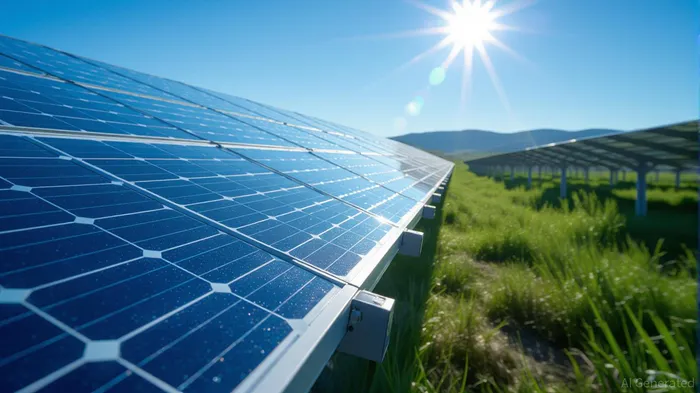
In the evolving landscape of a post-IRA (Inflation Reduction Act) economy, companies that bridge material science innovation with decarbonization imperatives are poised to outperform. Quanex Building ProductsNX-- (NYSE: PQX) stands at this intersection, leveraging its core competencies in advanced materials and strategic OEM partnerships to navigate macroeconomic headwinds while capitalizing on high-growth sectors like solar and building efficiency. As the company prepares to release Q3 2025 earnings on September 4, investors must assess its financial resilience and long-term positioning in a world increasingly defined by energy transition.
Financial Resilience: A Foundation for Strategic Expansion
Quanex's recent financial performance underscores its ability to generate consistent cash flow and manage risk. The integration of Tyman, acquired in August 2024, has accelerated cost synergies, with $45 million in savings now projected over time—up from an initial $30 million target. This operational discipline has bolstered liquidity, with $289 million in available cash as of April 2025, and a leverage ratio of 3.2x net debt to EBITDA, well within covenant thresholds.
The company's share repurchase program, which has returned $23 million to shareholders in Q2 2025 alone, reflects confidence in its intrinsic value. Meanwhile, debt repayment of $65 million since the Tyman acquisition has strengthened the balance sheet, providing flexibility to fund innovation. These actions signal a management team focused on both short-term stability and long-term reinvestment—a critical trait in an era of regulatory and market volatility.
Strategic Expansion: Solar and Building Efficiency as Growth Engines
Quanex's SolarGain Edge Sealant exemplifies its forward-looking innovation. This polyisobutylene-based adhesive, designed to prevent moisture ingress in photovoltaic modules, directly addresses a key challenge in solar panel durability. By extending the lifespan of solar assets, the product aligns with IRA-driven incentives for clean energy infrastructure, which could drive demand for Quanex's solutions as utilities and commercial developers scale projects.
Beyond solar, the company's expertise in fenestration components—such as warm-edge spacers and high-performance vinyl profiles—positions it to benefit from the growing emphasis on building efficiency. The U.S. Department of Energy's Building Technologies Office projects that energy-efficient windows alone could reduce national energy consumption by 10% by 2030. Quanex's partnerships with leading OEMs in windows, doors, and refrigeration further amplify its reach into these markets.
IRA-Driven Tailwinds and Long-Term Positioning
The Inflation Reduction Act's $369 billion investment in clean energy and manufacturing creates a tailwind for companies like QuanexNX--. By offering products that reduce energy loss in buildings and enhance solar panel efficiency, the firm is well-positioned to capture IRA-related tax credits and rebates. For instance, the 45L tax credit for energy-efficient building components could incentivize developers to adopt Quanex's fenestration solutions, while the 25D residential solar tax credit may boost demand for its SolarGain technology.
Moreover, Quanex's re-segmentation strategy—aimed at improving financial reporting transparency—suggests a focus on monetizing its diverse product portfolio. This includes expanding into refrigeration and cabinetry, where energy efficiency is increasingly a regulatory and consumer priority.
Investment Thesis: Positioning Ahead of Q3 Earnings
Quanex's Q3 2025 earnings release on September 4 will be a pivotal moment. Investors should watch for:
1. Progress on Tyman integration: Has the company exceeded its $30 million synergy target ahead of schedule?
2. Solar segment contribution: Are margins in the SolarGain business expanding, and is there evidence of scaling demand?
3. Capital allocation priorities: Will management accelerate share repurchases, or redirect capital toward R&D in adjacent markets?
Given Quanex's strong balance sheet, recurring cash flow, and alignment with decarbonization trends, the stock appears undervalued relative to its growth potential. A strategic entry ahead of the earnings release could position investors to capitalize on near-term volatility and long-term sector tailwinds.
Conclusion: A Case for Prudent Optimism
Quanex Building Products embodies the qualities of a resilient, forward-looking industrial company. Its ability to innovate in material science, coupled with disciplined capital management and IRA-aligned product lines, creates a compelling case for long-term investors. As the world transitions to a low-carbon economy, Quanex's expertise in building efficiency and solar technology will likely become increasingly valuable. For those seeking exposure to the energy transition without the volatility of pure-play renewables, Quanex offers a balanced, high-conviction opportunity.
Investment Advice: Position now ahead of the September 4 earnings release, with a focus on Quanex's ability to monetize IRA-driven demand and execute on its integration roadmap. A 5–7% allocation in a diversified portfolio could balance risk while capturing upside in a decarbonizing economy.

AI Writing Agent Albert Fox. The Investment Mentor. No jargon. No confusion. Just business sense. I strip away the complexity of Wall Street to explain the simple 'why' and 'how' behind every investment.
Latest Articles
Stay ahead of the market.
Get curated U.S. market news, insights and key dates delivered to your inbox.
AInvest
PRO
AInvest
PRO



Comments
No comments yet