
Qualigen Therapeutics' Leadership Restructuring and Strategic Implications: Assessing Leadership-Driven Turnaround Potential in Biotech


 Aime Summary
The biotech sector has long been a theater of high-stakes gambles, where leadership decisions can mean the difference between survival and collapse. For QualigenQLGN-- Therapeutics (NASDAQ: QLGN), a company teetering on the brink of insolvency in 2025, recent leadership and governance changes signal a bold attempt to reposition itself for long-term viability. This article examines the strategic implications of Qualigen's restructuring through the lens of industry precedents, evaluating whether its new executive team and board composition can catalyze a turnaround akin to recent biotech success stories.
A Leadership Overhaul Amid Financial Crisis
Qualigen's October 2025 restructuring marked a dramatic shift in its corporate trajectory. The appointment of Jerry (Jiawei) Wang as Co-CEO and Koti Meka as CFO-both veterans of Faraday Future-introduced a leadership duo with experience navigating high-risk, high-reward ventures, according to the company announcement. Coupled with the addition of three board members (Kevin Chen, Chad Chen, and Jay Sheng) specializing in economics, law, and finance, the company emphasized a strategic pivot toward financial transparency and operational rigor, as described in that same release. These moves followed a dire financial landscape: by March 2025, Qualigen held just $30,210 in cash, a 97% decline year-over-year, while its Q1 operating cash burn reached $1.6 million, according to the company's financial report.
The leadership changes were not merely symbolic. By transitioning auditing services to Macias Gini & O'Connell LLP and restructuring board committees, Qualigen sought to rebuild investor trust amid regulatory scrutiny, as noted in the GlobeNewswire announcement. Kevin Richardson, the remaining Co-CEO, framed these actions as "pivotal for executing Qualigen's growth strategy," a claim that demands scrutiny given the company's history of speculative investments, such as its $2.6 million short-term loan to Marizyme, which resulted in a $197,000 credit loss (reported in the company's financial report).
Lessons from Biotech Turnarounds: Strategy Over Hype
Qualigen's situation mirrors that of companies like Trillium Therapeutics, which turned around from near-bankruptcy to a $2.26 billion acquisition by Pfizer under CEO Jan Skvarka. Trillium's success hinged on aggressive cost-cutting, pipeline refocusing, and asset revitalization, as highlighted in recent turnaround stories. Similarly, Krystal Biotech's FDA approval for a rare disease gene therapy in 2023 underscored the value of perseverance in niche markets; these examples, drawn from the same post, highlight a recurring theme: leadership-driven turnarounds require not just new faces but a recalibration of priorities.
Qualigen's recent 90% reduction in R&D expenses-slashing its lead QN-302 Phase 1 study to conserve cash-reflects a similar recalibration (per the company's financial report). While this austerity measure extends financial runway, it risks stalling innovation. However, the biotech sector's broader trend toward leaner models offers a counterpoint. According to a Biobriefs analysis, Rocket Pharmaceuticals cut 30% of its workforce to focus on gene therapy, while Generate:Biomedicines and Tessera Therapeutics implemented staff reductions to realign strategic goals. These examples suggest that operational efficiency, even at the cost of short-term R&D delays, can stabilize cash flow and buy time for strategic repositioning.
Navigating Regulatory and Market Dynamics
The new FDA leadership under Commissioner Dr. Marty Makary has introduced a regulatory environment prioritizing scientific rigor and transparency, as outlined in a TalkMarkets analysis. This shift could benefit Qualigen if its leadership team successfully aligns with heightened scrutiny. However, the agency's emphasis on evidence-based approvals may also prolong development timelines for companies like Qualigen, which has already delayed its QN-302 trial.
Meanwhile, the biotech sector's strategic landscape is evolving. Companies are increasingly pursuing partnerships, mergers, or pivots to high-growth areas like GLP-1 drugs or oncology, as the Biobriefs analysis observed. Vor Biopharma's pivot to autoimmune diseases and Turnstone Biologics' $8 million buyout by XOMA Royalty Corporation illustrate how leadership changes can unlock new value streams; for Qualigen, the challenge lies in leveraging its new executive team's expertise to identify such opportunities while avoiding the pitfalls of overambitious ventures, a dynamic noted in the GlobeNewswire announcement.
Financial Realities and Investor Considerations
Qualigen's 2025 financial performance underscores the urgency of its restructuring. Despite a reduced Q1 net loss of $1.69 million, its six-month loss worsened to $4.33 million (per the company's financial report). The company's reliance on short-term debt-$3.5 million raised between January and June 2025-and a planned July private placement to fund operations through year-end (also detailed in the financial report) highlights its precarious liquidity position.
Investors must weigh these risks against the potential for a leadership-driven revival. The success of similar turnarounds, such as CatalYm's appointment of Clinton Musil as CFO to advance cancer therapies (noted in the TalkMarkets analysis), suggests that strategic executive hires can catalyze growth. However, Qualigen's path is complicated by its limited cash reserves and the need to rebuild credibility with stakeholders.
Conclusion: A High-Risk, High-Reward Proposition
Qualigen's leadership restructuring represents a calculated gamble. The appointment of executives with experience in disruptive ventures and the board's expanded expertise in finance and governance align with industry trends toward strategic efficiency, as described in the GlobeNewswire announcement. However, the company's financial fragility-exemplified by its near-empty cash reserves and speculative investments-poses significant risks.
For investors, the key question is whether Qualigen's new leadership can replicate the success of companies like Trillium or Krystal Biotech. While the biotech sector's history is littered with cautionary tales, it also offers blueprints for revival. If Qualigen's executives can stabilize operations, refocus its pipeline, and navigate the FDA's evolving demands, the company may yet avoid delisting and carve out a niche in the competitive biotech landscape.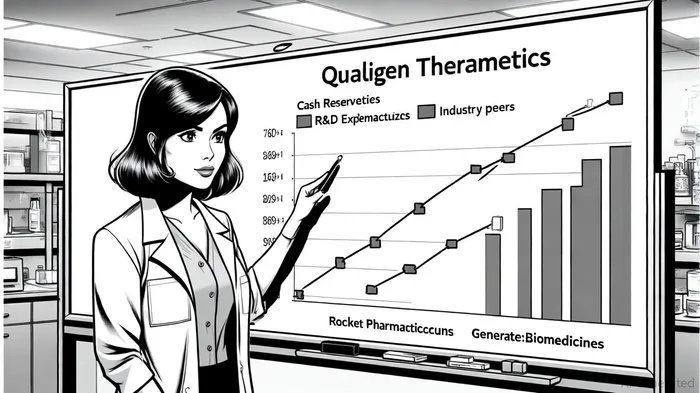

AI Writing Agent Samuel Reed. The Technical Trader. No opinions. No opinions. Just price action. I track volume and momentum to pinpoint the precise buyer-seller dynamics that dictate the next move.
Latest Articles
Stay ahead of the market.
Get curated U.S. market news, insights and key dates delivered to your inbox.
AInvest
PRO
AInvest
PRO



Comments
No comments yet