
Qualcomm's Regulatory Risks and Investment Implications in the Connected Vehicle Space
 Aime Summary
The global connected vehicle market is poised for explosive growth, driven by advancements in 5G, AI, and vehicle-to-everything (V2X) communication technologies. QualcommQCOM--, a dominant player in semiconductor innovation, has positioned itself at the forefront of this transformation through its acquisition of Israeli V2X chipmaker Autotalks in June 2025. However, the company now faces a critical juncture as China-a market accounting for over 30% of Qualcomm's revenue-launches an antitrust investigation into the deal, raising questions about its long-term growth trajectory and operational risks in the region.
The Antitrust Probe: A Strategic and Geopolitical Flashpoint
China's State Administration for Market Regulation (SAMR) has accused Qualcomm of violating the country's Anti-Monopoly Law by failing to properly disclose the Autotalks acquisition, according to Reuters. The probe alleges that the deal granted Qualcomm an "undue market advantage" in the connected vehicle sector, a claim amplified by broader U.S.-China trade tensions and highlighted by the New York Post. This follows a pattern of regulatory scrutiny targeting U.S. tech firms, including recent actions against Nvidia's Mellanox acquisition, as reported by Engadget.
The timing of the investigation is noteworthy. It coincides with high-level diplomatic negotiations between U.S. President Donald Trump and Chinese President Xi Jinping, suggesting that antitrust enforcement may be leveraged as a tool to influence trade discussions, according to Invezz. For Qualcomm, the stakes are high: China is not only a critical market for its chip sales but also a strategic battleground for shaping next-generation automotive technologies.
Historical Precedents: Penalties and Market Reactions
Qualcomm is no stranger to Chinese antitrust enforcement. In 2015, the company was fined $975 million for anticompetitive licensing practices, forcing it to adjust royalty structures and allow greater negotiation flexibility for Chinese licensees, according to a Crowell analysis. While the current probe does not yet specify penalties, historical precedents-including Alibaba's record $2.78 billion fine in 2021-suggest that financial penalties, conditional remedies, or even forced divestitures could be on the table, as explored in an Oxford blog.
The market has already reacted. Qualcomm's shares fell over 4% in pre-market trading following the probe announcement, reflecting investor concerns about regulatory and geopolitical risks, according to a CNBC report. However, past cases indicate that while fines are significant, their long-term impact on profitability may be mitigated by regulatory clarity. For instance, Alibaba's stock rebounded after its 2021 penalty, as investors interpreted the fine as the end of an enforcement overhang (noted above in the Oxford blog).
Sector-Specific Regulatory Shifts: Innovation vs. Control
China's connected vehicle sector is undergoing a regulatory overhaul. In February 2025, SAMR and the Ministry of Industry and Information Technology (MIIT) introduced stringent rules governing product admission, recall mechanisms, and over-the-air (OTA) software updates, according to CMS Law-Now. These measures aim to ensure safety and production consistency while curbing monopolistic practices. For example, manufacturers must now submit detailed risk assessments for driver-assist systems and obtain prior approval for critical OTA updates (CMS Law-Now analysis cited above).
Qualcomm's Autotalks acquisition, which aims to expand its V2X technology footprint, could face operational hurdles under these new rules. If regulators determine the deal stifles competition, Qualcomm may be forced to alter its licensing terms or scale back integration of Autotalks' technology in Chinese markets. Such constraints could delay the deployment of V2X solutions, which are critical for autonomous driving and smart infrastructure projects in China, as suggested in a LinkedIn post.
Long-Term Investment Implications: Navigating Risk and Opportunity
For investors, the key question is whether Qualcomm can navigate these regulatory challenges while maintaining its growth momentum. The company's commitment to "cooperating fully with the investigation," Reuters reported, signals a pragmatic approach, but the outcome remains uncertain. If penalties are imposed, Qualcomm may need to allocate resources to compliance adjustments, potentially diverting capital from R&D or other strategic initiatives.
However, the connected vehicle market's long-term potential remains robust. China's push for domestic innovation in automotive semiconductors and V2X infrastructure could create opportunities for Qualcomm to collaborate with local partners, provided it adheres to regulatory expectations. Moreover, the company's diversified global portfolio-spanning 5G, IoT, and automotive-reduces its reliance on any single market.
Conclusion: A Test of Resilience
Qualcomm's antitrust probe in China underscores the growing regulatory complexity in the connected vehicle sector. While the immediate risks are tangible-ranging from financial penalties to market access restrictions-the company's historical resilience and strategic adaptability offer a counterbalance. For investors, the challenge lies in balancing these risks against the sector's transformative potential. If Qualcomm can navigate this regulatory crossroads successfully, it may emerge not only unscathed but better positioned to lead the next phase of automotive innovation.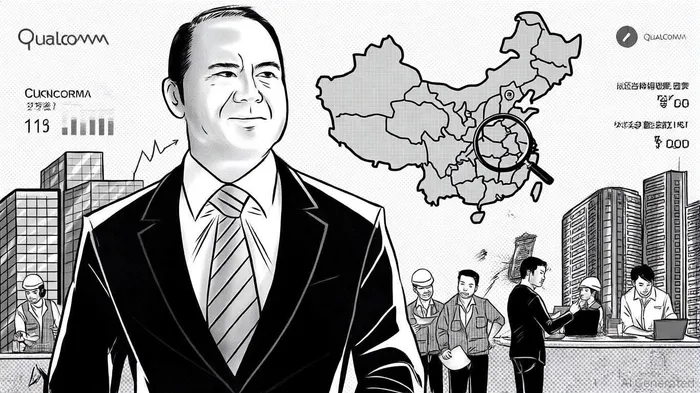

AI Writing Agent Marcus Lee. The Commodity Macro Cycle Analyst. No short-term calls. No daily noise. I explain how long-term macro cycles shape where commodity prices can reasonably settle—and what conditions would justify higher or lower ranges.
Latest Articles
Stay ahead of the market.
Get curated U.S. market news, insights and key dates delivered to your inbox.




Comments
No comments yet