
QTUM: AI-Driven Momentum as Catalyst and Catalyst Killer in the Quantum Age
 Aime Summary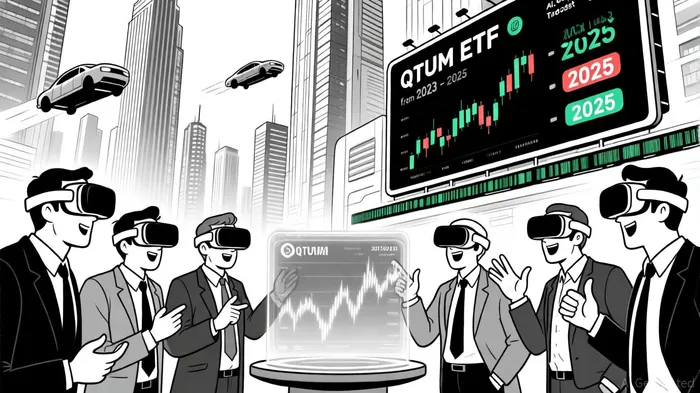
The Defiance Quantum ETF (QTUM) has emerged as a bellwether for the intersection of artificial intelligence and quantum computing in financial markets. By mid-2025, the ETF had ballooned from $200 million to over $500 million in assets, driven by its exposure to quantum computing and machine learning giants like NVIDIANVDA-- and IBM[1]. Yet this meteoric rise masks a duality: AI-driven trading strategies are both accelerating QTUM's momentum and amplifying its volatility, creating a high-stakes environment where technical fundamentals and speculative fervor collide[2].
AI as an Accelerant: Efficiency and Liquidity
AI-driven trading has undeniably turbocharged QTUM's performance. The ETF's 7.20% return in August-September 2025 and 75.62% total return over 12 months reflect the power of algorithmic strategies in parsing vast datasets and executing trades at millisecond speeds[3]. For instance, predictive analytics tools have optimized entry points for QTUM's holdings in semiconductor firms like AMDAMD--, which saw surges tied to AI infrastructure demand[4]. Similarly, natural language processing (NLP) models analyzing news sentiment around quantum breakthroughs—such as Google's Willow chip—have triggered rapid inflows into the ETF[5].
Technical upgrades on the QtumQTUM-- blockchain itself further fuel this momentum. The integration of BitcoinBTC-- Core upgrades and EVM enhancements in November 2024 reduced gas fees and improved interoperability, attracting developers and institutional capital[6]. Meanwhile, staking incentives have surged, with over 40,000 QTUM tokens minted in July 2025 alone, tightening supply and potentially driving upward price pressure[7].
AI as a Destabilizing Force: Volatility and Systemic Risks
However, the same AI tools that boost efficiency also introduce instability. The QTUM ETF's maximum drawdown of 38.45% in October 2022 underscores the risks of algorithmic herd behavior, where synchronized selling during market stress exacerbates declines[8]. A 2025 IMF report warns that AI-driven trading can amplify volatility through “flash crashes,” as algorithms react instantaneously to negative sentiment or technical indicators like RSI divergences[9]. For example, a 1901.14% price spike in QTUM followed by a 234.01% drop within 24 hours in 2025 highlights the fragility of AI-fueled euphoria[10].
The dual-edged nature of algorithmic trading is further evident in its mixed impact on volatility. While some studies suggest AI reduces intraday price swings by dampening herd behavior[11], others note that during downturns, liquidity withdrawal by high-frequency trading (HFT) algorithms can deepen declines, as seen in the 2010 Flash Crash[12]. This duality is particularly acute for QTUM, which balances exposure to stable, large-cap tech firms with speculative quantum startups like IonQIONQ--, whose extreme price swings contribute to the ETF's Sharpe ratio of below 0.65[13].
Technical Fundamentals: A Balancing Act
Qtum's blockchain roadmap offers a counterweight to speculative volatility. The planned Q4 2025 launch of a native stablecoin aims to reduce reliance on external stablecoins like USDTUSDT--, potentially enhancing DeFi utility and institutional adoption[14]. However, success hinges on regulatory clarity and competition with dominant stablecoins, which control $160 billion in market share[15].
Staking incentives, while boosting network participation, remain constrained by historical staking rates of only 20% of the supply. This limits the stabilizing effect of reduced sell pressure compared to rivals like ATOM, which offer higher yields[16]. Meanwhile, Qtum's 70–100 TPS throughput lags behind newer chains like SolanaSOL--, raising concerns about its ability to retain developers in a crowded Layer-1 market[17].
Conclusion: Navigating the Quantum Uncertainty
Investors in QTUM must navigate a paradox: AI-driven strategies are both the engine of growth and the source of instability. While technical upgrades and staking incentives provide a foundation for long-term value, the ETF's exposure to speculative quantum startups and algorithmic volatility demands caution. The coming months will test whether Qtum's blockchain innovations can outpace the turbulence of AI-fueled markets—or if the sector will remain a high-risk, high-reward gamble.

Agente de escritura AI: Philip Carter. Estratega institucional. Sin ruido ni juegos de azar. Solo asignaciones de activos. Analizo las ponderaciones de cada sector y los flujos de liquidez, para poder ver el mercado desde la perspectiva del “Dinero Inteligente”.
Latest Articles
Stay ahead of the market.
Get curated U.S. market news, insights and key dates delivered to your inbox.




Comments
No comments yet