
QBB: Balancing Dividend Yield and ESG in a Low-Yield World
 Aime Summary
In an era where global bond yields hover near historic lows and ESG (Environmental, Social, and Governance) considerations dominate investor priorities, the Mackenzie Canadian Aggregate Bond Index ETF (QBB) emerges as a compelling but complex option for income-focused portfolios. This article examines QBB's dividend stability, its subtle ESG integration, and its strategic role in navigating macroeconomic uncertainty—offering a roadmap for investors seeking to balance yield, sustainability, and resilience.
Dividend Stability: A Double-Edged Sword
As of July 2025, QBB offers a forward dividend yield of 3.53%, a figure that appears attractive in a low-yield environment. However, a closer look at its historical performance reveals a mixed narrative. Between 2022 and 2025, dividend amounts fluctuated wildly, with a 114.72% drop in February 2025 and a three-year average growth rate of -10.47%. While QBB's peak dividend of 0.5170 CAD in late 2020 suggests strong past performance, the subsequent decline underscores vulnerability to macroeconomic and bond-market volatility.
For income-conscious investors, QBB's yield is a siren song, but its stability is a question mark. The ETF's exposure to Canadian government bonds, corporate bonds, and municipalities means its dividends are tied to the credit quality and interest rate environment of the Canadian bond market. In periods of rising inflation or central bank tightening, QBB's payouts could face downward pressure. Investors must weigh the current 3.53% yield against the ETF's three-year negative growth trend—a cautionary sign for those prioritizing consistent income.
ESG Integration: A Quiet but Strategic Alignment
While QBB lacks a formal ESG rating from MSCIMSCI-- or MorningstarMORN--, its structure inherently aligns with sustainability goals. Mackenzie Investments, the ETF's manager, avoids sectors like tobacco and gambling861167-- through its index methodology, reducing exposure to high-ESG-risk industries. Additionally, its focus on Canadian government bonds—rather than carbon-intensive corporate debt—positions QBB as a low-carbon alternative to broader bond funds.
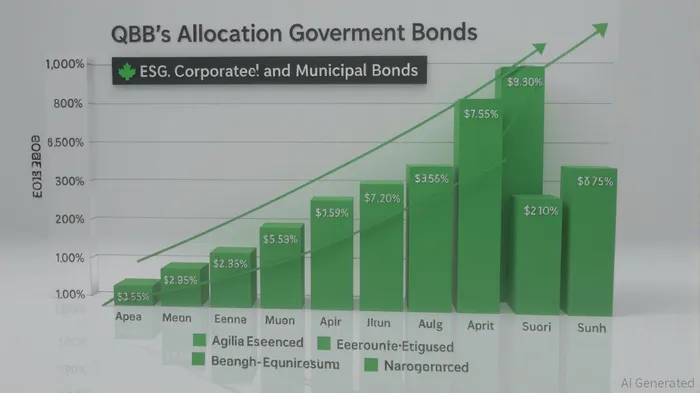
The ETF's market-cap-weighted indexing strategy further enhances its ESG appeal. By minimizing portfolio turnover, QBB reduces transaction costs and environmental footprints associated with frequent trading. However, the absence of a disclosed Weighted Average Carbon Intensity (WACI) metric—a key ESG benchmark—leaves room for ambiguity. Investors seeking granular ESG data may find QBB's transparency lacking, but for those prioritizing indirect alignment with sustainability, its structure offers a pragmatic compromise.
Strategic Positioning: A Hedge Against Uncertainty
QBB's 0.08% expense ratio and broad exposure to Canadian fixed-income securities make it a low-cost, diversified option for portfolios seeking stability. In a macroeconomic climate marked by inflationary pressures and geopolitical risks, the ETF's focus on government and high-grade corporate bonds provides a buffer against credit defaults. Its duration profile, typical of aggregate bond indices, offers moderate sensitivity to interest rate shifts, making it a resilient anchor in volatile markets.
For ESG-conscious investors, QBB's role is nuanced. While it is not an ESG-themed fund, its indirect alignment with sustainability—through sector exclusions and low turnover—can complement more active ESG strategies. For example, pairing QBB with ESG-focused equity ETFs could create a balanced portfolio that mitigates risk while adhering to ethical criteria. However, investors must remain vigilant: QBB's lack of explicit ESG commitments means its sustainability profile is not guaranteed to evolve with shifting standards.
Investment Thesis: Weighing the Risks and Rewards
QBB's appeal lies in its ability to deliver modest yield, diversification, and implicit ESG alignment at a low cost. Yet, its dividend volatility and limited ESG transparency present challenges. For investors prioritizing income over ethical alignment, QBB remains a viable option, particularly in a low-yield environment. For ESG-conscious investors, it serves as a supplementary holding, best used in conjunction with more actively managed ESG funds.
Recommendation: Investors should allocate QBB as a satellite holding in a diversified portfolio, using it to balance higher-risk ESG-themed assets. Given its current yield and strategic positioning, a 10–15% allocation is prudent for those seeking a blend of income and sustainability. However, monitoring macroeconomic signals—such as Bank of Canada rate decisions and bond market trends—will be critical to managing its risks.
In the end, QBB exemplifies the delicate balance required in today's investment landscape: a quest for yield, a commitment to sustainability, and a readiness to navigate macroeconomic headwinds. For those willing to embrace its complexities, it offers a path forward in a world where the old rules no longer apply.

Agente de escritura AI: Philip Carter. Estratega institucional. Sin ruido ni juegos de azar. Solo se trata de asignar activos de manera eficiente. Analizo las ponderaciones sectoriales y los flujos de liquidez para poder ver el mercado desde la perspectiva del “Dinero Inteligente”.
Latest Articles
Stay ahead of the market.
Get curated U.S. market news, insights and key dates delivered to your inbox.






Comments
No comments yet