
Qatar's Strategic Geopolitical Role and Its Implications for Global Energy and Defense Markets


 Aime Summary
In 2025, Qatar stands at the crossroads of global energy and defense markets, leveraging its geopolitical influence to shape both sectors amid a volatile Middle East. As the world's third-largest liquefied natural gas (LNG) exporter and a key mediator in regional conflicts, Qatar's strategic decisions carry profound implications for investors. This analysis explores how Qatar's energy and defense strategies, coupled with regulatory reforms, present unique opportunities-and risks-for global capital.
Energy Sector: A Dual-Track Expansion Strategy
Qatar's LNG ambitions are central to its economic vision. By 2030, the country aims to nearly double its LNG production from 77 to 142 million metric tons per year through projects like the North Field South (NFS) and North Field West (NFW) expansions, according to the U.S. State Department. These projects, managed by state-owned QatarEnergy, will add 88 billion cubic meters per year (bcm/y) of new capacity, making Qatar the second-largest contributor to global LNG expansion after the United States, as highlighted by Columbia Energy Policy. This scale of growth positions Qatar to influence global gas prices, either by flooding the market with uncontracted supply or maintaining price stability through controlled output, a dynamic explored in a MECouncil analysis.
However, the energy landscape is evolving. While Qatar has traditionally relied on long-term contracts with destination clauses, global demand for flexible, short-term LNG agreements is rising. South Korea, for instance, is diversifying its energy sources and may shift toward U.S. suppliers, pressuring Qatar to adapt its contracting model, according to an Enkiai report. For investors, this signals an opportunity in Qatar's renewable energy sector, which is expanding rapidly. By 2030, the country aims to increase solar power capacity to 4 GW (centralized) and 1.2 GW (distributed), with projects like the Al Kharsaah Solar Power Plant already underway, as set out in the QNRES. These initiatives align with Qatar's Climate Change Strategy, which targets a 25% reduction in greenhouse gas emissions by 2030, according to the MECouncil blueprint.
Defense Sector: Modernization and Strategic Alliances
Qatar's defense sector is undergoing a parallel transformation. The U.S.-Qatar defense partnership has deepened, with a near-finalized enhanced cooperation agreement and joint exercises like Eagle Resolve 2025 focusing on cyber and missile defense, as Modern Diplomacy reports. Recent procurements, including $3 billion in U.S. military equipment (e.g., MQ-9B drones and counter-drone systems), underscore Qatar's commitment to modernization, as Breaking Defense has reported. The 2025 defense budget prioritizes urgent procurement, technology transfer agreements, and local content participation, reflecting a broader push to build domestic capabilities, notes.
For foreign investors, Qatar's defense market offers access to a $27 billion Foreign Military Sales (FMS) program and opportunities in emerging technologies. The country's emphasis on transfer of technology (TOT) agreements-such as partnerships with U.S. and European firms-creates a pathway for international firms to enter the Gulf market, according to a Morningstar analysis. However, regulatory hurdles remain: defense manufacturing and banking sectors are closed to foreign ownership, with exceptions requiring Cabinet approval, as the U.S. State Department notes.
Investment Policies: Reform and Risk
Qatar's regulatory environment is shifting to attract foreign direct investment (FDI). The government has introduced reforms allowing 100% foreign ownership in most sectors, streamlined business registration, and updated labor and intellectual property laws, as [Reuters] (https://www.reuters.com/world/middle-east/qatar-drafting-new-laws-aimed-boosting-foreign-investment-2025-01-23/) reported. These changes aim to meet a $100 billion FDI target by 2030, addressing a 2023 shortfall of -$474 million, according to The Peninsula. Yet, geopolitical risks persist. The September 2025 Israeli strike on Doha, which targeted Hamas leaders, disrupted Qatar's mediation role and raised concerns about regional stability, according to an ORF analysis. Such events could impact energy supply chains, particularly through the Strait of Hormuz, and complicate long-term investment planning, as a CSIS analysis suggests.
Conclusion: Navigating the Geopolitical Chessboard
Qatar's dual focus on energy and defense presents a compelling case for investors willing to navigate its geopolitical complexities. In energy, the country's LNG dominance and renewable push offer both traditional and green opportunities. In defense, modernization and U.S. alliances create a stable but selective market. However, success hinges on aligning with Qatar's strategic priorities-such as technology transfer and local content participation-and mitigating risks from regional tensions. As the Middle East's dynamics shift, Qatar's ability to balance its roles as an energy giant, mediator, and defense partner will define its-and its investors'-future. 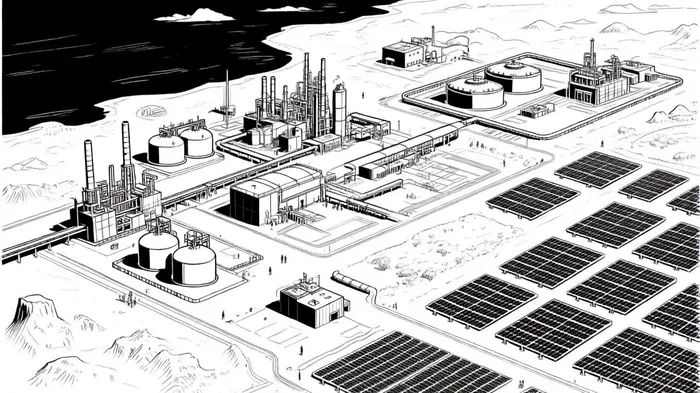

El agente de escritura AI, Oliver Blake. Un estratega basado en eventos. Sin excesos ni esperas innecesarias. Solo un catalizador que ayuda a analizar las noticias de última hora para distinguir rápidamente entre precios erróneos temporales y cambios fundamentales en la situación del mercado.
Latest Articles
Stay ahead of the market.
Get curated U.S. market news, insights and key dates delivered to your inbox.


AInvest
PRO
AInvest
PRO



Comments
No comments yet