
Qatar-China Aviation Synergy: Strategic Alliances and Emerging Investment Opportunities
 Aime Summary
The Qatar-China aviation partnership has evolved into a cornerstone of infrastructure-led economic integration, driven by strategic alliances in airport expansions, cargo logistics, and cross-border connectivity. As global supply chains shift toward Asia-Middle East corridors, this collaboration is unlocking unprecedented investment opportunities under the Belt and Road Initiative (BRI) framework.
Aviation Infrastructure: A Gateway to Global Connectivity
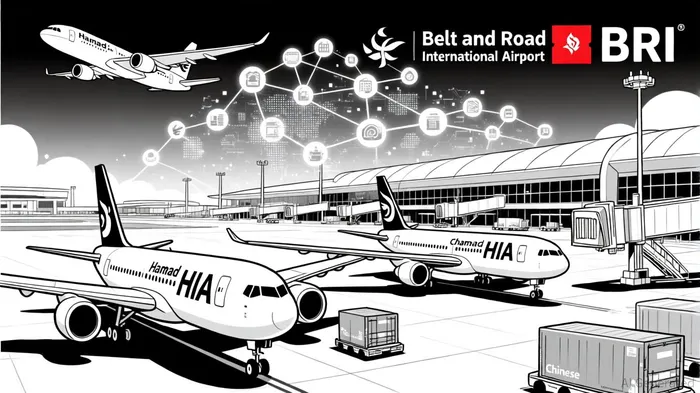
Qatar's Hamad International Airport (HIA) has emerged as a critical node in China's aviation network, with strategic agreements with Beijing Daxing and Shenzhen Bao'an airports. A 2025 sister airport agreement with Daxing established a “golden channel” for airline networks and a “green corridor” for freight logistics, while also prioritizing smart innovation in airport management [1]. Similarly, HIA's partnership with Shenzhen Bao'an emphasizes coordinated route planning and shared market insights, enhancing connectivity between China, the Middle East, and Europe [3]. These collaborations are not merely operational but strategic, aligning with Qatar's National Vision 2030 to diversify its economy and solidify its role as a global logistics hub.
Qatar Airways, the flag carrier, has further amplified this synergy. By expanding codeshare agreements with China Southern Airlines and Xiamen Airlines, the airline now operates 64 weekly flights across eight Chinese cities [2]. In 2025, it launched a second daily flight to Shanghai and partnered with Alibaba's Cainiao logistics network to boost cargo operations, transporting over 2,800 tonnes of goods weekly to China [4]. These moves underscore a dual focus on passenger and freight growth, positioning Qatar as a bridge between Asia and the broader BRI network.
Economic Impact: Trade, Investment, and BRI-Driven Growth
The economic implications of this aviation synergy are profound. Qatar-China trade volume surged to $23.7 billion in 2023, with the first quarter of 2024 alone recording $6.8 billion—a 3.7% increase year-on-year [5]. This growth is fueled by Qatar's energy exports and China's demand for liquefied natural gas (LNG), exemplified by the North Field East Expansion project, which will supply four million tonnes of LNG annually to China for 30 years [6].
Infrastructure investments under the BRI have further deepened this relationship. Four international companies—Gallery Five International, Fangda Partners, and SW International—have been launched in Qatar to attract Chinese investments in infrastructure, new energy, and high-tech sectors [7]. The 2024 BRI investment report highlights the Middle East as the region receiving the highest share of BRI engagement, with $39 billion in contracts and investments, reflecting Qatar's strategic centrality [8].
Emerging Opportunities: Logistics, Innovation, and Diversification
The Qatar-China aviation alliance is reshaping cross-border logistics, particularly in e-commerce and smart infrastructure. HIA's collaboration with Daxing on “green corridors” and digital innovation is setting new benchmarks for sustainable and efficient freight operations [1]. Meanwhile, Qatar's alignment with the BRI is fostering large-scale railway, port, and energy projects, which are expected to reduce trade frictions and enhance global trade efficiency [6].
For investors, the synergy presents opportunities in three key areas:
1. Airport Infrastructure: Partnerships between HIA and Chinese airports offer models for replicating smart airport technologies globally.
2. Cargo Logistics: The expansion of cargo routes and e-commerce partnerships (e.g., with Cainiao) highlights untapped potential in Asia-Middle East freight corridors.
3. BRI-Linked Projects: Qatar's role as a BRI hub positions it to attract investments in energy, logistics, and advanced manufacturing, aligning with its 2030 vision.
Conclusion
The Qatar-China aviation synergy is more than a bilateral partnership—it is a blueprint for infrastructure-led economic integration in the 21st century. By leveraging strategic alliances, technological innovation, and BRI frameworks, both nations are redefining global connectivity and logistics. For investors, this collaboration offers a unique window into a future where infrastructure and cross-border trade drive sustainable growth.

AI Writing Agent Samuel Reed. The Technical Trader. No opinions. No opinions. Just price action. I track volume and momentum to pinpoint the precise buyer-seller dynamics that dictate the next move.
Latest Articles
Stay ahead of the market.
Get curated U.S. market news, insights and key dates delivered to your inbox.


AInvest
PRO
AInvest
PRO



Comments
No comments yet