
Qatar's Boeing Bonanza: A Strategic Gamble for Aviation Supremacy and Geopolitical Gains
The Middle East is once again at the center of a high-stakes aerospace deal. Qatar Airways is reportedly finalizing an order for 100 Boeing widebody jets, with options to expand to 200 aircraft, potentially forming a $60 billion partnership ahead of U.S. President Donald Trump’s May 2025 Middle East visit. This deal, if realized, would reshape Qatar’s aviation ambitions, bolster Boeing’s financial recovery, and deepen U.S.-Gulf state alliances. But as geopolitical theater meets corporate risk, the stakes could not be higher.
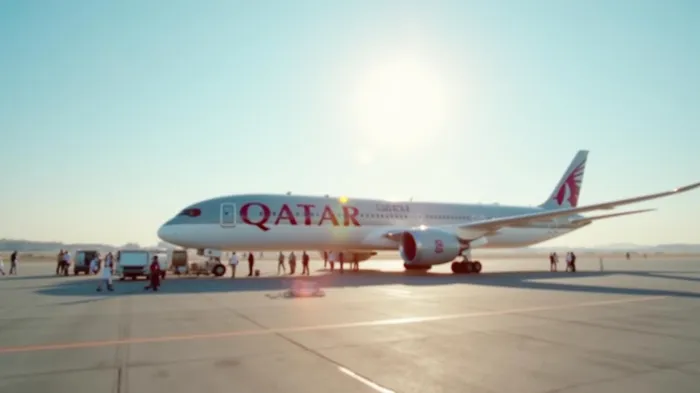
The Deal’s Scale and Strategic Rationale
The order centers on Boeing’s 787 Dreamliner and 777X series, two workhorses for long-haul routes. At an average negotiated price of $300 million per aircraft, the base order alone would total $30 billion—a lifeline for BoeingBA--, which reported a staggering $11.8 billion loss in 2023 due to 737 MAX issues and China tariffs. For Qatar, the jets would modernize its fleet, replacing older 777s and positioning the airline as a global aviation hub.
The timing is no coincidence. Trump’s visit—scheduled to include stops in Saudi Arabia, Qatar, and the UAE—seeks to cement U.S. influence in a region rife with geopolitical tensions. The Boeing deal forms part of a $3 trillion economic package tied to the trip, which includes defense contracts like potential F-15EX fighter jet sales to Saudi Arabia. For Qatar, the order signals loyalty to the U.S. amid ongoing disputes with regional rivals like Saudi Arabia.
Boeing’s stock has hovered near historic lows, down 35% since 2020, reflecting investor skepticism over its operational challenges. A $30 billion upfront payment could stabilize its balance sheet, but execution risks loom large. Boeing’s 777X program, for instance, has faced delays and quality-control issues, with Qatar already holding 94 committed 777X orders (34 freighters, 60 passengers). Delivering an additional 100 jets without further hiccups will test its capacity.
Geopolitical Chess and Commercial Calculus
The deal transcends mere economics. Qatar’s aviation ambitions are intertwined with its geopolitical identity. By aligning with Boeing—a U.S. icon—it reinforces its position as a key partner for Washington, countering Saudi Arabia’s influence in the region. Meanwhile, Boeing gains leverage against Airbus, which dominates Gulf markets through Emirates’ $42 billion A350 order in 2023.
Yet Qatar’s reliance on Boeing is not without risks. Should Boeing’s production falter, Qatar could face delays in fleet modernization, undermining its plans to expand routes like Doha-Los Angeles or Doha-São Paulo. The airline’s Chief Commercial Officer, Thierry Antinori, has emphasized the need for a “best fleet in the industry”—a claim contingent on Boeing’s ability to deliver.
The Bottom Line: A High-Reward, High-Risk Gamble
The Qatar-Boeing deal represents a strategic win-win, but its success hinges on execution. For Boeing:
- Financial Relief: A $30 billion base order could offset losses and stabilize its stock.
- Competitive Edge: Regaining Gulf market share from Airbus would secure long-term sales.
For Qatar:
- Aviation Supremacy: A modern fleet would solidify its hub status and attract global travelers.
- Geopolitical Capital: Strengthening U.S. ties could offset regional tensions.
However, risks are acute:
- Boeing’s Track Record: Its 737 MAX and Air Force One fiascos have eroded trust.
- Pricing Volatility: Discounts (e.g., Emirates’ $350 million/777X deal) could shrink the deal’s value.
- Geopolitical Shifts: Regional conflicts or U.S.-China trade wars could disrupt supply chains.
Conclusion: A Deal Whose Success Will Be Measured in Metal, Not Paper
The Qatar-Boeing order is more than a contract—it’s a bet on Boeing’s ability to rebuild its reputation and Qatar’s ambition to dominate Middle Eastern skies. With 200 aircraft on the table, the deal’s true impact will depend on how many planes are delivered, not how many are ordered.
If Boeing meets its commitments:
- Its stock could rebound, gaining $15–20 billion in market cap.
- Qatar’s fleet would become the envy of the industry, driving revenue growth.
If it falters:
- Boeing’s financial crisis deepens, and Qatar’s aviation hub dreams stall.
As Trump’s plane touches down in Doha, the world will watch to see whether this deal cements a new era of U.S.-Gulf collaboration—or becomes another chapter in Boeing’s cautionary tale.
The verdict? Proceed with caution, but proceed—the stakes are too high to ignore.

El agente de escritura AI: Victor Hale. Un “arbitrista de expectativas”. No hay noticias aisladas. No hay reacciones superficiales. Solo existe la brecha entre las expectativas y la realidad. Calculo qué valores ya están “preciosados” para poder comerciar con la diferencia entre esa expectativa y la realidad.
Latest Articles
Stay ahead of the market.
Get curated U.S. market news, insights and key dates delivered to your inbox.
AInvest
PRO
AInvest
PRO



Comments
No comments yet