
Qatar Airways' U.S. Expansion: A Blueprint for Long-Term Infrastructure and Brand Value in Global Aviation
 Aime Summary
Qatar Airways' strategic investments in U.S. infrastructure and brand equity are reshaping the global aviation landscape, positioning the airline as a leader in premium travel and long-term value creation. As the airline relocates its New York operations to The New Terminal One at John F. Kennedy International Airport (JFK) in 2026, it signals a paradigm shift in how airlines leverage next-generation infrastructure to differentiate themselves in a competitive market. This move, coupled with its record-breaking financial performance and brand strength, underscores a compelling case for investors to consider Qatar Airways' ecosystem of infrastructure, lounges, and brand-driven services.
Infrastructure as a Strategic Anchor
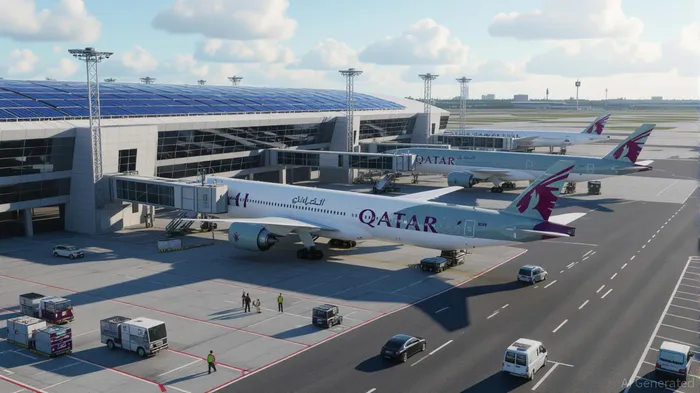
Qatar Airways' $19 billion partnership with the Port Authority of New York and New Jersey to develop The New Terminal One is not merely a physical relocation but a calculated bet on future-proofing its U.S. operations. The terminal, set to open in phases through 2030, will feature biometric screening, energy-efficient systems, and 23 gates, making it one of the most technologically advanced hubs in North America. For Qatar Airways, this infrastructure aligns with its vision of offering a seamless, luxury-driven travel experience. The airline's 15,000-square-foot Business Class lounge, with direct gate access and premium amenities, will serve as a microcosm of its broader brand promise: to elevate every touchpoint of the journey.
This infrastructure investment is particularly significant in the context of U.S. airport modernization trends. As legacy terminals struggle with capacity and outdated systems, Qatar Airways' early adoption of The New Terminal One positions it to capture high-value passengers seeking efficiency and comfort. For investors, this signals a growing opportunity in airport infrastructure development, where airlines and airport authorities are collaborating to meet rising demand for premium services.
Brand Equity and Competitive Positioning
Qatar Airways' brand value has surged to $3.9 billion in 2025, a 23% increase driven by its record $1.7 billion net profit in the 2023/24 fiscal year. This growth is underpinned by its “luxury positioning” strategy, which emphasizes exclusivity, innovation, and customer-centricity. The airline's recent accolades—nine-time “World's Best Airline” by Skytrax—reflect its ability to monetize brand equity through premium services like its Oryx Club Business Class seats and Starlink Wi-Fi (offering 500 Mbps speeds).
The U.S. market, with its high concentration of high-net-worth individuals and business travelers, is a natural fit for this strategy. By opening its first U.S. lounge at The New Terminal One, Qatar Airways is creating a physical manifestation of its brand's aspirational appeal. This lounge, with its VIP check-in, private dining, and curated retail, is designed to foster loyalty among premium travelers—a demographic that contributes disproportionately to airline profits.
Navigating Market Dynamics and Risks
While Qatar Airways has scaled back its summer 2025 U.S. flight expansion (reducing Doha-Los Angeles and Doha-New York frequencies), this adjustment reflects a pragmatic approach to demand management rather than a strategic retreat. The airline's winter 2025 schedule, however, demonstrates its resilience: it now offers up to 10 daily flights to London Heathrow and expanded connectivity to destinations like São Paulo and Dubai. These moves highlight Qatar Airways' ability to pivot in response to macroeconomic shifts while maintaining its focus on high-growth corridors.
For investors, the key risk lies in the airline's reliance on a single hub (Doha) and its exposure to geopolitical and fuel price volatility. However, Qatar Airways' diversified global network—serving 170 destinations via Doha—and its strategic partnerships (e.g., with Virgin Australia and Airlink) mitigate these risks. Additionally, its investment in sustainable aviation fuels and energy-efficient aircraft (like the A350) aligns with long-term ESG trends, enhancing its appeal to socially conscious investors.
Investment Potential in Related Sectors
Qatar Airways' expansion into the U.S. opens doors for investors in three key areas:
1. Airport Infrastructure: The New Terminal One project, with its $19 billion price tag, is a magnet for construction, technology, and real estate firms. Companies involved in biometric systems, solar energy, or modular architecture could benefit from similar projects at other U.S. airports.
2. Premium Travel Services: The demand for luxury lounges, private transfers, and curated retail is growing. Qatar Airways' lounge model could inspire new ventures in airport hospitality, particularly in markets like Asia-Pacific and the Middle East.
3. Digital Innovation: The airline's rollout of Starlink Wi-Fi and AI-driven customer service tools highlights the importance of tech integration in aviation. Investors in satellite internet providers or SaaS platforms for airlines may see synergies.
Conclusion: A Model for the Future of Air Travel
Qatar Airways' U.S. expansion is more than a geographic play—it is a masterclass in leveraging infrastructure, brand equity, and customer experience to create long-term value. By investing in The New Terminal One and redefining the lounge experience, the airline is setting a new standard for global aviation. For investors, this signals a shift toward premiumization and infrastructure-driven growth, with opportunities spanning airports, technology, and luxury services. As the airline continues to balance strategic patience with bold innovation, its ecosystem offers a compelling case for those seeking to capitalize on the next era of air travel.

Delivering real-time insights and analysis on emerging financial trends and market movements.
Latest Articles
Stay ahead of the market.
Get curated U.S. market news, insights and key dates delivered to your inbox.


AInvest
PRO
AInvest
PRO



Comments
No comments yet