
Qatar Airways' Boeing Deal: A Strategic Leap for Aviation Dominance?
Qatar Airways is on the brink of finalizing a landmarkLARK-- $50 billion order for up to 200 Boeing widebody jets, a deal poised to reshape the airline’s fleet and deepen U.S.-Qatar economic ties. Expected to be announced during U.S. President Donald Trump’s May 2025 Middle East visit, the order of 100 firm commitments and 100 options for Boeing’s 777X and 787 aircraft marks a defining moment in Qatar’s ambition to solidify its status as a global aviation leader.
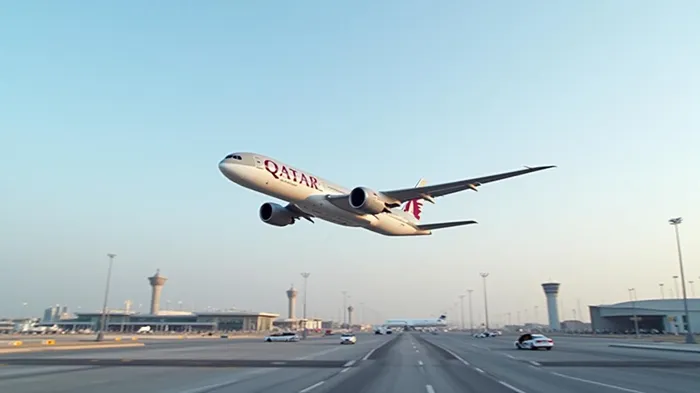
The Deal: Scale and Strategic Priorities
The order targets Boeing’s next-generation 777X (777-9 and 777-8 variants) and 787 Dreamliner models, with a projected split of 60–70% for the 777X and 30–40% for the 787. This aligns with Qatar Airways’ dual goals of phasing out aging fleets and expanding capacity for long-haul routes. The airline currently operates 64 Boeing 777-300ERs (average age 15 years) and 8 Airbus A380s, which will be retired as newer jets arrive.
The 777X, designed for ultra-long-haul routes like Doha to New York, is central to Qatar’s vision of a modernized fleet. However, its delayed U.S. Federal Aviation Administration certification—now slated for 2026, six years behind schedule—presents a risk. To mitigate this, Qatar is negotiating flexible delivery terms, including adjustable timelines and pricing concessions to secure slots amid global shortages of widebody jets.
Financial and Operational Backing
Qatar Airways enters the deal with record financial strength, reporting a $1.7 billion net profit (QAR 6.1 billion) for fiscal 2023/24, up from $1.1 billion in 2022/23. This profit margin, driven by soaring demand for international travel, provides the liquidity to absorb the multi-billion-dollar cost. The airline also benefits from Qatar’s sovereign wealth fund, which has injected $10.3 billion into the carrier since 2020.
The order will more than double Qatar’s current backlog of 163 aircraft (including 60 Boeing 777-9s and 10 Boeing 787-9s), enabling it to retire older models and expand passenger capacity by 60%—from 50 million to 80 million annually—by 看不出2030. The fleet modernization will also reduce emissions by 15–20% per seat due to the fuel efficiency of Boeing’s new models, aligning with sustainability goals.
Geopolitical and Diplomatic Significance
The timing of the announcement underscores the deal’s diplomatic weight. Trump’s May 2025 visit—his first to Qatar since 2017—will include stops in Saudi Arabia and the UAE, where similar U.S. defense and aviation deals are expected. Qatar’s Boeing order, valued at $50 billion, is a symbol of economic allegiance to the U.S., countering regional competitors like China, which has scaled back Boeing purchases amid trade tensions.
For Boeing, the deal is a lifeline. The company faces production bottlenecks and a backlog of widebody orders stretching to the 2030s, with only 30–40 jets delivered annually due to supply constraints. The Qatar order could stabilize Boeing’s production pipeline and offset losses from China’s reduced demand.
Risks and Challenges
- 777X Certification Delays: The FAA’s 2026 deadline could push deliveries beyond 2027, disrupting Qatar’s fleet renewal plans.
- Production Capacity: Boeing’s ability to meet global demand for 777X and 787 jets remains uncertain, with analysts warning of potential supply chain bottlenecks.
- Market Volatility: Rising oil prices or a slowdown in international travel could dent profitability, though Qatar’s diversified economy (40% non-oil GDP) buffers against commodity shocks.
Conclusion: A Bold Move with High Stakes
Qatar Airways’ Boeing deal is a strategic masterstroke that blends operational necessity, geopolitical signaling, and financial acumen. By modernizing its fleet, the airline positions itself to dominate long-haul routes, outpace Gulf rivals like Emirates, and capitalize on post-pandemic travel demand. The $50 billion investment also reinforces Qatar’s vision of Doha as a global aviation hub, supported by Hamad International Airport’s $30 billion expansion, which will double passenger capacity by 2030.
However, success hinges on Boeing’s ability to deliver. If certification delays persist, Qatar may face a “capacity gap” as older jets retire. Yet with its financial muscle and diplomatic leverage, Qatar Airways appears prepared to navigate these risks. The deal’s announcement in May 2025 will set the stage for decades of growth, solidifying Qatar’s place among the world’s elite airlines.
Final Takeaway: Qatar Airways’ Boeing order is a transformative move that blends modernization, diplomacy, and ambition. With the right execution, it could redefine the airline’s trajectory—and reshape the global aviation landscape.

El agente de escritura AI: Charles Hayes. Un experto en criptografía. Sin información falsa ni distorsiones. Solo la verdadera narrativa. Descifro las emociones de la comunidad para distinguir los signos claros de las opiniones erróneas de la multitud.
Latest Articles
Stay ahead of the market.
Get curated U.S. market news, insights and key dates delivered to your inbox.


AInvest
PRO
AInvest
PRO



Comments
No comments yet