
U.S. Q4 Final GDP Misses Expectations as Growth Slows, While Fed's Key Inflation Gauge Holds Steady Ahead of War
 Aime Summary
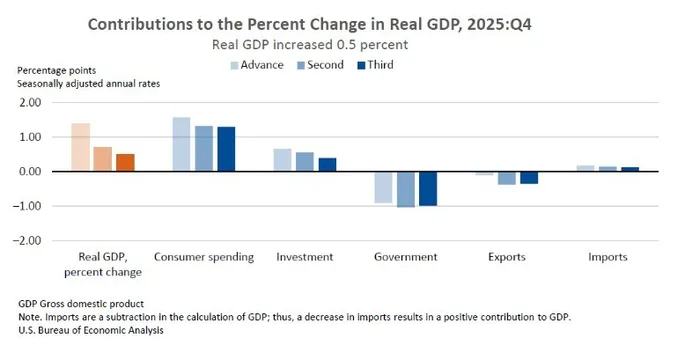
U.S. economic growth slowed more than expected in the fourth quarter of 2025, according to the latest estimate from the Bureau of Economic Analysis. Real gross domestic product expanded at an annualized pace of 0.5%, falling short of the 0.7% forecast and matching the prior estimate. The downward surprise was largely driven by weaker investment, pointing to a loss of momentum heading into year-end. This marks a sharp deceleration from the 4.4% growth recorded in the third quarter.
At the same time, inflation data showed a more stable trend. The Core Personal Consumption Expenditures Price Index (Core PCE), the Federal Reserve's preferred gauge for underlying inflation, rose 0.4% on a monthly basis in February and 3.0% from a year earlier. The reading came in line with expectations and unchanged from the previous month, suggesting that core inflation pressures remained steady.
On a year-over-year basis, the February core reading edged slightly lower from January's 3.1% pace, indicating modest progress in easing inflation. Meanwhile, headline PCE, which includes food861035-- and energy, also increased 0.4% on the month, exceeding expectations for a 0.32% gain. Annual headline inflation stood at 2.8%, in line with forecasts.
Importantly, the data largely precedes the escalation of geopolitical tensions tied to the Iran conflict, which began at the end of February. As a result, the report captures minimal impact from the recent surge in energy prices. This context makes the inflation picture more concerning, as it suggests the Federal Reserve was already contending with persistent price pressures before the latest external shock.
Overall, the combination of slowing growth and still-elevated inflation presents a challenging backdrop for policymakers, as the economy shows signs of softening even as inflation remains above target.

Crypto market researcher and content strategist with 3 years of experience in digital asset analysis and market commentary. Skilled at transforming complex blockchain data and trading signals into clear, actionable insights for investors. Experienced in covering Bitcoin, Ethereum, and emerging ecosystems including DeFi, Layer2, and AI-related projects. Passionate about bridging professional market research with accessible storytelling to empower readers and investors in the fast-evolving crypto landscape.
Latest Articles
Stay ahead of the market.
Get curated U.S. market news, insights and key dates delivered to your inbox.


AInvest
PRO
AInvest
PRO



Comments
No comments yet