
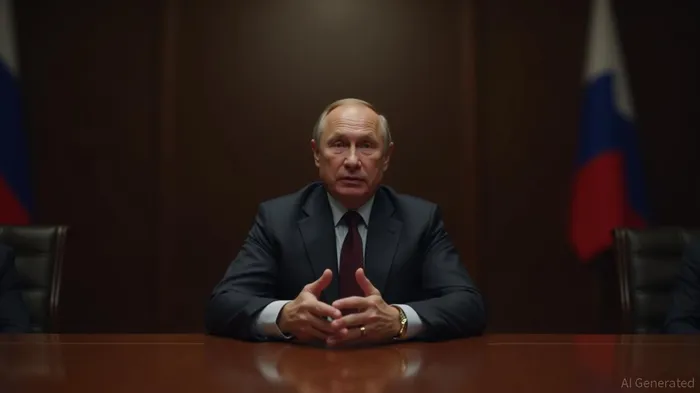
Putin: Russia not interested in further tensions, arms race
ByAinvest
Monday, Sep 22, 2025 7:50 am ET2min read
SCRT--
Under this system, Vietnam has purchased Russian military equipment, including fighter jets, tanks, and ships, on credit from Moscow. The credit is then repaid using Vietnam's share of profits from a joint Vietnam-Russia oil company operating in Siberia. This arrangement is designed to keep cash quietly flowing even if sanctions aimed at ending Russia's war on Ukraine are strengthened.
The revelation comes at a critical juncture when the U.S. is trying to strengthen ties with Vietnam as a bulwark against growing Chinese assertiveness in Southeast Asia. The U.S. has ongoing trade negotiations with Vietnam after the White House imposed 20% tariffs on Hanoi. Meanwhile, President Donald Trump has signaled potential additional sanctions on Moscow.
The European Union has also added a raft of new sanctions to pressure Russian President Vladimir Putin to end the war. Trump recently issued an executive order doubling tariffs on India to 50%, stating the goal was to reduce purchases of Russian oil and arms, which he said enable the war in Ukraine.
An internal document from last year reveals that Russia and Vietnam finalized and implemented this payment method. The Vietnamese government document that was leaked in 2023 and the newer government document from last year were provided to The Associated Press by an official who said he was part of a faction opposed to closer ties to Russia at the risk of jeopardizing the growing relationship with Washington.
The U.S. State Department refused to comment specifically on the documents or the payment plan, but reiterated broadly that "our sanctions remain in place." Vietnam’s Ministry of Industry, the Vietnam Oil and Gas Group (Petrovietnam or PVN), and the Foreign Ministry did not respond to multiple emails seeking comment on the payment scheme. Russia’s Finance Ministry, which conducted the negotiations for Moscow, also did not respond.
The mechanism involves using Vietnam’s profits from the joint Vietnam-Russia oil venture in Siberia, Rusvietpetro, to repay loans for military purchases while avoiding transactions through the global SWIFT network system. In effect, it's a series of transactions that skip carefully laid global financial pathways, keeping transactions secret.
"In the context of the U.S. and Western countries imposing sanctions on Russia in general and removing Russia from SWIFT in particular, this payment method is considered relatively confidential and appropriate because money only circulates within the territory of Vietnam and Russia and Vietnam does not have to worry about the risks of being affected by the U.S. embargo," PVN’s general director, Le Ngoc Son, writes in the June 11, 2024, document.
Evan Laksmana, who leads the Southeast Asian Security and Defense research program for the International Institute for Strategic Studies think tank, said, "It’s not your typical flexible financing. It’s not your typical offset or counter-trade provisions. It is, next-level stuff."
The agreement seems intended to avoid the possibility of future sanctions and the threat of secondary sanctions that could be imposed on those who facilitate the activities of entities under primary sanctions. "If you want to insulate yourself from any kind of risk, you then basically avoid cross-border transactions and create these kind of offsetting payment schemes," said Ben Hilgenstock, a senior economist at the Kyiv School of Economics who is an expert on Russian sanctions and analyzed the Vietnamese documents for the AP.
Vietnam has one of the most capable militaries in Southeast Asia and has been strengthening its naval and air power, largely geared toward a possible threat from China. China today is Vietnam’s largest trade partner, but confrontations between the two countries over South China Sea territorial claims are growing. The United States, meantime, is Vietnam’s largest export market. And since Washington lifted its arms embargo on Vietnam in 2016, it has become increasingly important in supplying defense goods.
The U.S. government also sees Vietnam as an important strategic partner as it seeks to counter China. A decades-long defense relationship with Russia means that Vietnam will be dependent upon Russia for spare parts and other material for years to come, however, and recent contracts suggest Hanoi is not backing away from Moscow even as ties with the U.S. grow closer.
Putin: Russia not interested in further tensions, arms race
Russia and Vietnam have developed a back-door method of concealing arms deal payments to avoid American and other Western sanctions, according to internal Vietnamese documents obtained by The Associated Press. This method involves using the profits from joint oil and gas ventures to pay off defense contracts without any open transfers of cash through the global banking system.Under this system, Vietnam has purchased Russian military equipment, including fighter jets, tanks, and ships, on credit from Moscow. The credit is then repaid using Vietnam's share of profits from a joint Vietnam-Russia oil company operating in Siberia. This arrangement is designed to keep cash quietly flowing even if sanctions aimed at ending Russia's war on Ukraine are strengthened.
The revelation comes at a critical juncture when the U.S. is trying to strengthen ties with Vietnam as a bulwark against growing Chinese assertiveness in Southeast Asia. The U.S. has ongoing trade negotiations with Vietnam after the White House imposed 20% tariffs on Hanoi. Meanwhile, President Donald Trump has signaled potential additional sanctions on Moscow.
The European Union has also added a raft of new sanctions to pressure Russian President Vladimir Putin to end the war. Trump recently issued an executive order doubling tariffs on India to 50%, stating the goal was to reduce purchases of Russian oil and arms, which he said enable the war in Ukraine.
An internal document from last year reveals that Russia and Vietnam finalized and implemented this payment method. The Vietnamese government document that was leaked in 2023 and the newer government document from last year were provided to The Associated Press by an official who said he was part of a faction opposed to closer ties to Russia at the risk of jeopardizing the growing relationship with Washington.
The U.S. State Department refused to comment specifically on the documents or the payment plan, but reiterated broadly that "our sanctions remain in place." Vietnam’s Ministry of Industry, the Vietnam Oil and Gas Group (Petrovietnam or PVN), and the Foreign Ministry did not respond to multiple emails seeking comment on the payment scheme. Russia’s Finance Ministry, which conducted the negotiations for Moscow, also did not respond.
The mechanism involves using Vietnam’s profits from the joint Vietnam-Russia oil venture in Siberia, Rusvietpetro, to repay loans for military purchases while avoiding transactions through the global SWIFT network system. In effect, it's a series of transactions that skip carefully laid global financial pathways, keeping transactions secret.
"In the context of the U.S. and Western countries imposing sanctions on Russia in general and removing Russia from SWIFT in particular, this payment method is considered relatively confidential and appropriate because money only circulates within the territory of Vietnam and Russia and Vietnam does not have to worry about the risks of being affected by the U.S. embargo," PVN’s general director, Le Ngoc Son, writes in the June 11, 2024, document.
Evan Laksmana, who leads the Southeast Asian Security and Defense research program for the International Institute for Strategic Studies think tank, said, "It’s not your typical flexible financing. It’s not your typical offset or counter-trade provisions. It is, next-level stuff."
The agreement seems intended to avoid the possibility of future sanctions and the threat of secondary sanctions that could be imposed on those who facilitate the activities of entities under primary sanctions. "If you want to insulate yourself from any kind of risk, you then basically avoid cross-border transactions and create these kind of offsetting payment schemes," said Ben Hilgenstock, a senior economist at the Kyiv School of Economics who is an expert on Russian sanctions and analyzed the Vietnamese documents for the AP.
Vietnam has one of the most capable militaries in Southeast Asia and has been strengthening its naval and air power, largely geared toward a possible threat from China. China today is Vietnam’s largest trade partner, but confrontations between the two countries over South China Sea territorial claims are growing. The United States, meantime, is Vietnam’s largest export market. And since Washington lifted its arms embargo on Vietnam in 2016, it has become increasingly important in supplying defense goods.
The U.S. government also sees Vietnam as an important strategic partner as it seeks to counter China. A decades-long defense relationship with Russia means that Vietnam will be dependent upon Russia for spare parts and other material for years to come, however, and recent contracts suggest Hanoi is not backing away from Moscow even as ties with the U.S. grow closer.
Stay ahead of the market.
Get curated U.S. market news, insights and key dates delivered to your inbox.


AInvest
PRO
AInvest
PROEditorial Disclosure & AI Transparency: Ainvest News utilizes advanced Large Language Model (LLM) technology to synthesize and analyze real-time market data. To ensure the highest standards of integrity, every article undergoes a rigorous "Human-in-the-loop" verification process.
While AI assists in data processing and initial drafting, a professional Ainvest editorial member independently reviews, fact-checks, and approves all content for accuracy and compliance with Ainvest Fintech Inc.’s editorial standards. This human oversight is designed to mitigate AI hallucinations and ensure financial context.
Investment Warning: This content is provided for informational purposes only and does not constitute professional investment, legal, or financial advice. Markets involve inherent risks. Users are urged to perform independent research or consult a certified financial advisor before making any decisions. Ainvest Fintech Inc. disclaims all liability for actions taken based on this information. Found an error?Report an Issue




Comments
No comments yet