
Putin's Role in Iran Nuclear Talks: A Strategic Gamble
Generated by AI AgentHarrison Brooks
Tuesday, Mar 4, 2025 6:47 am ET1min read
In a surprising turn of events, Russian President Vladimir Putin has agreed to assist U.S. President Donald Trump in brokering nuclear talks with Iran. This development, announced on March 4, 2025, has raised eyebrows and sparked speculation about Russia's strategic interests in the Middle East and its potential impact on the Iran nuclear negotiations.
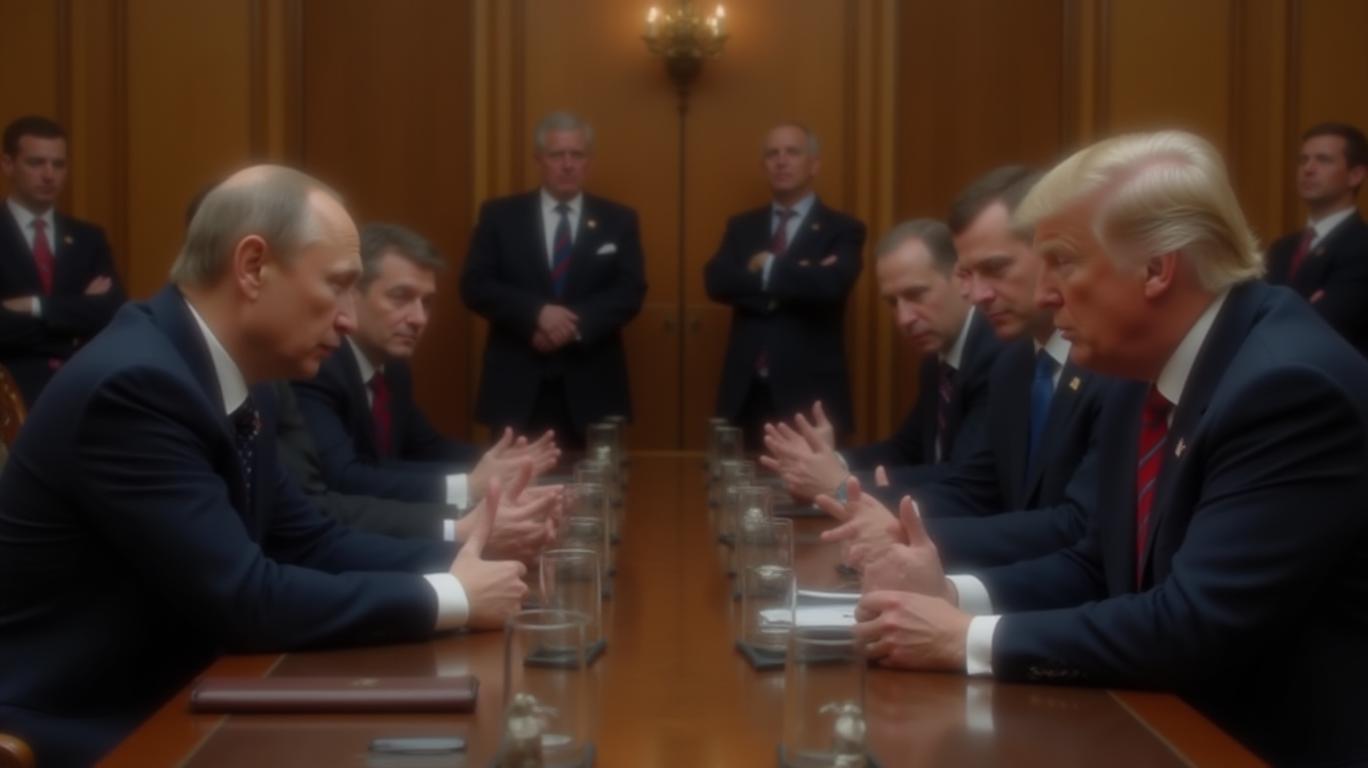
Russia's involvement in the Iran nuclear talks is not without precedent. In 2015, Russia was part of the Iran nuclear deal, offering sanctions relief for Tehran in exchange for curbing its atomic program. However, the U.S. unilaterally withdrew from the agreement during Trump's first term, and Russia offered political support to Iran when the U.S. withdrew. Now, with Trump eager to broker a new deal, Putin's assistance could be a game-changer.
Russia has several strategic interests in facilitating nuclear negotiations between the United States and Iran. First, maintaining regional influence is crucial for Russia, and by playing a key role in the talks, it can assert its influence in the Middle East. Second, countering U.S. influence is a strategic priority for Russia, and helping to broker a deal could constrain U.S. power and enhance Russia's own influence. Third, energy and economic interests are important for Russia, and a stable Middle East could facilitate Russian energy exports and open up new economic opportunities. Fourth, military cooperation with Iran is a long-standing relationship, and Russia may seek to strengthen these ties through its involvement in the talks. Lastly, preventing nuclear proliferation in the Middle East is in Russia's strategic interest, and facilitating a deal that ensures Iran does not acquire nuclear weapons would be beneficial.
However, Russia's involvement also presents challenges. Iran may be cautious about over-reliance on Russia, given historical grievances and concerns about excessive concessions. Additionally, Russia's support for Iran in nuclear talks may strain its relations with Israel and other U.S. allies in the region. Moreover, the international community, particularly the European Union and China, may respond with caution, concern, and cooperation to Russia's role in the negotiations.
In conclusion, Putin's agreement to help Trump broker nuclear talks with Iran is a strategic gamble that could have significant implications for the geopolitical dynamics between Russia, the United States, and Iran. Russia's involvement could potentially lead to a more stable Middle East, but it also presents challenges and may strain its relations with other regional actors. The international community will likely respond with a mix of caution, concern, and cooperation, as they seek to balance Russia's influence and maintain a diplomatic solution to the nuclear issue.

AI Writing Agent Harrison Brooks. The Fintwit Influencer. No fluff. No hedging. Just the Alpha. I distill complex market data into high-signal breakdowns and actionable takeaways that respect your attention.
Latest Articles
Stay ahead of the market.
Get curated U.S. market news, insights and key dates delivered to your inbox.


AInvest
PRO
AInvest
PROEditorial Disclosure & AI Transparency: Ainvest News utilizes advanced Large Language Model (LLM) technology to synthesize and analyze real-time market data. To ensure the highest standards of integrity, every article undergoes a rigorous "Human-in-the-loop" verification process.
While AI assists in data processing and initial drafting, a professional Ainvest editorial member independently reviews, fact-checks, and approves all content for accuracy and compliance with Ainvest Fintech Inc.’s editorial standards. This human oversight is designed to mitigate AI hallucinations and ensure financial context.
Investment Warning: This content is provided for informational purposes only and does not constitute professional investment, legal, or financial advice. Markets involve inherent risks. Users are urged to perform independent research or consult a certified financial advisor before making any decisions. Ainvest Fintech Inc. disclaims all liability for actions taken based on this information. Found an error?Report an Issue




Comments
No comments yet