
Putin's 'Kremlin Internet': A New Super-App Called 'Max' to Control Online Activities
ByAinvest
Friday, Aug 1, 2025 12:39 am ET1min read
MSFT--
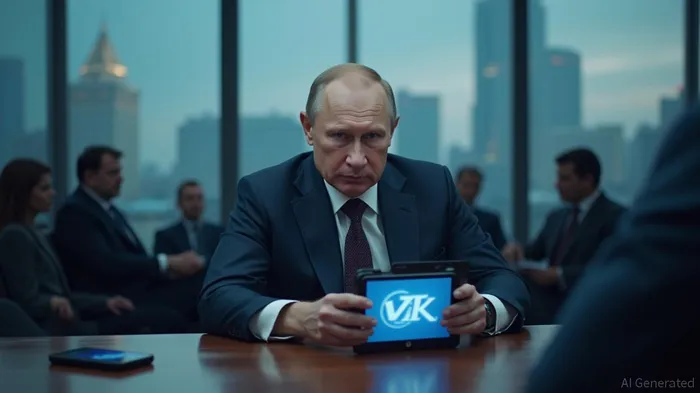
VK, which is indirectly controlled by the state-owned energy company Gazprom and government-backed investors, will have substantial power over Russians' online activities through Max. The app lacks end-to-end encryption, making it easier for authorities to access user data. This move is part of a broader trend towards digital sovereignty, where countries seek to reduce reliance on foreign-owned technology companies and infrastructure [2].
The appointment of VK as the national messaging service is a significant step in Russia's ongoing efforts to control the internet. Since the start of the war in Ukraine, Russia has been increasingly restricting access to foreign services and has been shutting down the internet with increasing regularity. In July alone, there were a record 2,591 mobile internet blackouts across the country [2].
The Max app aims to provide a comprehensive online experience for Russian users, combining various functionalities in a single platform. However, its success in supplanting competitors like WhatsApp and YouTube remains uncertain. While the government's backing may initially drive adoption, long-term usage is likely to depend on the app's ability to meet users' needs and preferences [2].
As Russia continues to develop Max, it is not just an attempt to build a sovereign internet but also an attempt to destroy what already exists. The app's lack of end-to-end encryption and the government's control over its development raise significant concerns about privacy and freedom of expression [2].
References:
[1] https://www.aljazeera.com/news/2025/7/31/microsoft-accuses-russias-fsb-of-using-malware-against-foreign-embassies
[2] https://www.bloomberg.com/news/articles/2025-07-30/russia-replaces-popular-apps-with-putin-approved-alternatives
Russian President Vladimir Putin is furthering his vision of a state-controlled internet by appointing VK Co. as the official national messaging service of Russia. The new app, "Max", is a super-app that combines communication, financial management, access to state services, and event access. Putin has issued an order to develop new restrictions for software and communication services from "unfriendly" states, and WhatsApp is expected to be affected. VK is indirectly controlled by the state-owned energy company Gazprom and government-backed investors. The app "Max" uses no end-to-end encryption, making it easier for authorities to access user data.
Russian President Vladimir Putin is advancing his vision of a state-controlled internet by appointing VK Co. as the official national messaging service of Russia. The new app, "Max," is a super-app that combines communication, financial management, access to state services, and event access. This move comes as Putin has issued an order to develop new restrictions for software and communication services from "unfriendly" states, with WhatsApp expected to be among the targets [2].VK, which is indirectly controlled by the state-owned energy company Gazprom and government-backed investors, will have substantial power over Russians' online activities through Max. The app lacks end-to-end encryption, making it easier for authorities to access user data. This move is part of a broader trend towards digital sovereignty, where countries seek to reduce reliance on foreign-owned technology companies and infrastructure [2].
The appointment of VK as the national messaging service is a significant step in Russia's ongoing efforts to control the internet. Since the start of the war in Ukraine, Russia has been increasingly restricting access to foreign services and has been shutting down the internet with increasing regularity. In July alone, there were a record 2,591 mobile internet blackouts across the country [2].
The Max app aims to provide a comprehensive online experience for Russian users, combining various functionalities in a single platform. However, its success in supplanting competitors like WhatsApp and YouTube remains uncertain. While the government's backing may initially drive adoption, long-term usage is likely to depend on the app's ability to meet users' needs and preferences [2].
As Russia continues to develop Max, it is not just an attempt to build a sovereign internet but also an attempt to destroy what already exists. The app's lack of end-to-end encryption and the government's control over its development raise significant concerns about privacy and freedom of expression [2].
References:
[1] https://www.aljazeera.com/news/2025/7/31/microsoft-accuses-russias-fsb-of-using-malware-against-foreign-embassies
[2] https://www.bloomberg.com/news/articles/2025-07-30/russia-replaces-popular-apps-with-putin-approved-alternatives
Stay ahead of the market.
Get curated U.S. market news, insights and key dates delivered to your inbox.
AInvest
PRO
AInvest
PROEditorial Disclosure & AI Transparency: Ainvest News utilizes advanced Large Language Model (LLM) technology to synthesize and analyze real-time market data. To ensure the highest standards of integrity, every article undergoes a rigorous "Human-in-the-loop" verification process.
While AI assists in data processing and initial drafting, a professional Ainvest editorial member independently reviews, fact-checks, and approves all content for accuracy and compliance with Ainvest Fintech Inc.’s editorial standards. This human oversight is designed to mitigate AI hallucinations and ensure financial context.
Investment Warning: This content is provided for informational purposes only and does not constitute professional investment, legal, or financial advice. Markets involve inherent risks. Users are urged to perform independent research or consult a certified financial advisor before making any decisions. Ainvest Fintech Inc. disclaims all liability for actions taken based on this information. Found an error?Report an Issue




Comments
No comments yet