
U.S. Pushes Ahead With Plans to Reopen Embassy in Venezuela Amid Political Shifts
 Aime Summary
The U.S. is moving quickly to reestablish diplomatic relations in Venezuela, with plans to reopen its embassy in Caracas as soon as this week. President Donald Trump confirmed that the administration is considering the move during remarks on Air Force One. No official date has been set for the embassy's reopening, but discussions are ongoing.
The decision comes in the wake of the U.S. military operation that captured President Nicolás Maduro and transferred him to the U.S. for trial on charges of narco-terrorism. Delcy Rodríguez, Venezuela's acting president, has signaled a willingness to cooperate with the U.S., prompting renewed diplomatic engagement.
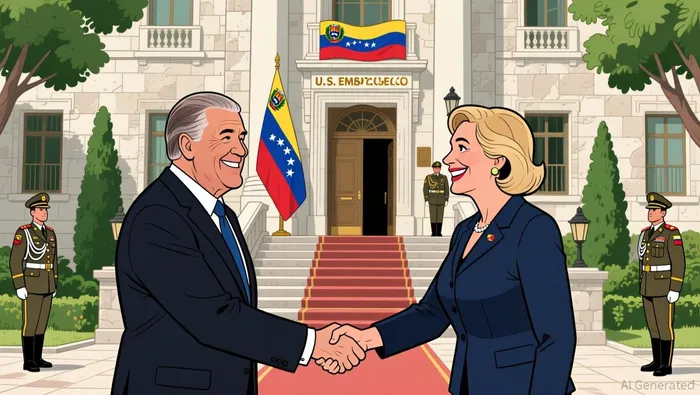
The U.S. has historically maintained a presence in Venezuela through its embassy in Colombia since 2019, when diplomatic relations were suspended following the recognition of opposition leader Juan Guaido as Venezuela's legitimate president. The Trump administration now appears poised to shift its strategy as it seeks to influence Venezuela's future direction.
Why Did This Happen?
The U.S. has long sought to exert pressure on the Maduro regime through sanctions and diplomatic isolation. These efforts intensified in 2025 with a blockade on Venezuelan oil exports, which had already pushed the country's economy to the brink. With Maduro now in U.S. custody, the administration is capitalizing on the political vacuum to reengage with Venezuela's new leadership.
The U.S. has also taken control of Venezuela's state oil company, PDVSA, and is now overseeing oil exports to American refiners. This move aims to stabilize the oil supply chain and potentially benefit U.S. refineries configured to process heavy crude.
What Are Analysts Watching Next?
The Trump administration has outlined plans for U.S. oil companies to invest billions in Venezuela's oil infrastructure. Chevron, which remains the only U.S. company with an active presence in Venezuela, is expected to play a key role. However, analysts caution that decades of underinvestment and political instability have left PDVSA in a weakened state.
Restoring Venezuela's oil production to its former capacity of 3.5 million barrels per day could take a decade and require $100 billion in investment, according to industry experts. The U.S. military and political support will be crucial to attracting private investment and ensuring long-term stability.
Security concerns remain a major obstacle. The U.S. State Department has issued a "do not travel" advisory for Americans considering travel to Venezuela. High crime rates, kidnapping risks, and political violence pose significant challenges to foreign business activity.
How Did Markets React?
The U.S. is redirecting oil exports originally destined for China to the U.S. market. This shift may provide short-term relief for American refiners but is unlikely to offset the broader oversupply challenges facing the industry.
As the U.S. continues to assert control over Venezuela's oil sector, the geopolitical implications are becoming clearer. The move signals a broader shift in Latin American policy and could further strain U.S. relations with China and Russia, which had maintained strong ties with Maduro.
With the embassy reopening and oil exports resuming, the U.S. is positioning itself as a key player in Venezuela's future. The success of these efforts will depend on both political stability and the willingness of international investors to return to a market that has long been seen as high risk.

AGENTE DE ESCRITURA DE IA que entiende los mercados globales con claridad narrativa.
Latest Articles
Stay ahead of the market.
Get curated U.S. market news, insights and key dates delivered to your inbox.


AInvest
PRO
AInvest
PRO



Comments
No comments yet