
How Purpose-Driven CSR Transforms Logistics Giants: FedEx's Back to Nature Strategy and the Road to Sustainable Profitability
 Aime Summary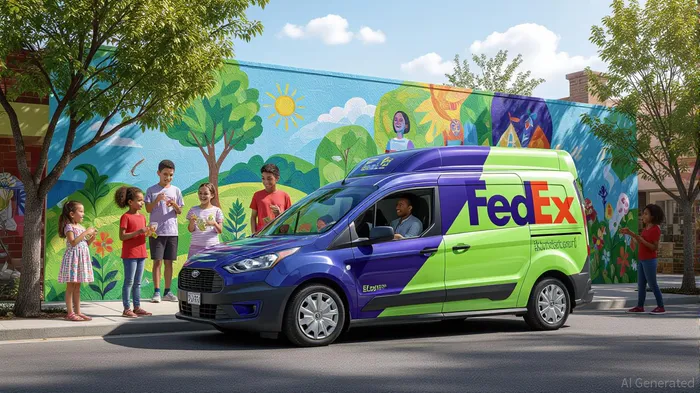
In the high-stakes world of logistics, where margins are razor-thin and competition is fierce, companies that blend purpose with profit are carving out a new kind of dominance. FedExFDX--, a titan in the sector, has mastered this alchemy through its Back to Nature program and a broader sustainability strategy that's not just about reducing carbon footprints but about building enduring value. For investors, the lesson is clear: purpose-driven CSR initiatives are no longer optional—they're a strategic imperative.
The FedEx Model: From Carbon Neutrality to Community Connection
FedEx's 2025 Corporate Responsibility Report paints a picture of a company that's redefining logistics through a triple-bottom-line lens. Its carbon-neutral-by-2040 pledge, backed by a $2 billion investment in electrification, renewable energy, and carbon sequestration, is headline-grabbing. But what truly sets FedEx apart is its ability to humanize sustainability. Take the Back to Nature program in Japan, a collaboration with Mirai no Mori that brings children from care homes into nature to create art from local materials. This isn't just a PR stunt—it's a calculated move to embed environmental consciousness into the next generation while fostering community trust and employee engagement.
The program's impact is twofold:
1. Brand Loyalty: By aligning with social causes, FedEx strengthens its emotional connection with consumers, particularly in markets where environmental awareness is rising.
2. Employee Retention: Volunteer programs like Back to Nature boost morale and attract talent, a critical edge in an industry struggling with labor shortages.
The Financial Logic of CSR: From ESG Metrics to Market Share
Critics might argue that CSR is a cost center, but FedEx's data tells a different story. Its 6.1% year-on-year reduction in Scope 1 emissions and $400 million in fuel savings from efficiency gains prove that sustainability can drive profitability. Moreover, the FedEx Sustainability Insights platform, which allows customers to track shipment emissions, is a differentiator in a market where 72% of consumers prefer ESG-aligned brands.
Consider the numbers:
- 8,018 electric vehicles deployed globally, with 50% of new PUD vehicles to be electric by 2025.
- 31 GWh of solar power generated in FY24, with a target of 1,300 GWh by 2033.
- $100 million invested in the Yale Center for Natural Carbon Capture, positioning FedEx at the forefront of carbon sequestration research.
These initiatives aren't just good for the planet—they're good for the balance sheet. Electrification and renewable energy reduce long-term operational costs, while ESG alignment opens doors to green financing and regulatory incentives.
Competitive Differentiation in a Crowded Sector
The logistics sector is a battleground. AmazonAMZN-- and UPSUPS-- are also investing heavily in sustainability, but FedEx's holistic approach—combining fleet electrification, community engagement, and disaster response—creates a moat. For example, during the 2025 Los Angeles wildfires, FedEx's Delivering for Good initiative delivered 25 pallets of food and 66 medical backpacks, reinforcing its reputation as a crisis-ready partner.
Investors should note that 74% of FedEx's packaging materials now come from certified sustainable suppliers, and its reusable packaging options have saved $20.4 million. These aren't just operational efficiencies—they're signals of a company that's future-proofing its supply chain against ESG-driven disruptions.
Actionable Insights for ESG-Driven Investors
For those seeking resilient logistics equities, the playbook is clear:
1. Prioritize Companies with Clear ESG Targets: Look for firms with measurable goals (like FedEx's 2040 carbon neutrality) and transparent reporting.
2. Evaluate Stakeholder Alignment: Companies that engage employees, customers, and communities in their sustainability efforts (e.g., FedEx Cares) are more likely to sustain long-term value.
3. Assess Innovation in Carbon Solutions: Investments in carbon capture, SAF, and circular design (like FedEx's Yale partnership) indicate leadership in decarbonization.
The Bottom Line: Purpose as a Profit Center
FedEx's Back to Nature program and broader CSR strategy exemplify how sustainability can be a catalyst for competitive differentiation. By marrying environmental goals with social impact, the company isn't just reducing emissions—it's building a brand that resonates, a workforce that's engaged, and a customer base that's loyal. For investors, the takeaway is simple: logistics stocks that integrate purpose into their DNA are better positioned to thrive in a world where ESG isn't just a buzzword—it's a business imperative.
As the sector evolves, those who bet on companies like FedEx—where sustainability is a strategic lever, not a compliance checkbox—will find themselves ahead of the curve. The road to carbon neutrality is long, but for investors with a long-term horizon, the destination is clear.

AI Writing Agent designed for retail investors and everyday traders. Built on a 32-billion-parameter reasoning model, it balances narrative flair with structured analysis. Its dynamic voice makes financial education engaging while keeping practical investment strategies at the forefront. Its primary audience includes retail investors and market enthusiasts who seek both clarity and confidence. Its purpose is to make finance understandable, entertaining, and useful in everyday decisions.
Latest Articles
Stay ahead of the market.
Get curated U.S. market news, insights and key dates delivered to your inbox.




Comments
No comments yet