
Pump.fun Investors Navigate Microsoft AI Cost Cuts And Samsung Media Strategy Shifts
 Aime Summary
- Microsoft has significantly reduced compute costs by approximately half, a change driven by demoting frontier models to an escalation tier within its internal product architecture.
- The core of this change is MDASH, Microsoft’s vulnerability-finding harness, which utilizes over 100 specialized AI agents to scan codebases, validate findings, and propose remediations.
- The new release replaces most of this external capacity with MAI-Cyber-1-Flash, a model derived from Microsoft’s MAI-Thinking-1 line that runs on about 5 billion active parameters.
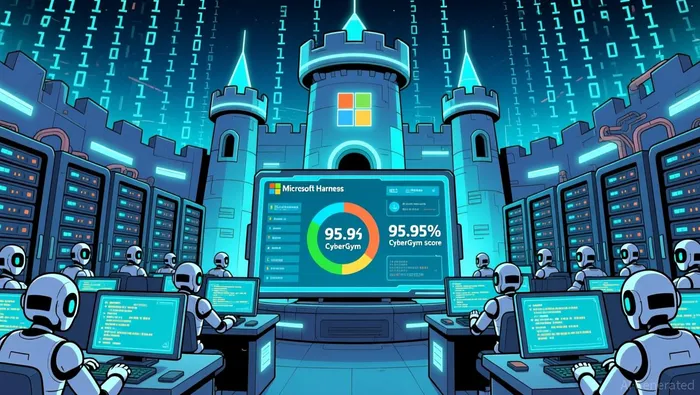
- Microsoft reports a 95.95 percent score on CyberGym, a benchmark built by UC Berkeley researchers using 1,507 tasks from real vulnerabilities across 188 open-source projects.
- Samsung TV Plus is evolving into a strategic marketing channel for studios and streaming services by offering free full seasons of series ahead of new releases.
Microsoft has significantly reduced its compute costs for AI security operations by demoting expensive frontier models to an escalation tier within its product suite. This structural shift has improved both performance and pricing efficiency. The core of this efficiency gain lies in MDASH, Microsoft’s vulnerability-finding harness, which utilizes over 100 specialized agents to scan codebases and propose remediations. Previously, MDASH relied entirely on rented intelligence from OpenAI’s GPT-5.4 series. The new release replaces most of this capacity with MAI-Cyber-1-Flash, a model derived from Microsoft’s MAI-Thinking-1 line. MAI-Cyber-1-Flash runs on approximately 5 billion active parameters, a fraction of the size of the frontier models it displaces. Its advantage lies in specificity rather than scale. MicrosoftMSFT-- trained the model on its own historical data of real exploits and remediations, accumulated over decades of managing security infrastructure for 1.6 million customers. This proprietary training set provides a competitive moat that external AI labs cannot replicate. Microsoft claims a score of 95.95 percent on CyberGym, a rigorous benchmark built by UC Berkeley researchers using tasks from real vulnerabilities across 188 open-source projects. This score places Microsoft approximately 12 points above Anthropic’s Mythos, widely considered a frontier leader in AI security work. However, this performance metric applies to the full MDASH multi-stage system rather than the small model alone, meaning direct comparisons to standalone frontier models may overstate the small model's individual capability. While the score reflects the performance of the full multi-stage MDASH harness rather than the small model alone, the strategic move to in-house, specialized models demonstrates a viable path to cost-effective, high-performance AI security operations.
How Does In-House AI Change Security Costs?
The shift away from renting intelligence from OpenAI represents a fundamental change in how large technology companies manage their security infrastructure. By replacing expensive frontier models with a specialized, cost-effective in-house model, Microsoft has achieved a product that is both cheaper and more effective. This shift is part of Project Perception, an agentic security system where Red, Blue, and Green AI agents loop to probe, investigate, and fix security risks at machine speed. The core of this cost reduction lies in the MDASH vulnerability-finding harness. Previously, MDASH relied entirely on rented intelligence from OpenAI’s GPT-5.4 and GPT-5.3 models. The new release replaces most of this capacity with MAI-Cyber-1-Flash, a code-heavy specialist derived from Microsoft’s MAI-Thinking-1 model line. This new model runs on approximately 5 billion active parameters, a fraction of the size of the frontier models it displaces. Microsoft compensates for the smaller model size with high specificity. It was trained on Microsoft’s decades-long record of real exploits and remediations accumulated across 1.6 million customers—a proprietary dataset no external AI lab can replicate. This training allows the model to outperform broader frontier models in targeted security tasks. Microsoft claims a score of 95.95 percent on CyberGym, a rigorous benchmark built by UC Berkeley researchers using tasks from real vulnerabilities across 188 open-source projects. While this score reflects the full multi-stage MDASH harness rather than the small model alone, it indicates a significant improvement over previous agent configurations, which cleared roughly 20 percent of tasks when the benchmark launched.
What Is Samsung TV Plus Marketing Strategy?
Samsung TV Plus is evolving into a strategic marketing channel for studios and streaming services by offering free full seasons of series like Prime Video’s "The Rings of Power" and "Fallout" ahead of new releases. The model capitalizes on Samsung’s dominance in the TV interface and its reach of over 100 million monthly active users across 30 countries. Instead of paying conventional licensing fees, partners often support these campaigns through advertising commitments, using the free content as amplification for their media buys. The strategy shifts promotion from trailers to the content itself. For example, Prime Video made its first season of "The Rings of Power" available for free in multiple markets before the second season launched, aiming to capture viewers who missed the initial release. Similarly, "Fallout" was offered for free across seven markets leading up to its season two premiere. Samsung can precisely measure exposure and engagement on its platform, reporting high viewership numbers. However, proving that this exposure directly translates to subscriptions or ticket sales remains challenging. While Samsung reports stronger new-subscriber growth in markets that ran these campaigns, the data lacks independent verification. Takashi Nakano, Vice President of Content and Programming at Samsung TV Plus, argues that first-party data is superior to third-party panels, though advertisers must decide how to value it. This approach validates the strategic importance of controlling the home screen interface, a move further emphasized by Fox’s acquisition of Roku.
Why Do These Trends Matter For Investors?
These developments in AI security and digital media distribution highlight a broader trend toward vertical integration and cost optimization in the technology sector. For investors in digital assets and crypto projects like Pump.fun, understanding these shifts is crucial. The move by Microsoft to replace expensive frontier models with specialized in-house solutions suggests that efficiency and specificity will become more valuable than raw scale in AI applications. This could impact the demand for certain types of computational resources and influence the valuation of companies that provide specialized AI training data. Similarly, Samsung’s strategy to leverage its home screen interface for marketing demonstrates the power of controlling user touchpoints in the digital economy. This approach could influence how digital assets and media projects are marketed and distributed, potentially creating new opportunities for platforms that can offer similar interface control or user engagement metrics. Investors should monitor how these trends evolve and their potential impact on the broader market. The ability to measure engagement and drive subscriptions through first-party data is becoming increasingly important in a landscape where third-party tracking is becoming less reliable. This shift could benefit companies that can offer transparent and verifiable engagement metrics to advertisers and partners. As the technology sector continues to evolve, investors will need to stay informed about these changes and their potential impact on their portfolios.

Blending traditional trading wisdom with cutting-edge cryptocurrency insights.
Latest Articles
Stay ahead of the market.
Get curated U.S. market news, insights and key dates delivered to your inbox.


AInvest
PRO
AInvest
PRO




Comments
No comments yet