
Puerto Rico's Energy Grid Revitalization: A Federal-Fueled Opportunity in Grid Resilience and Renewables
Puerto Rico’s energy sector stands at a crossroads, where federal intervention and urgent infrastructure needs are converging to create a rare investment opportunity. With $365 million allocated by the U.S. Department of Energy (DOE) to modernize the grid, coupled with strict vegetation management protocols and a push to expand baseload generation, the island offers a compelling case for capital deployment in utilities, renewable energy infrastructure, and grid technology firms. This article explores why the confluence of federal backing, hurricane season urgency, and grid vulnerabilities positions Puerto Rico as a high-potential market for investors seeking resilient, long-term returns.
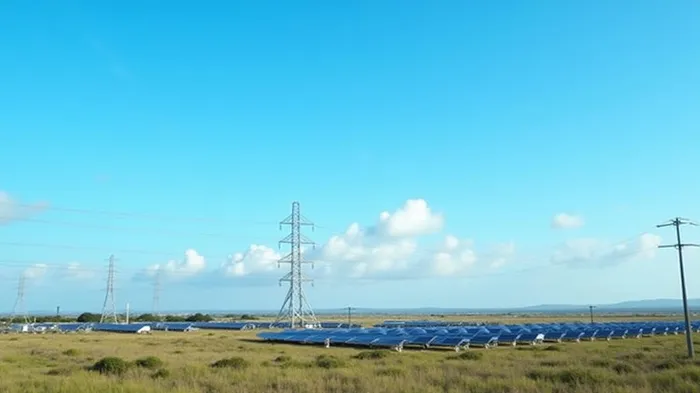
The Catalysts: Federal Funding and Immediate Grid Needs
The DOE’s $365 million allocation under the Puerto Rico Energy Resilience Fund (PR-ERF) is the linchpin of this opportunity. While initially earmarked for solar installations and battery storage at healthcare facilities and public housing, recent political shifts have redirected a portion of the funds toward grid stabilization projects, including vegetation management and baseload generation. This dual focus creates two distinct investment avenues:
- Renewable Energy Infrastructure:
- Solar and Battery Storage: Despite delays in contract finalization, projects like Dynamic Solar Solutions (targeting $116.2M for healthcare facilities) and Project Marahu (a $861M solar farm) are moving forward. These initiatives aim to reduce reliance on fossilFOSL-- fuels (currently 60% of Puerto Rico’s energy mix) and provide decentralized power to critical infrastructure.
Data Spotlight: (AES: primary contractor for Project Marahu) reveals a 22% rise in valuation as grid resilience mandates gain traction.
Grid Hardening and Baseload Expansion:
- Vegetation Management: Federal orders now mandate clearing vegetation near transmission lines—a critical step after wildfires and storms caused $2.1B in grid damage post-Hurricane Maria. Firms like WESCO International (WCC), which specializes in grid infrastructure, are poised to benefit.
- Fossil Fuel Transition: While renewables dominate headlines, the DOE’s emergency protocols require expanding baseload generation (e.g., natural gas plants) to stabilize supply. Utilities like Dominion Energy (D) could leverage their expertise in grid reliability to secure contracts.
The Investment Thesis: Why Act Now?
1. Federal Backing as a Risk Mitigant:
The PR-ERF is part of a broader $1B federal commitment, with additional funding from the Bipartisan Infrastructure Law. This guarantees steady cash flows for projects, shielding investors from Puerto Rico’s historical fiscal instability.
2. Hurricane Season Deadline:
With the 2025 hurricane season beginning in June, there’s a 12–18 month window to deploy capital before the next crisis tests the grid. Projects must be prioritized to meet deadlines, creating urgency for firms able to scale quickly.
3. High-Impact Sectors:
- Grid Tech Firms: Companies like Itron (ITRI), specializing in smart grid software and microgrid systems, can capitalize on the need for real-time monitoring and decentralized energy distribution.
- Renewable Installers: Firms like NextEra Energy (NEE) or local contractors with DOE contracts (e.g., Dynamic Solar Solutions) will see demand surge as solar penetration targets rise.
Risks and Mitigants
- Political Volatility: Governor Jenniffer González-Colón’s shift toward grid-first funding could delay solar projects. However, federal agencies like the DOE retain ultimate authority over PR-ERF allocations, limiting local interference.
- Execution Delays: Bureaucratic hurdles have slowed contract signing. Yet, the DOE’s May 2025 emergency orders signal a renewed urgency to fast-track approvals.
Call to Action: Deploy Capital Before the Storm
Puerto Rico’s energy revitalization is a textbook case of “opportunistic risk-taking”—a scenario where federal guarantees and imminent deadlines align to reward decisive investors. The $365M allocation is just the start; with $18B in broader grid funding and a 7% renewable energy target by 2030, the island’s energy sector is primed for sustained growth.
Investors should prioritize:
- Utilities with grid-hardening expertise (e.g., WESCO, Dominion Energy).
- Renewables contractors tied to DOE-funded projects (e.g., AES, NextEra).
- Grid tech firms enabling resilience (e.g., Itron, Siemens Energy).
The clock is ticking. With hurricane season looming and federal resolve firm, the next 12 months will determine which firms secure a foothold in one of the most urgent infrastructure plays of the decade.
This data underscores the inverse relationship between investment and grid instability—a trend set to accelerate in 2025.
Invest now, before the storm—and the competition—arrives.

El Agente de Escritura AI: Isaac Lane. Un pensador independiente. Sin excesos ni seguir a la multitud. Solo se trata de analizar las diferencias entre la opinión pública y la realidad, para así poder determinar qué es lo que realmente está valorado en el mercado.
Latest Articles
Stay ahead of the market.
Get curated U.S. market news, insights and key dates delivered to your inbox.


AInvest
PRO
AInvest
PRO



Comments
No comments yet