
Pudgy Penguins Unveils Visa Card And Prop Trading To Bridge Web3 And Traditional Finance
 Aime Summary
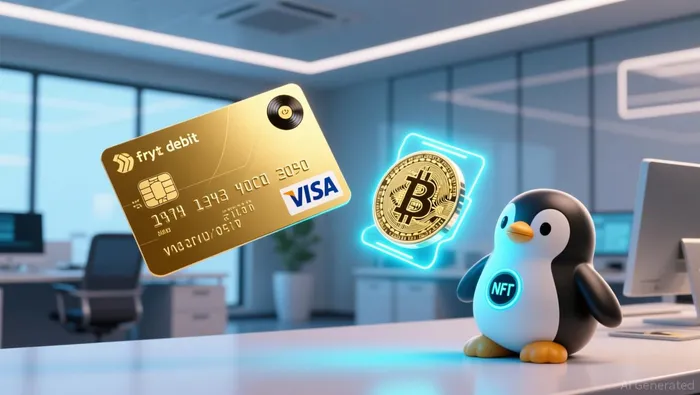
Pudgy Penguins has executed a strategic pivot to merge Web3 assets with traditional finance by launching hybrid physical-digital collectibles and a Visa-backed crypto debit card. The initiative introduces NFC-enabled vinyl penguin figures that allow owners to redeem exclusive digital NFTs by tapping the physical item. Concurrently, the PenguPENGU-- Card enables users to spend over 25 cryptocurrencies, including the PENGU token, at 150 million merchants worldwide. These moves collectively signal an attempt to stabilize the token's utility.
The ecosystem expansion also includes a partnership with Sizeprop to launch an open proprietary trading competition offering $100,000 funded accounts without requiring personal capital. This initiative marks a significant shift toward financial services, aiming to attract institutional confidence by merging Web3 innovation with traditional finance. Despite these commercial successes, the PENGU token operates under distinct legal terms that separate it from the company's business performance.
Official documentation explicitly defines the token as existing for fun and entertainment only with zero commercial value. This designation confirms that token holders have no formal economic claim on toy sales, licensing deals, or other revenue streams generated by the parent company Igloo. The token trades at a premium over similar NFT-backed tokens, and valuation remains sensitive to macro risk-on/risk-off dynamics.
What Are The Specific Financial Products And Utility Expansions?
Pudgy Penguins has introduced the Pengu Card, a Visa-backed crypto debit card that allows users to spend stablecoins and PENGU tokens at 150 million global merchants via automatic crypto-to-fiat conversion at checkout. The card is available in three tiers—Standard, Black, and Gold—with the Gold tier offering up to 12% cashback and 7% annual yield. This initiative represents a strategic shift from speculative NFT trading to real-world financial applications, aiming to expand the PENGU token's use cases into mainstream commerce.
The card enables contactless payments through Apple Wallet and Google Wallet, supporting over 25 cryptocurrencies. Concurrently, the project unveiled NFC-enabled physical penguin collectibles that serve as tangible proof of digital NFT ownership. A strategic partnership with VanEck further supports this hybrid model, releasing limited edition vinyl figures embedded with chips to enable exclusive digital claims.
Concurrently, the project partnered with Sizeprop to launch an open proprietary trading competition, allowing traders to access funded accounts up to $100,000 without risking personal capital. The initiative removes capital barriers by utilizing a proprietary trading terminal built for crypto users, with scoring based on profits and a live leaderboard. This expansion of use cases aligns with a broader industry trend toward mainstream adoption and practical applications.
Stratosphere and Pudgy PenguinsPENGU-- have also partnered to co-host The Founders Table, a recurring private dinner series scheduled for 2026. The series aims to bring together founders, C-level executives, and institutional operators at major Web3 conferences including Digital Asset Summit, Consensus Miami, TOKEN2049 Singapore, and Korean Blockchain Week. The first edition, held in New York City during Digital Asset Summit 2026, was fully oversubscribed with 47 curated guests.
How Does The Token Economy Face Structural Risks And Valuation Pressures?
Despite the potential benefits, the initiative faces challenges including regulatory uncertainties and intense competition within the crypto debit card market. The PENGU token currently lacks direct economic claims to brand revenue, creating a structural disconnect between brand success and token value. The token's valuation trades at 3.2x the market cap of similar NFT-backed tokens, suggesting a momentum premium that requires continued execution on brand monetization to sustain.
Investors face specific risks regarding tokenomics and insider allocations. Insiders and the corporation hold 29.28% of the total supply, with vesting schedules extending to 2028. This high level of insider concentration creates potential for sustained selling pressure. Additionally, a scheduled token unlock in June 2026 could exert additional downward pressure on the price.
Current valuation trades at a premium, requiring continued execution on brand monetization to sustain. The token's value proposition relies on continued execution to translate brand strength into tangible token appreciation. The project is attempting to bridge this gap by launching hybrid physical-digital assets and financial products that integrate blockchain with traditional commerce.
Pudgy Penguins' PENGU token has reached a market capitalization of $417.5 million, ranking #106 across all cryptocurrencies. The 24-hour trading volume of $114.3 million represents a volume-to-market-cap ratio of 27.4%, significantly higher than the typical 10-15% for established mid-cap tokens. This elevated ratio suggests heightened speculative interest and active position management rather than stable accumulation.
Despite this surge, the token faces a structural disconnect where its massive retail footprint does not grant holders economic claims to brand revenue. While the project secures distribution in 3,100 Walmart and Target locations, official documentation explicitly states the token exists for fun and entertainment only with zero commercial value. This creates a scenario where brand success may not automatically transfer economic value to token holders.
For investors, position sizing should account for 40-60% drawdowns typical of this market cap range. The tokenomics present specific risks for investors regarding insider allocations and vesting schedules. With a total supply of 88.89 billion tokens, insiders and the corporation hold 29.28% of the supply.
What Are The Market Dynamics And Institutional Adoption Trends?
Pudgy Penguins is gaining institutional attention due to mainstream brand adoption and cultural liquidity rather than pure speculation, creating a distinct risk profile compared to typical meme tokens. Unlike speculative tokens, PENGU benefits from corporate integration of its brand into marketing campaigns, including appearances in ETF commercials. This has created cultural liquidity, allowing the token to maintain market interest independent of short-term price action.
From a technical perspective, PENGU is trading at a critical juncture, gaining against Bitcoin specifically, which suggests independent buying pressure. While technical analysis has limitations due to the token's short history, cross-currency stability indicates genuine demand. The project positions PENGU as a social currency aimed at creating network effects around the existing community.
However, the $407 million valuation depends heavily on continued community engagement and brand relevance, which are volatile in the NFT space. Additionally, PENGU faces systemic risk exposure through its correlation with broader NFT market sentiment; a downturn in the NFT sector could trigger disproportionate selling pressure. Volume compression from initial launch peaks also suggests diminishing marginal interest from new participants.
The project is bridging physical and digital assets through NFC-enabled collectibles and a Visa-backed debit card, aiming to transition from a speculative NFT project to a real-world financial service provider. Despite these innovations, the PENGU token has seen a 4.8% decline, highlighting investor concerns about the sustainability of token value based solely on brand recognition. The success of these initiatives depends on creating a sustainable economic model that attracts and retains users while navigating the evolving regulatory landscape.
The ecosystem also includes Pudgy World, a play-to-earn game with on-chain mechanics targeting both gamers and crypto users. These initiatives are part of a strategic vision to position Pudgy Penguins as a bridge between physical and digital worlds. The initiative faces challenges including regulatory uncertainties and intense competition within the crypto debit card market.

Blending traditional trading wisdom with cutting-edge cryptocurrency insights.
Latest Articles
Stay ahead of the market.
Get curated U.S. market news, insights and key dates delivered to your inbox.


AInvest
PRO
AInvest
PRO



Comments
No comments yet