
Pudgy Penguins PENGU Token Launches Visa Card Amid Structural Revenue Risks
 Aime Summary
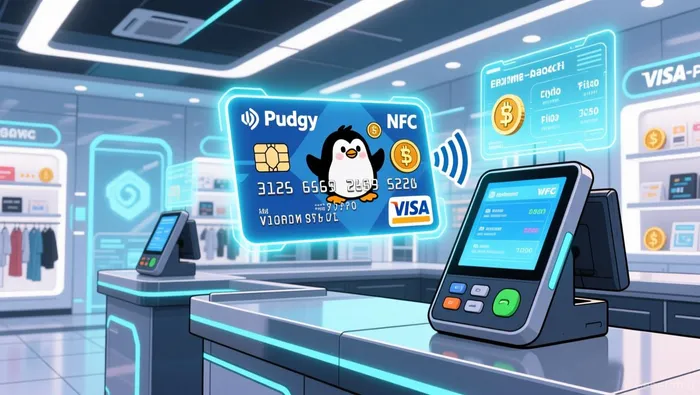
Pudgy Penguins has officially launched the PenguPENGU-- Card, a Visa-backed payment solution designed to integrate digital assets into traditional commerce. The card enables users to spend stablecoins and the PENGU token at over 150 million merchants globally, automatically converting crypto to fiat at checkout to minimize volatility impacts. This move marks a strategic pivot from a purely NFT-focused brand to a financial services provider, aiming to stabilize token demand through real-world utility.
The initiative is supported by tiered incentives, with the Gold version offering up to 12% cashback and a 7% annual yield to attract users. Beyond the card, the project is expanding its ecosystem with NFC-enabled physical collectibles and partnerships with major retailers like Walmart and Target. These efforts aim to foster institutional trust and bridge the gap between Web3 culture and traditional finance.
Despite these commercial advancements, the PENGU token faces a critical structural disconnect. Official documentation explicitly states the token exists for fun and entertainment only, meaning holders have no formal economic claim on brand revenue or licensing deals. This lack of revenue linkage creates a scenario where the brand's success does not automatically transfer to token value, a factor contributing to the token trading approximately 90% below its December 2024 peak.
How Does The Pengu Card Impact Token Utility?
The Pengu Card is available in Standard, Black, and Gold tiers, supporting over 25 cryptocurrencies and integrating with Apple and Google Wallets. By automatically converting crypto assets into local currency at the point of sale, the card mitigates price volatility risks for merchants and users alike. This functionality allows PENGU holders to use their assets in everyday transactions, potentially increasing liquidity and adoption among non-crypto natives.
The project has also introduced hybrid physical-digital assets, such as limited edition vinyl figures embedded with NFC chips that serve as tangible proof of NFT ownership. These collectibles, developed in partnership with asset manager VanEck, sold out quickly, indicating strong demand for hybrid assets that link physical retail with digital ownership. Such initiatives are designed to diversify income streams and attract institutional capital by demonstrating a dual strategy to engage both traditional collectors and Web3 participants.
However, the utility provided by the card does not resolve the fundamental issue that the token does not entitle holders to any share of company revenue. While the card generates transaction volume, the financial rights of the token remain separate from the business growth of the parent company, Igloo. This separation means that increased card usage may not directly correlate with token price appreciation, leaving investors reliant on brand sentiment rather than intrinsic financial rights.
What Are The Primary Tokenomics And Supply Risks?
A significant concern for investors is the high concentration of tokens held by insiders and the corporation. Nearly 29.3% of the total supply is controlled by insiders, with vesting schedules extending through 2028. This includes 17.80% designated for team members and 11.48% reserved for corporate purposes, creating a combined insider concentration that could exert sustained selling pressure.
Furthermore, a large token unlock is scheduled for June 2026, which could materially depress prices if demand does not keep pace with the increased supply. The token currently trades at a premium of approximately 3.2x over similar NFT-backed tokens, relying on continued brand success to sustain its valuation. This premium is particularly risky given the lack of protocol revenue, staking yields, or burn mechanisms to create organic buy pressure.
Recent market data shows the token has seen a 4.8% price drop amidst broader market volatility, highlighting its sensitivity to sentiment rather than fundamental utility. The token's valuation is further complicated by a 'treadmill effect,' where it must appreciate in USD terms just to maintain its BTC ratio if BitcoinBTC-- continues to strengthen. These factors suggest that while the Pengu Card expands utility, the token's price action remains heavily influenced by macro sentiment and upcoming unlock events.
Why Does The Revenue Disconnect Matter For Investors?
The structural disconnect between the brand's commercial success and the token's financial rights is a defining characteristic of the PENGU asset. Official statements clarify that the token is intended solely for entertainment, creating a gap between the growth of toy sales or licensing deals and the token's market value. This means that even if Pudgy PenguinsPENGU-- generates significant revenue from its retail footprint in 3,100 Walmart and Target locations, that value does not accrue to token holders.
Investors face a scenario where the token trades based on 'cultural liquidity' and community engagement rather than cash flow or dividends. The project's sustainability depends heavily on its ability to translate brand strength into sustained token appreciation without the support of revenue-sharing mechanisms. This lack of clear value accrual mechanisms makes the asset more speculative compared to tokens with defined economic claims on underlying business performance.
Regulatory uncertainty also looms over the project, as it navigates the intersection of traditional finance and digital assets. The combination of high insider concentration, upcoming unlocks, and the absence of revenue rights creates a complex risk profile for institutional and retail investors alike. While the Pengu Card represents a significant step toward real-world utility, the structural risks suggest that token value remains decoupled from the broader success of the Pudgy Penguins brand.

Blending traditional trading wisdom with cutting-edge cryptocurrency insights.
Latest Articles
Stay ahead of the market.
Get curated U.S. market news, insights and key dates delivered to your inbox.


AInvest
PRO
AInvest
PRO



Comments
No comments yet