
Pudgy Penguins PENGU Token Expands Real-World Utility With Visa Card And Physical NFTs
 Aime Summary
Pudgy Penguins has officially launched the PenguPENGU-- Card, a Visa-backed crypto debit card that enables users to spend stablecoins and PENGU tokens at over 150 million global merchants. This strategic move is complemented by the release of NFC-embedded physical collectibles, which allow owners to redeem digital NFTs and bridge the gap between physical and digital assets. These developments mark a significant pivot for the ecosystem, transitioning from speculative NFT trading toward real-world financial services.
The token's recent market performance reflects a unique risk profile driven by tangible institutional adoption. Analysts describe this dynamic as 'cultural liquidity,' where the project maintains market interest independent of short-term price action through massive social media visibility and corporate integrations. Despite a trading history since late 2024, the token has established a stable trading range with gains against BitcoinBTC--, suggesting independent buying pressure.
However, the PENGU token faces structural challenges as it trades approximately 90% below its December 2024 peak. While the project boasts a $407 million market cap, the token currently lacks direct economic claims to brand revenue, creating a disconnect between brand success and token value. Investors must weigh the potential for mainstream adoption against the volatility inherent in the broader NFT sector and regulatory uncertainties surrounding crypto payments.
How Does The Pengu Card Transform Token Utility?
The newly launched Pengu Card represents a critical infrastructure upgrade for the Pudgy PenguinsPENGU-- ecosystem by facilitating seamless crypto-to-fiat transactions. Developed in partnership with VanEck, the card supports contactless payments via Apple and Google Wallets, allowing users to spend over 25 cryptocurrencies. The product features a tiered rewards structure designed to incentivize usage, with Gold tier holders receiving up to 12% cashback and 7% annual yield on qualifying balances.
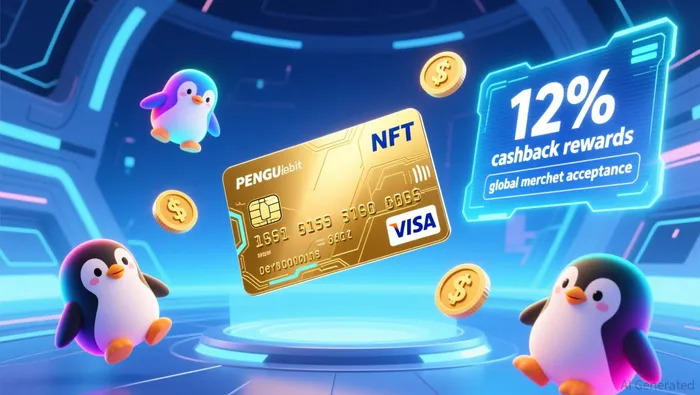
This initiative directly addresses a key barrier to mainstream crypto adoption by simplifying transactions for both users and merchants. The card automatically converts crypto to fiat at the point of sale, removing the friction of manual exchanges for everyday commerce. By integrating with modern consumer preferences for convenience, the project aims to attract both retail and institutional investors beyond the traditional NFT community.
The rollout also includes a proprietary trading competition partnered with Sizeprop, allowing traders to access funded accounts up to $100,000 without risking personal capital. Announced on April 2, 2026, this program bridges professional trading infrastructure with the Web3 community, further diversifying the utility of the ecosystem. These financial tools are intended to solidify PENGU's position as a 'social currency' that creates network effects beyond simple speculation.
What Drives The Token's Resilience Amid Market Volatility?
PENGU demonstrates resilience through a 'cultural moat' achieved by appearances in ETF commercials and corporate adoptions that transcend typical crypto boundaries. The project claims over 100 billion views across social platforms, providing a level of visibility that supports valuation even during periods of modest price movement. Trading data supports this thesis, with a volume-to-market-cap ratio of approximately 19.4% suggesting healthy liquidity without the extreme volatility spikes characteristic of pump-driven tokens.
Unlike many projects that fail post-launch, PENGU has maintained integrity by functioning as a social currency with better holder retention metrics than comparable NFT-derivative tokens. Exchange inflow/outflow patterns suggest a higher percentage of tokens moving to private wallets, a bullish indicator for medium-term stability. The token has also outperformed Bitcoin and EthereumETH-- in recent 24-hour periods, indicating capital rotation specifically into this asset.
Despite these positive indicators, the token remains sensitive to broader market trends. In August 2025, PENGU dropped over 20% despite the successful launch of the Pudgy Party game, underscoring its vulnerability to sector-wide downturns. The market capitalization of the broader NFT sector fell from $9.3 billion to $7.4 billion during that period, dragging down even strong product launches.
What Are The Primary Risks And Limitations For Investors?
Investors face significant structural risks as the token trades at a premium over similar NFT-backed assets without direct economic claims to brand revenue. The $407 million market cap is substantial for a token with limited demonstrated utility beyond social signaling, making sustainability dependent on continued community engagement. Additionally, the project is exposed to systemic risk due to correlation with broader NFT market sentiment and potential liquidity shocks.
Regulatory uncertainty remains a key headwind, with the SEC having previously pushed back on PENGU ETF decisions. The Pengu Card also introduces potential cybersecurity threats and compliance challenges as it operates within evolving regulatory frameworks. The token's reliance on the Ethereum network further exposes it to gas fees and network congestion, which could impact user experience and transaction costs.
Technical analysis shows the token pressing against resistance near $0.0075, having rebounded from a 6.63% drop following a Fed rate hold decision. While on-chain data suggests a 'liquidity sweep' pattern with whale accumulation, the 30-day return remains negative at -3%. The gap between the narrative quality of physical collectibles and payments utility, and the current price performance, highlights the risk of buying after initial excitement has landed.

Blending traditional trading wisdom with cutting-edge cryptocurrency insights.
Latest Articles
Stay ahead of the market.
Get curated U.S. market news, insights and key dates delivered to your inbox.


AInvest
PRO
AInvest
PRO



Comments
No comments yet