
Pudgy Penguins NFT Brand Strength Highlights Traditional Sports Finance Limits
 Aime Summary
- Pudgy Penguins demonstrates strong NFT brand equity with physical retail presence, contrasting with the failed $4.2 billion private equity bid for FIFA World Cup rights.
- Traditional sports governance structures resisted external financial control, rejected a 20% stake proposal.
- The absence of blockchain or tokenized governance in FIFA's financing attempt highlights the sports industry's reliance on traditional capital-raising mechanisms.
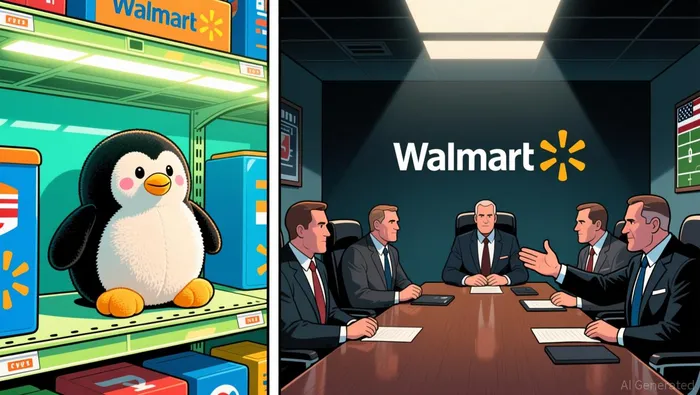
Pudgy Penguins continues to establish a distinct value proposition in the digital assets market, characterized by a floor price of 4.1397 ETH and a 57.2% unique-owner ratio. The collection benefits from a steady demand base driven by physical toy sales at major retailers like Walmart and Target. This mainstream brand strength offers a different investment profile compared to purely digital collectibles, though the high entry cost limits broader accessibility.
In the traditional sports sector, FIFA recently abandoned a proposal to sell a 20% stake in World Cup commercial rights to private equity investors. The governing body floated the creation of a new commercial subsidiary called FIFA Forward Enterprise on July 29, aiming for a $20 billion valuation. The target raise was $4.2 billion, which roughly equates to the GDP of Bermuda.
The proposal faced immediate and severe opposition from UEFA and CONCACAF. These confederations threatened to boycott FIFA events entirely if the deal proceeded. Given that European teams and the US-hosted 2026 World Cup represent the overwhelming commercial value of the sport, this threat was not a bluff. By July 31, after only 48 hours, the plan was scrapped.
FIFA President Gianni Infantino had offered each of the 211 national federations an immediate $20 million payment for backing the plan. This sweetener alone amounted to over $4.2 billion, indicating the massive scale of the transaction. J.P. Morgan was advising on the capital raise, and Thrive Eternal emerged as a possible anchor investor.
UEFA viewed the proposal as opening the door to external influence over how football’s biggest events are run. The European confederation maintains that commercial decisions should remain with football people, not fund managers optimizing for internal rates of return. FIFA withdrew the proposal, citing the divisions it had caused, and restored the status quo of FIFA-controlled commercial operations.
Private equity has been aggressively pushing into professional sports for years. Firms like CVC Capital Partners have bought stakes in Spain’s La Liga, Italy’s Serie A, and France’s Ligue 1. The playbook involves leveraging predictable, growing media rights revenue, which is exactly the kind of cash flow private equity loves.
The FIFA proposal was different in scale and would have set a precedent for global sporting events interacting with outside capital. However, the deal happened in a vacuum completely devoid of cryptocurrency or digital asset involvement. No tokenized equity, no blockchain-based governance, and no fan tokens were attached to the commercial subsidiary.
The sports industry has been experimenting with digital assets for years. NFT ticketing platforms are gaining traction, and fan token projects on the ChilizCHZ-- network have created new models for fan engagement. Yet when FIFA went looking for $4.2 billion, it defaulted to the most traditional financing mechanism available.
Tokenized governance might have actually helped FIFA’s case. One of UEFA’s primary objections was that private equity investors would gain undue influence over football decisions. A tokenized structure could theoretically distribute ownership more broadly, giving fans or member associations governance rights proportional to their stake.
Instead of one private equity firm holding 20% and potentially calling shots, thousands of stakeholders could hold fractional pieces with transparent, on-chain voting rights. No sports governing body has attempted anything close to this scale with blockchain technology.
Real Madrid’s €65 million acquisition of Rodri underscores the massive scale of traditional sports economics. The 30-year-old Spanish midfielder agreed to a four-year contract running through June 2030. He turned down a contract extension from Manchester City, making this move a matter of when, not if.
Football clubs have also been increasingly flirting with blockchain technology. Fan tokens, NFT ticketing, and tokenized ownership models have all emerged as experiments at the intersection of sports and crypto. Real Madrid itself has historically been cautious about crypto partnerships compared to clubs like Paris Saint-Germain and FC Barcelona.
Fan tokens remain a niche within crypto, and their price action is driven more by sentiment and club performance than by fundamental cash flows. Football clubs have century-old governance structures, regulated transfer mechanisms, and arbitration bodies.
For investors tracking the convergence of sports and blockchain, the question is whether the platforms capturing fan attention can convert it into something durable. The failure of the FIFA private equity deal highlights the resistance of traditional sports governance to external financial control.
Pudgy Penguins stands out for its strong brand equity, driven by physical toy sales at major retailers like Walmart and Target. With a floor price of 4.1397 ETH and a 57.2% unique-owner ratio, it offers a steady demand base from non-crypto-native buyers. However, the high entry cost limits accessibility.
Doodles occupies a middle ground with a floor of 0.3836 ETH and 6.05 ETH in daily volume. Backed by media and licensing efforts, it provides brand-backed art at a more realistic entry point than Pudgy PenguinsPENGU--. Its main weakness is comparatively flat floor growth and lower total volume.
Gemesis represents the most accessible entry point with a $20.48 floor and a massive holder base of 94,752 pieces. As a membership NFT tied to OpenSea Pro perks, it lacks artistic IP or collectible value, making its risk profile distinct from the other two brand-anchored collections.
The contrast between Pudgy Penguins' successful brand integration and FIFA's failed private equity bid highlights the different paths to value creation in sports. While traditional finance struggles to break into governance structures, digital assets are building infrastructure for a future where sports finance runs on rails that don't exist yet at scale.
The irony is that tokenized governance might have actually helped FIFA’s case. One of UEFA’s primary objections was that private equity investors would gain undue influence over football decisions. A tokenized structure could theoretically distribute ownership more broadly, giving fans or member associations governance rights proportional to their stake.
No sports governing body has attempted anything close to this scale with blockchain technology. Projects like Chiliz, Socios, and various NFT ticketing startups are building infrastructure for a future where sports finance runs on rails that don't exist yet at scale.

Blending traditional trading wisdom with cutting-edge cryptocurrency insights.
Latest Articles
Stay ahead of the market.
Get curated U.S. market news, insights and key dates delivered to your inbox.


AInvest
PRO
AInvest
PRO




Comments
No comments yet