
Pudgy Penguins Launches Visa Pengu Card to Bridge NFTs and Global Payments
 Aime Summary
Pudgy Penguins has introduced the Visa-backed PenguPENGU-- Card, allowing users to spend stablecoins and the PENGU token at 150 million global merchants.
The card operates on Visa's infrastructure and provides cashback rewards depending on the card tier, aiming to integrate digital assets with traditional payment systems.
Pudgy Penguins's ecosystem also includes a browser-based game called Pudgy World and a custom ZKsync Layer 2 network for reduced transaction costs.
Pudgy Penguins has launched the Pengu Card to streamline cryptocurrency spending and expand its utility beyond NFT trading. This new product is part of a broader strategy to position the project as a financial platform with real-world applications. The card allows users to spend stablecoins and the PENGU token at over 150 million merchants globally, without the need for manual conversion to fiat on centralized exchanges .
The card's availability includes three tiers—Standard, Black, and Gold—offering varying rewards, referral incentives, and yield-earning features for crypto holdings as announced. The Standard tier is free, while the premium tiers provide enhanced benefits such as higher cashback rates and APYs according to the launch announcement.
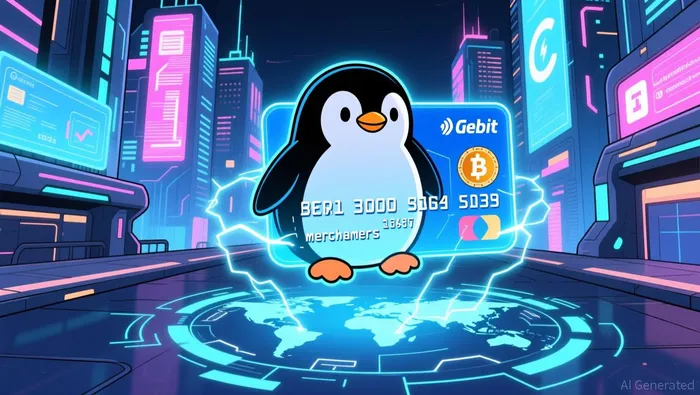
Pudgy Penguins has also integrated the card with mobile payment platforms like Apple Pay and Google Pay, ensuring a seamless user experience and real-time settlement.
What is the impact on the PENGU token's performance?
Despite new initiatives like the Pengu Card and the launch of Pudgy World, the PENGU token has faced price volatility. In late August 2025, it declined over 20% amid a broader NFT market correction, even as the Pudgy PenguinsPENGU-- project achieved high engagement with its Pudgy Party game.
The PENGU token's market cap currently stands at $445.69 million, ranking it as the 108th largest cryptocurrency. However, the token remains sensitive to market sentiment, regulatory news, and crypto market conditions according to market analysis.
What are the risks associated with the Pudgy Penguins ecosystem?
The ecosystem faces potential security risks, including phishing campaigns targeting user credentials on Pudgy World as reported. Users are advised to access the platform through trusted bookmarks to avoid these threats. Additionally, the PENGU token's market structure is concentrated, with the top 100 holders controlling 67.3% of the circulating supply, posing risks for smaller investors.
The token's increased correlation with Bitcoin—rising from 0.42 to 0.67 in 30 days— suggests it is becoming more dependent on broader crypto market trends.
Pudgy Penguins's expansion into global payments and physical toy licensing has generated significant brand awareness, including appearances in major ETF marketing and social media views exceeding 100 billion according to reports. However, these cultural gains have not fully translated into price appreciation for the PENGU token. As of the latest report, the token's price dropped 1.08% in 24 hours to $0.007087.
Investors are advised to monitor key metrics such as on-chain activity, social media engagement, and institutional accumulation patterns to assess the token's long-term viability. The PENGU token remains a high-volatility asset with a beta of 1.8 relative to BitcoinBTC-- and lacks traditional DeFi utility, making it a narrative-driven investment.
The Pudgy Penguins project's strategic pivot from NFTs to a broader financial platform reflects broader trends in corporate finance, with firms increasingly integrating digital assets into daily financial interactions. The Pengu Card is expected to expand the ecosystem's reach and adoption by making crypto spending more accessible to a mainstream audience according to market analysis.

Blending traditional trading wisdom with cutting-edge cryptocurrency insights.
Latest Articles
Stay ahead of the market.
Get curated U.S. market news, insights and key dates delivered to your inbox.
AInvest
PRO
AInvest
PRO



Comments
No comments yet