
Pudgy Penguins Launches Visa Card And PenguBot Amid Revenue Rights Concerns
 Aime Summary
Pudgy Penguins has officially launched PenguBot, a self-custodial trading companion for Telegram, alongside the PenguPENGU-- Card, a Visa-backed payment solution designed to integrate Web3 with traditional finance. The Pengu Card enables users to spend stablecoins and the PENGU token at over 150 million global merchants, while PenguBot facilitates cross-chain transactions on SolanaSOL--, EthereumETH--, and Abstract. These initiatives mark a strategic pivot from pure NFT speculation toward real-world financial utility and institutional trust.
Despite the commercial rollout, a critical structural flaw remains: the PENGU token offers no formal economic claim on the brand's revenue from toy sales or licensing deals. Official documentation defines the token as existing for fun and entertainment only, meaning increased card usage does not automatically transfer to token price appreciation. Consequently, the asset relies heavily on speculative demand rather than fundamental cash flows generated by the parent company's expanding ecosystem.
Investors must also navigate significant concentration risks associated with the token's distribution schedule. Nearly 29.3% of the total supply is held by insiders, with vesting schedules extending through 2028. A major token unlock is scheduled for June 2026, which could materially depress prices if market demand fails to absorb the increased supply.
How Do PenguCard And PenguBot Function For Investors?
The newly introduced Pengu Card operates as a Visa-enabled crypto debit card available in Standard, Black, and Gold tiers. The Gold tier offers incentives such as up to 12% cashback and a 7% annual yield, while automatically converting cryptocurrency into local fiat currency at the point of sale to mitigate volatility risks. The card supports over 25 cryptocurrencies, including USDC, USDT, and PENGU, and integrates with Apple Pay and Google Pay for seamless contactless payments.
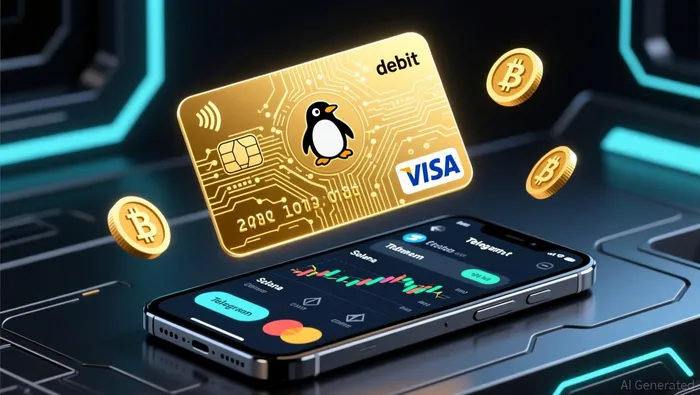
PenguBot serves as an agentic trading companion within Telegram, featuring a self-custodial wallet that allows users to manage assets without third-party custodians. This tool enables automated trading operations across multiple blockchain networks, specifically targeting Solana, Ethereum, and Abstract. By embedding Web3 trading capabilities directly into messaging platforms, the project aims to lower the barrier to entry for users engaging with the ecosystem.
Complementing these digital tools, Pudgy PenguinsPENGU-- has introduced NFC-embedded physical collectibles that serve as tangible proof of NFT ownership. These hybrid assets, developed in partnership with VanEck, include limited edition vinyl figures embedded with NFC chips that allow owners to redeem exclusive digital NFTs. This strategy attempts to bridge physical and digital ownership, appealing to both traditional collectors and Web3 participants.
Why Does The Token Lack Revenue Rights And Face Valuation Risks?
A persistent disconnect exists between the brand's commercial success and the token's financial performance. The PENGU token trades at a market cap premium of 3.2x over similar NFT-backed assets, relying on sustained brand engagement rather than direct financial performance. Unlike utility tokens tied to protocol revenue, PENGU holders have no formal claim on the revenue streams from toy sales or licensing deals generated by the parent company, Igloo.
This structural divergence creates a scenario where the brand's expansion does not benefit token holders financially. The token's valuation remains highly correlated with broader market sentiment and the NFT sector, lacking the fundamental support of direct cash flows. Recent price action shows the token trading approximately 90% below its December 2024 peak, highlighting the sensitivity to market volatility.
The project's valuation is further complicated by the absence of revenue accrual mechanisms for token holders. While the Pengu Card and PenguBot aim to stabilize value through recurring economic activity, the lack of revenue-sharing rights means business growth does not correlate with token valuation. This disconnect raises questions about the long-term viability of the token as a financial instrument beyond initial launch periods.
What Are The Tokenomic Risks And Upcoming Supply Shocks?
Tokenomics reveal a substantial insider allocation of 29.28%, with 17.80% designated for team members and 11.48% for corporate purposes. These holdings unlock progressively through 2028, creating a complex investment profile for retail investors. The concentration of supply among insiders increases the potential for selling pressure if these holders decide to liquidate positions.
A significant token unlock is scheduled for June 2026, which represents a major potential liquidity shock. This event could exert downward pressure on the price if demand does not keep pace with the increased supply entering the market. Investors must consider this unlock alongside the broader regulatory uncertainties surrounding crypto debit cards and digital collectibles.
The project has also expanded into professional trading infrastructure through a partnership with Sizeprop, offering $100,000 funded accounts. While this move aims to stabilize token utility by connecting the brand with professional trading tools, it does not resolve the underlying issue of revenue rights. The success of these initiatives depends on converting social influence into sustainable utility beyond the initial launch phases.

Blending traditional trading wisdom with cutting-edge cryptocurrency insights.
Latest Articles
Stay ahead of the market.
Get curated U.S. market news, insights and key dates delivered to your inbox.


AInvest
PRO
AInvest
PRO



Comments
No comments yet