
Pudgy Penguins Launches PenguBot And Visa Card Amid Token Revenue Risks
 Aime Summary
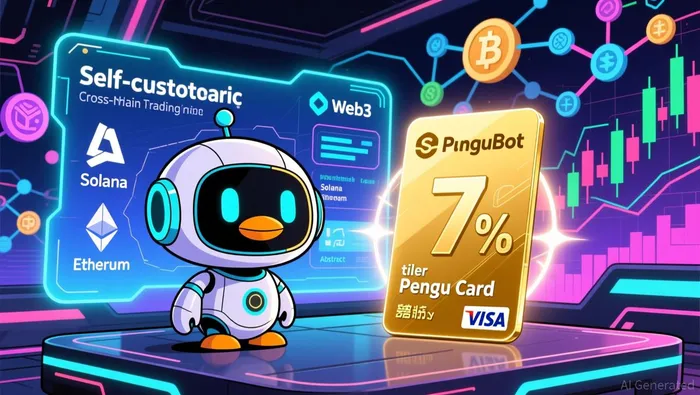
Pudgy Penguins has expanded its ecosystem with two major initiatives: PenguBot, a self-custodial agentic trading tool on Telegram, and the PenguPENGU-- Card, a Visa-backed payment solution according to the launch announcement. The new bot facilitates cross-chain transactions on SolanaSOL--, EthereumETH--, and Abstract, while the card enables spending at over 150 million merchants globally as reported by industry analysis. These moves aim to bridge Web3 culture with traditional finance by offering tangible utility for digital assets according to market research.
Despite the commercial advancements, the PENGU token faces significant structural challenges that investors must consider according to financial analysis. Official documentation states the token exists for fun and entertainment only, meaning holders have no formal economic claim on brand revenue or licensing deals. This disconnect creates a scenario where the brand's success does not automatically transfer to token value.
A critical risk factor is the high concentration of tokens held by insiders, with nearly 29.3% of the total supply controlled by the team and company. Vesting schedules for these insiders extend through 2028, including specific allocations for team members and corporate purposes. Additionally, a large token unlock is scheduled for June 2026, which could materially depress prices if demand does not keep pace with increased supply.
What Utility Does PenguBot Offer To Traders?
PenguBot functions as an agentic trading companion integrated directly into the Telegram messaging platform. It features a self-custodial wallet architecture, allowing users to manage assets securely without relying on third-party custody. The tool supports trading operations across multiple blockchains, specifically Solana, Ethereum, and Abstract. This launch represents a strategic move to expand utility within the Pudgy PenguinsPENGU-- ecosystem by providing users with direct, automated access to decentralized trading capabilities.
The integration allows for seamless cross-chain transactions, addressing the fragmentation often seen in multi-chain environments. By embedding these capabilities within a widely used messaging app, Pudgy Penguins aims to lower the barrier to entry for users who may not be comfortable navigating complex decentralized exchanges. The self-custodial nature ensures that users retain control of their private keys, aligning with core Web3 principles of security and sovereignty.
How Does The Pengu Card Bridge Digital Assets With Traditional Commerce?
The Pengu Card is a Visa-backed debit solution designed to facilitate spending of stablecoins and PENGU tokens at over 150 million merchants globally. The card automatically converts cryptocurrency to fiat currency at checkout to mitigate volatility risks for both merchants and users. It is available in Standard, Black, and Gold tiers, with the Gold version offering up to 12% cashback and a 7% annual yield.
Complementing the digital card, the project released NFC-embedded physical collectibles serving as tangible proof of digital NFT ownership. These physical items integrate with Apple and Google Wallets, further bridging the gap between Web3 culture and traditional finance. The initiative aims to foster trust among institutions and attract traditional investors by demonstrating real-world utility for digital tokens.
However, the card's utility is limited by the token's structural design. While the card supports over 25 cryptocurrencies, the PENGU token does not entitle holders to any share of company revenue. This means that increased card usage may not directly correlate with token price appreciation or dividends.
What Are The Key Structural Risks For PENGU Token Holders?
The primary structural headwind is the lack of revenue linkage between the brand's commercial success and the token's value. Official documentation defines the token as existing for fun and entertainment only, meaning holders have no formal economic claim on toy sales or licensing deals. This creates a scenario where the brand's growth does not automatically transfer to token value, unlike utility tokens with explicit revenue-sharing mechanisms.
Investors face significant concentration risk due to the high insider allocation of 29.28% of the total supply. Vesting schedules for these insiders extend through 2028, including 17.80% for team members and 11.48% for corporate purposes. This long vesting period suggests that insider selling pressure could be deferred but not eliminated.
A large token unlock is scheduled for June 2026, which could depress prices and exert downward pressure on the market. If demand does not keep pace with the increased supply, the token's valuation could suffer despite the expansion of brand utility. The token currently trades approximately 90% below its December 2024 peak, yet maintains a valuation premium over peers.
The structural disconnect between the Pengu Card's commercial success and the token's economic rights remains a critical concern. While the initiatives aim to boost demand through real-world utility, investors face risks due to the token's lack of revenue rights and significant insider concentration. The effectiveness of these brand initiatives in supporting long-term token value remains uncertain without formal economic claims.
Market participants should closely monitor the June 2026 unlock event and the evolving adoption rates of the Pengu Card and PenguBot. The combination of high insider holdings and a potential supply shock in mid-2026 creates a complex risk profile for the asset. The lack of revenue sharing means that token price appreciation relies heavily on speculative demand rather than fundamental cash flows.
Despite the premium valuation over similar NFT-backed tokens, the PENGU token relies on continued brand success rather than intrinsic financial rights. The structural disconnect between business growth and token value is a key differentiator for this project compared to others in the space. Investors must weigh the potential for utility-driven growth against the significant risks posed by insider concentration and supply dynamics.
The launch of PenguBot and the Pengu Card marks a significant step in expanding the Pudgy Penguins ecosystem. However, the absence of formal revenue claims and the looming June 2026 unlock create a nuanced investment thesis. The project's ability to maintain value will depend on sustained user adoption and the market's reaction to future token unlocks.
Ultimately, the structural disconnect between the brand's commercial success and the token's economic rights remains a critical factor for investors to evaluate. While the initiatives aim to boost demand through real-world utility, the lack of revenue sharing creates a gap between business growth and token value. The high insider concentration and scheduled unlock events add further layers of complexity to the investment case.
The market's response to these developments will likely depend on whether the utility provided by the Pengu Card and PenguBot can overcome the structural limitations of the token. The interplay between brand expansion and token economics will be a key metric for assessing the long-term viability of the PENGU asset.

Blending traditional trading wisdom with cutting-edge cryptocurrency insights.
Latest Articles
Stay ahead of the market.
Get curated U.S. market news, insights and key dates delivered to your inbox.


AInvest
PRO
AInvest
PRO



Comments
No comments yet