
Pudgy Penguins Launches Hybrid NFTs And Visa Card Amid Token Revenue Disconnect
 Aime Summary
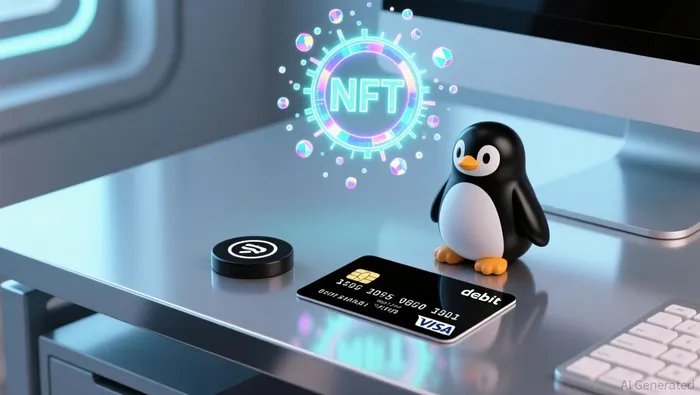
Pudgy Penguins has executed a strategic pivot to merge Web3 assets with traditional finance by launching hybrid physical-digital collectibles and a Visa-backed crypto debit card. The initiative introduces NFC-enabled vinyl penguin figures that allow owners to redeem exclusive digital NFTs by tapping the physical item. Concurrently, the PenguPENGU-- Card enables users to spend over 25 cryptocurrencies, including the PENGU token, at 150 million merchants worldwide. These moves collectively signal an attempt to stabilize the token's utility.
Despite this commercial success, the PENGU token operates under distinct legal terms that separate it from the company's business performance. Official documentation explicitly defines the token as existing for fun and entertainment only with zero commercial value. This designation confirms that token holders have no formal economic claim on toy sales, licensing deals, or other revenue streams generated by the parent company Igloo.
The ecosystem expansion also includes a partnership with Sizeprop to launch an open proprietary trading competition offering $100,000 funded accounts without requiring personal capital. This initiative marks a significant shift toward financial services, aiming to attract institutional confidence by merging Web3 innovation with traditional finance. However, the token's valuation trades at a premium, requiring continued execution on brand monetization to sustain.
How Do Hybrid NFTs And The Pengu Card Function?
The project unveiled a collection of physical penguin figures equipped with NFC chips, enabling owners to claim and authenticate matching digital NFTs. Developed in partnership with VanEck, these vinyl collectibles link physical items to Web3 technology, providing a secure method for verifying digital ownership. The larger variant of the collectible sold out rapidly after release, indicating strong initial demand for this hybrid model.
Simultaneously, the company introduced the Pengu Card, a Visa-supported debit card that allows users to spend over 25 cryptocurrencies at 150 million merchants worldwide. The card automatically converts crypto to local currency at the point of sale, streamlining transactions and removing the need for manual conversion. It features three tiers—Standard, Black, and Gold—each offering different cashback and yield rewards, with the Gold tier providing up to 12% cashback and 7% annual yield according to the product details.
These innovations represent a strategic shift beyond NFT trading into real-world financial services. By integrating practical spending tools and tangible collectibles, Pudgy PenguinsPENGU-- aims to bridge the gap between blockchain assets and traditional finance. The card is compatible with Apple Pay and Google Pay, targeting users outside the core NFT community.
What Are The Tokenomics And Structural Risks For Investors?
The PENGU token currently lacks direct economic claims to brand revenue, creating a structural disconnect between the brand's success and token value. The token's structure includes a maximum supply of 88.89 billion coins, with 29.28% held by insiders subject to vesting through 2028. This high insider exposure, combined with the lack of revenue linkage, presents a distinct risk for investors assuming brand growth will automatically transfer to token value.
Investors face specific risks regarding tokenomics and insider allocations. Insiders and the corporation hold 29.28% of the total supply, with vesting schedules extending to 2028. This high level of insider concentration creates potential for sustained selling pressure. Additionally, a scheduled token unlock in June 2026 could exert additional downward pressure on the price.
The token's valuation remains disconnected from the brand's cultural influence, underscoring the difficulty of translating brand strength into token appreciation. The token also faces a treadmill effect where it must appreciate in USD terms just to maintain its BTC ratio if BitcoinBTC-- strengthens. Future plans to launch a U.S. ETF application and expand Pudgy World aim to build institutional trust, but the project must prove it can sustain token value against competition and regulatory scrutiny according to market analysis.
How Does The Sizeprop Partnership Impact The Market?
Sizeprop has announced a new open prop trading competition in partnership with Pudgy Penguins, bringing together a crypto proprietary trading platform and one of the best-known Web3 brands. The competition was announced on April 2, 2026, and started the same day at 18:00 UTC. According to the announcement, the competition is open to anyone interested in participating.
The launch is notable because it shows how competition in the prop trading market is extending beyond standard challenge models and payout terms. Firms are increasingly leaning on brand collaborations, community engagement, and event-based campaigns to differentiate themselves in a crowded market. The Sizeprop x Pudgy Penguins competition reflects a broader shift in crypto prop trading, where firms are combining funded trading products with community-driven marketing and Web3 brand partnerships to stand out.
Despite these initiatives, investors face specific risks including regulatory scrutiny on crypto debit cards and the challenge of maintaining value in hybrid physical-digital assets. The project's market capitalization has reached approximately $417.5 million, driven by a massive retail footprint. The upcoming Q1 earnings reports for partner entities and continued execution on AI and monetization initiatives will be critical to validate if these investments are delivering results according to financial reports.
Pudgy Penguins differentiates itself by offering tangible utility, unlike many NFT projects focused on speculation. However, the token's price decline highlights the challenge of converting brand recognition into token value, with the market cap ranking at #112 suggesting it is viewed more as a mid-tier technical project than a leading entertainment brand according to market data. The collaboration with Sizeprop removes the barrier of personal capital for traders, using a terminal built specifically for crypto users. These moves collectively signal an attempt to stabilize the PENGU token's utility beyond speculative NFT trading. The token's valuation trades at a premium, requiring continued execution on brand monetization to sustain as reported.
The introduction of the Pengu Card represents the primary utility driver, enabling the token to be spent at millions of merchants worldwide. The card's compatibility with Apple Pay and Google Pay enhances accessibility, targeting users outside the core NFT community. Hybrid physical-digital assets further enhance the ecosystem by allowing users to authenticate NFTs via NFC chips on physical collectibles. However, the token holds a market share of less than 0.02% and faces high volatility.
Future plans to launch a U.S. ETF application and expand Pudgy World aim to build institutional trust, but the project must prove it can sustain token value against competition and regulatory scrutiny. Despite these innovations, the PENGU token has experienced significant price fluctuations, raising doubts about the effectiveness of brand-driven initiatives in increasing token value. The token's valuation remains disconnected from the brand's cultural influence, underscoring the difficulty of translating brand strength into token appreciation as market analysis indicates.
Regulatory uncertainty remains a concern, with the SEC scrutinizing digital collectibles. Pudgy Penguins differentiates itself by offering tangible utility, unlike many NFT projects focused on speculation. However, the token's price decline highlights the challenge of converting brand recognition into token value, with the market cap ranking at #112 suggesting it is viewed more as a mid-tier technical project than a leading entertainment brand according to market reports.
The parent company, Igloo, has secured distribution in 3,100 Walmart and Target locations and an $11 million venture funding round, yet official documentation states the PENGU token exists for fun and entertainment only with zero commercial value. Token ownership functions primarily as a community engagement mechanism rather than an investment vehicle tied to business performance. Investors face specific risks regarding tokenomics and insider allocations according to company documentation.
The limited edition 100-unit Jumbo Series sold out within 20 minutes, indicating strong demand from both traditional collectors and Web3 enthusiasts. This strategy aims to democratize crypto adoption by creating a cohesive ecosystem where physical ownership unlocks digital utility. However, the initiative faces structural risks as the PENGU token holds no legal claim to the company's commercial revenue or licensing income as confirmed by legal analysis.

Blending traditional trading wisdom with cutting-edge cryptocurrency insights.
Latest Articles
Stay ahead of the market.
Get curated U.S. market news, insights and key dates delivered to your inbox.


AInvest
PRO
AInvest
PRO



Comments
No comments yet