
Pudgy Penguins Expands Ecosystem With Pudgy World Game And Visa Card Amid Security Alerts
Pudgy Penguins has introduced Pudgy World, a browser-based game designed to lower barriers to Web3 adoption by integrating physical toy ownership with digital utility. The project also unveiled the PenguPENGU-- Card in partnership with KAST, enabling VisaV-- transactions across more than 170 countries. These developments coincide with a filing by Canary Capital for a U.S. ETF that would include Pudgy PenguinsPENGU-- NFTs and the PENGU token.
The launch has generated significant market activity, with the PENGU token seeing a 7.4% surge in 24 hours alongside a trading volume of $152.5 million. However, cybersecurity firm Malwarebytes has warned of a targeted phishing operation mimicking the game's wallet connection interface to steal user credentials.
Despite a slight 1.08% price decline in some reports, the token retains a market capitalization of approximately $445.69 million and maintains a high volume-to-market-cap ratio. The ecosystem continues to diversify revenue streams through physical toy licensing, which generated approximately $2.4 million monthly in recent reports.
How Does Pudgy World Bridge Physical And Digital Experiences?
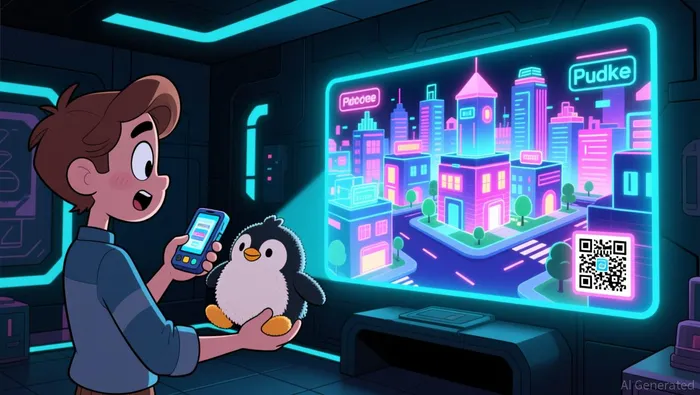
Pudgy World is a browser-accessible game that allows players to explore 12 distinct towns and embark on quests without requiring software downloads. The platform utilizes QR code mechanics to let owners of physical Pudgy Penguins toys unlock specific digital content, effectively bridging tangible and virtual experiences.
The game incorporates the PENGU token for both gameplay mechanics and governance, reflecting a broader initiative to draw new users into the Web3 ecosystem. By eliminating the need for downloads and offering quick transactions, the project aims to make entry easier for mainstream audiences who may be unfamiliar with complex blockchain interfaces.
The game is built on a custom ZKsync Layer 2 network, which supports the integration of the token for utility while aiming to reduce transaction costs for users. This approach is designed to boost user engagement and generate new revenue by merging the physical brand with digital utility.
What Are The Security Risks Targeting The New Ecosystem?
A sophisticated phishing campaign is currently targeting users of the new game by creating a fake website that impersonates Pudgy World. The fraudulent domain uses highly convincing replicas of 11 different crypto wallet interfaces to deceive visitors into revealing their credentials.
The scam site triggers a fake unlock screen that mimics the legitimate wallet software users already trust, exploiting the influx of new users unfamiliar with crypto security practices. Advanced evasion techniques, including virtual machine detection and hidden CSS commands, are used to bypass AI security tools and hide malicious code within the HTML.
Security experts warn that the campaign leaves almost no wallet blind spot, with the threat actor likely utilizing a well-resourced commercial phishing kit. Users are advised to access official sites only through trusted bookmarks and never enter passwords directly into webpage content to avoid compromise.
How Are Market Metrics And Institutional Interest Shaping The Narrative?
The PENGU token has demonstrated resilience with a volume-to-market-cap ratio of 22.7%, suggesting genuine market interest rather than purely speculative frenzy. Despite this, the token shows increased correlation with BitcoinBTC--, which may indicate a loss of independent price discovery during broader market shifts.
Institutional interest is growing, evidenced by the Canary Capital ETF filing which proposes holding PENGU tokens and Pudgy Penguins NFTs alongside other assets like SOL and ETH. This filing marks a potential structural shift in institutional access to digital collectibles, moving beyond retail speculation into regulated investment products.
However, structural risks remain as the top 100 holders control 67.3% of the circulating supply, creating downside risk if early investors distribute positions. The token's value proposition relies heavily on its cultural capital, with over 100 billion social views, but the fundamental question remains whether this translates into sustained utility.
The Pengu Card launch with KAST further aims to enhance the utility of digital assets by integrating them into everyday financial transactions across 150 million merchants. This expansion supports the project's strategy to generate revenue through licensing and financial integration, indirectly supporting the token's value proposition as a social currency.

La combinación de la sabiduría tradicional en el comercio con las perspectivas más avanzadas sobre las criptomonedas.
Latest Articles
Stay ahead of the market.
Get curated U.S. market news, insights and key dates delivered to your inbox.
AInvest
PRO
AInvest
PRO



Comments
No comments yet