
Pudgy Penguins (CSPR) Expands Retail Footprint to Drive Ecosystem Utility
 Aime Summary
- Pudgy Penguins expands physical merchandise into TargetTGT-- stores to bridge digital NFTs with mainstream consumer markets.
- The PENGUPENGU-- token rallies in April 2026 despite supply releases, indicating strong demand for ecosystem utility.
- Monthly token unlocks continue in July and August 2026, testing the balance between circulating supply and adoption.
- Yield Guild Games closes its gaming arm, prompting Pudgy PenguinsPENGU-- to pivot toward fresh browser-based experiences.
- Structural shifts in Web3 gaming and payments create new opportunities for stablecoin integration in digital ownership.
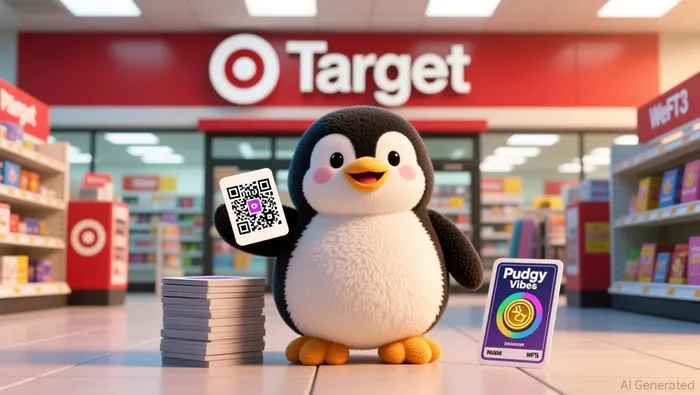
Pudgy Penguins has significantly expanded its retail presence by making Pengu plushies and Pudgy Vibes TCG Season 3 trading cards available in every Target store across the United States. This strategy builds on prior retail launches and links physical products directly to the digital Pudgy World game and NFT ecosystem. The initiative aims to drive mainstream consumer adoption and generate revenue streams outside of crypto markets. Physical items often unlock exclusive traits or utilities within the digital ecosystem, reinforcing the token's role as a social and utility currency.
From a financial and operational perspective, the project is navigating tokenomics carefully. Monthly token unlocks continue, with recent events occurring in July 2026 and another scheduled for mid-August. Analysts are monitoring how these increasing circulating supply events interact with the positive sentiment generated by real-world adoption in gaming and retail. The token, which functions as utility and social currency across games and staking, rallied in April 2026 despite supply releases, suggesting strong demand for ecosystem utility.
The ecosystem is also undergoing structural shifts. A gaming partner, Yield Guild GamesYGG--, closed its gaming arm in July 2026, leading to the retirement of titles like Pudgy Party. This reflects broader challenges in sustaining early Web3 gaming experiments but allows Pudgy Penguins to pivot toward fresh gaming initiatives and its own browser-based experiences. The project is focusing on scaled growth, community tools, and potential IPO considerations for 2027, signaling a long-term approach to building value beyond pure speculation.
How Does Retail Expansion Impact Token Utility?
Pudgy Penguins operates as a leading Web3 intellectual property brand, centered on 8,888 unique NFTs on the EthereumETH-- blockchain. Founded in 2021, the project has expanded beyond its origins as a profile picture (PFP) collection into a mainstream digital collectibles franchise. The business model leverages a strong community, known as 'The Huddle,' to drive engagement in NFT trading and Web3 culture.
The ecosystem includes 'Pudgy World,' a metaverse gaming environment where digital assets are linked to physical toys via QR codes. This strategy provides real-world utility, with products available globally through major retailers like Walmart and Amazon. The company generates revenue through licensing, merchandise sales, and community-driven digital assets, positioning itself as a Web3 IP powerhouse specializing in mainstream brand adoption.
By integrating tangible toys, games, licensing opportunities, and community-driven digital assets, the brand has effectively bridged the gap between Web3 culture and mainstream consumer markets. The integration of digital and physical assets provides real-world utility, as the brand sells themed items such as plushies, bag charms, accessories, and collectibles globally. This convergence of digital ownership with everyday consumer goods positions Pudgy Penguins as a leader in the intersection of NFTs and traditional retail.
What Are the Risks of Token Unlocks and Gaming Shifts?
The project is navigating tokenomics carefully, with monthly token unlocks continuing into August 2026. Analysts are monitoring how these increasing circulating supply events interact with the positive sentiment generated by real-world adoption. The token rallied in April 2026 despite supply releases, suggesting strong demand for ecosystem utility. However, the structural shift away from established gaming partners like Yield Guild Games introduces uncertainty. The closure of Yield Guild Games' gaming arm in July 2026 led to the retirement of titles like Pudgy Party, reflecting broader challenges in sustaining early Web3 gaming experiments.
This pivot allows Pudgy Penguins to focus on fresh gaming initiatives and its own browser-based experiences. The project is focusing on scaled growth, community tools, and potential IPO considerations for 2027. This long-term approach aims to build value beyond pure speculation, balancing the risks of supply dilution with the potential for sustained consumer engagement.
How Do Payment and Gaming Trends Affect Web3 Adoption?
A recent court ruling has opened a window for stablecoin payments in gaming by allowing web shops to process transactions outside native app store systems. This shift addresses high chargeback rates and offers instant settlement, potentially reshaping the digital ownership economy for in-game items and NFTs. Will Harborne, CEO and co-founder of Rhino.fi, noted that games have the highest like chargeback rate in the industry, partly because users often use parents' credit cards and chargeback later. The decision allows people to use web shops for payments instead of going via native Android or iPhone payment systems, opening up the opportunity for stablecoin transactions.
Early adopters are marketplaces selling in-game items for crypto completely outside the app store. Post-ruling, stablecoins clearly solve needs for fast payments, instant settlement, no chargebacks, and costs cheaper than credit cards. Harborne forecasts that in a year, all these platforms will have stablecoin payment options, whereas today they mostly do not. This regulatory and technological shift supports the broader Web3 ecosystem, including projects like Pudgy Penguins that rely on seamless digital transactions and NFT utility.
Meanwhile, companies like ScorePoint are betting that status drives engagement more than money alone. They argue that a leaderboard or clan alone is not enough; what matters is the loop created when several small systems connect together. Scores attach to profiles, clans compete by country, and challenges travel between friends. Games are the entry point, but identity and competition systems create return behavior. This trend aligns with Pudgy Penguins' focus on community tools and scaled growth, emphasizing the importance of social and utility currencies in driving long-term engagement.

Blending traditional trading wisdom with cutting-edge cryptocurrency insights.
Latest Articles
Stay ahead of the market.
Get curated U.S. market news, insights and key dates delivered to your inbox.


AInvest
PRO
AInvest
PRO




Comments
No comments yet